Question
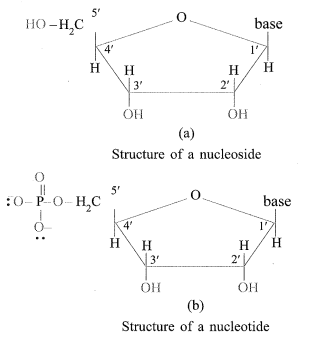
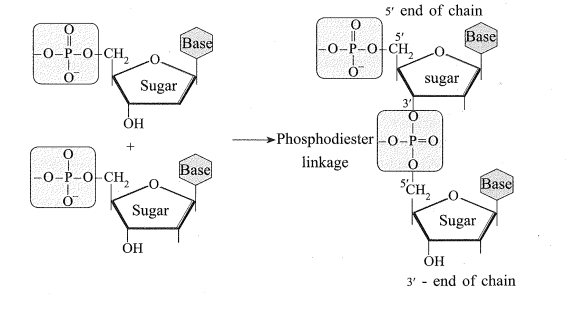
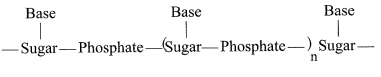
Explain the structure of nucleic acid compounds.
Generate a complete, print-ready paper with questions like this in minutes — across 16+ boards, with answer keys.
Reason: All naturally occurring CL-amino acids, except glycine, has at least one asymmetric carbon.
Reason: Amino acids contain asymmetric carbon atoms.
Reason: An egg contains a soluble globular protein called albumin which is present in the white part.
Reason: Out of 20 amino acids, only 12 amino acids can be synthesised by human body.
Reason: Sanger's reagent is used for the identification of N-tenninal amino acid of peptide chain.
Reason: Lucas' reagent can be used to distinguish between methanol and ethanol.
Reason: It is a 3º alcohol.
Reason: 3º carbocation is most stable.
Reason: Tertiary alcohol gives turbidity immediately with Lucas' reagent.
Reason: Lucas test is based upon the difference in reactivity of primary, secondary and tertiary alcohols with cone. HCI and anhyd. ZnCl2.