Question
Explain the structure of starch and cellulose.

Answer

self

Need a full question paper?

Generate a complete, print-ready paper with questions like this in minutes — across 16+ boards, with answer keys.

Start Generating Free

Similar questions

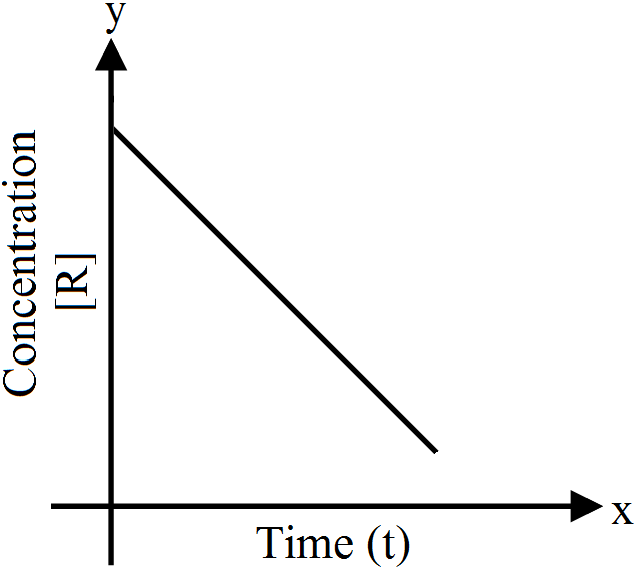
Consider the reaction $\text{R}\xrightarrow{\ \ \text{k}\ \ } \text{P}.$ The change in concentration of R with time is shown in the following plot:

  1. Predict the order of the reaction.
  2. Derive the expression for the time required for the completion of the reaction.
  3. What does the slope of the above line indicate?

Answer the following questions:
Assign reasons for the following:
  1. In the series Sc (Z = 21) to Zn (Z = 30), the enthalpy of atomisation of Zn is the lowest.
  2. Zr and Hf have almost identical radii.
  3. Transition metals show variable oxidation states.
  4. The E°M2+/M value for copper is positive (+0.34 V).
Give the electronic configuration of the following complexes on the basis of Crystal Field Splitting theory.
[CoF6]3-, [Fe(CN)6]4- and [Cu(NH3)6]2+
Answer the following questions:
Draw the structures of chromate and dichromate ions.
Discuss biological and industrial importance of osmosis.
  1. Define the following terms:
  1. Mole fraction.
  2. Ideal solution.
  1. 15.0 g of an unknown molecular material is dissolved in 450 g of water. The resulting solution freezes at - 0.34°C. What is the molar mass of the material?

(Kf for water = 1.86 K kg mol–1).

The elements of 3d transition series are given as:
Sc Ti V Cr Mn Fe Co Ni Cu Zn.
Answer the following:
  1. Write the element which shows maximum number of oxidation states. Give reason.
  2. Which element has the highest m.p?
  3. Which element shows only + 3 oxidation state?
  4. Which element is a strong oxidizing agent in + 3 oxidation state and why?
Explain the methods of preparation alcohol from the following compounds:
(a) From carbonyl compound
(b) From carboxylic acid
(c) From esters
(d) From Grignard reagent
  1. 30 g of urea (M = 60 g mol-1) is dissolved in 846 g of water. Calculate the vapour pressure of water for this solution if vapour pressure of pure water at 298 K is 23.8 mm Hg.
  2. Write two differences between ideal solutions and non-ideal solutions.
The air is a mixture of a number of gases. The major components are oxygen and nitrogen with approximate proportion of 20% is to 79% by volume at 298 K. The water is in equilibrium with air at a pressure of 10 atm. At 298 K if the Henry’s law constants for oxygen and nitrogen at 298 K are 3.30 × 107 mm and 6.51 × 107 mm respectively, calculate the composition of these gases in water.