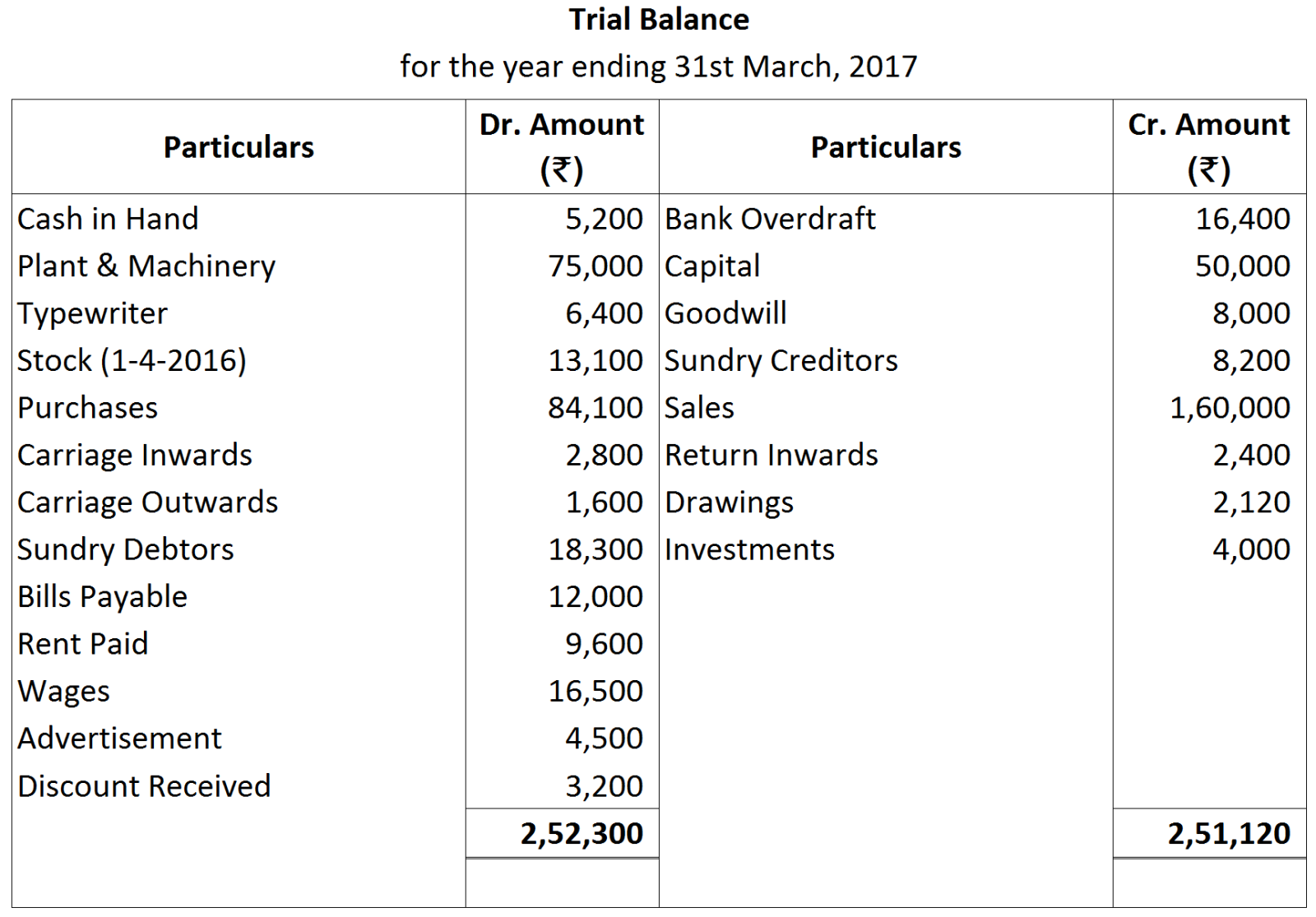
Question
Explain the types of Reserves.

Answer

Types of Reserves: To have a better understanding of the nature and purpose of Reserves, let us classify them into different types. Reserves are generally classified into:
  1. Revenue Reserves: Revenue Reserves are set aside out of revenue profits which are available for distribution as dividend.
Revenue reserves can be classified into:
  1. General Reserve: General Reserve is the amount set aside out of profits not for any specific purpose. It is available for any future contingency or expansion of business. Such reserve strengthens the financial position of the business. Example is General Reserve.
  2. Specific Reserve: Specific Reserve is that reserve which is set aside out of profits for a specific purpose and can be utilised only for that purpose. For example, Workmen Compensation Reserve is a specific reserve because it is maintained to pay compensation to workmen. Debentures Redemption Reserve, Capital Redemption Reserve, Investment Fluctuation Reserve, etc., are other examples of Specific Reserve.
  1. Capital Reserves: Capital Reserves are set aside out of capital profits and are normally not available for distribution as dividend. In other words, reserve created out of capital profits and which is not readily available for distribution as dividend among the shareholders is called Capital Reserve. Examples of capital reserves are:
  1. Profit prior to incorporation.
  2. Premium on issue of shares or debentures.
  3. Profit on redemption of debentures.
  4. Profit on forfeiture of shares.
  5. Profit on sale of fixed assets.
  6. Capital Redemption Reserve.
  7. Profit on revaluation of fixed assets and liabilities.

Need a full question paper?

Generate a complete, print-ready paper with questions like this in minutes — across 16+ boards, with answer keys.

Start Generating Free

Similar questions

Rectify the following errors:-
  1. A sale of goods to Raja Ram for ₹ 2,500 was passed through the Purchases Book.
  2. Salary of ₹ 800 paid to Hari Babu was wrongly debited to his personal account.
  3. Furniture purchased on credit from Mohan Singh for ₹ 1,000 was entered in the Purchases Book.
  4. ₹ 5,000 spent on the extension of buildings was debited to Buildings Repairs Account.
  5. Goods returned by Mani Ram ₹ 1,200 were entered in the Returns Outwards Book.
Cash Book shows a balance of ₹ 12,500. On comparing the Cash Book with the Pass Book, following discrepancies were noted:
 
 
(i)
Cheques issued but not yet presented for payment.
6,000
(ii)
Cheques deposited in the bank but not collected.
9,000
(iii)
Bank paid insurance premium.
5,000
(iv)
Bank charges.
300
(v)
Directly deposited by a customer.
8,000
(vi)
Interest on investment collected by bank.
2,000
(vii)
Cash discount allowed of ₹ 200 was recorded on the debit side of the Bank column.
 
Prepare Bank Reconciliation Statement.
On 1st April, 2016, B accepts a bill drawn by A at three months for ₹ 8,000 in payment of debt. On the due date the acceptance is dishonoured and A gets the bill noted paying ₹ 100. On 4th July, 2016 A draws a new bill payable after 73 days provided interest is paid in cash @ 15% p.a. To this B is agreeable. The bill is met on maturity.
Record these transactions in the Journal of both the parties.
Record the following transaction in the Purchases Book of Modern Furniture House, New Delhi assuming CGST @ 6% and SGST @ 6% and post it into Ledger:
2017
 
Nov. 3
Purchased goods from Sachdeva Furniture Store, New Delhi :
50 Chairs @ ₹ 2,000 each
5 Tables @ ₹ 10,000 each
Nov. 10
Purchased furniture from Mahadeva & Co., Jaipur (Rajasthan) valued ₹ 2,00,000, less $12\frac{1}{2}\%$ Trade Discount
Nov. 18
Purchased furniture from Fashion Furniture House, Chandigarh of the list price of ₹ 2,50,000, less 15%
Nov. 20
Purchased from India Furniture House, New Delhi:
100 Chairs @ ₹ 1,800 each
Nov. 25
Purchased from Mohan Lal & Sons furniture of the value of ₹ 20,000 for cash
The following is the Trial Balance prepared by an inexperienced accountant. Redraft it in a correct form and give necessary notes :-
Show the accounting equation on the basis of following transactions:
  1. Commenced business with Cash ₹ 20,000; Goods ₹ 50,000 and Furniture ₹ 30,000.
  2. Purchased goods from Gopal on Credit ₹ 40,000.
  3. Sold goods for Cash ₹ 40,000 (costing ₹ 30,000).
  4. Sold goods to Ram on Credit ₹ 65,000 (costing ₹ 50,000).
  5. Withdrew for personal use goods costing ₹ 5,000.
  6. Purchased typewriter for personal use of the proprietor ₹ 20,000.
  7. Purchased chairs for office use for Cash ₹ 10,000.
  8. Paid for printing ₹ 500 and received Commission ₹ 1,200.
  9. Introduced fresh Capital ₹ 40,000.
  10. Paid to Gopal ₹ 30,000.
Enter the following transaction in the Journal of Marutinandan Stores:
2017
 
Jan. 10
Purchased goods from Ghanshyam of the list price of 50,000 at 15% trade discount.
Jan. 13
Returned goods to Ghanshyam of the list price of ₹ 2,000
Jan. 15
Paid cash to Ghanshyam ₹ 40,000 in full settlement of his account.
Jan. 20
Purchased goods from Raghu of the list price of ₹ 60,000 at 10% trade discount.
Jan. 22
Returned goods to Raghu of the list price of ₹ 5,000
Jan. 25
Paid cash to Raghu ₹ 49,000 in full settlement of his Account.
Following balances appear in the books of X Ltd. as on 1st April, 2018:
 
Machinery A/c
5,00,000
Provision for Depreciation A/c
2,25,000
The machinery is depreciated @ 10% p.a. on the Fixed Instalment Method. The accounting year being April-March. On 1st October, 2018, a machinery which was purchased on 1st July, 2015 for ₹ 1,00,000 was sold for ₹ 42,000 plus CGST and SGST @ 6% each and on the same date a new machine was purchased for ₹ 2,00,000 paying IGST @ 12%. Prepare Machinery Account and Provision for Depreciation Account for the year ended 31st March, 2019.
What do you mean by an asset and what are different types of assets?
Pass Journal entries in the books of Puneet, Delhi for the following:
  1. Received an order from Karan & Co. for supply of goods of ₹ 50,000.
  2. Received an order from AK & Co. for goods of ₹ 1,00,000 along with a cheque for ₹ 25,000 as advance.
  3. Paid to staff ₹ 40,000 against outstanding salary of ₹ 60,000.
  4. Sold goods to Bharat, Kaithal (Haryana) of ₹ 10,000 plus IGST @ 12% out of which 1/5th were returned being defective.
  5. Cheque of ₹ 20,000 issued by Feroz was dishonoured.
  6. Received 40 paise in a rupee from Feroz against the above dues.
  7. Received a cheque of ₹ 25,000 from Mohan after banking hours.
  8. Purchased goods from Barun of Chandigarh of ₹ 10,000 plus IGST @ 12% and sold them to Arun of Shimla (HP) at ₹ 22,400, including IGST @ 12%.
  9. Arun returned goods of ₹ 6,720, including IGST which were returned to Barun.
  10. ABC & Co. purchased 10 TV sets @ ₹ 20,000 per set and paid IGST @ 12%. It sold all the sets @ ₹ 25,000 per set plus CGST and SGST @ 6% each.
  11. Paid insurance of ₹ 12,000 plus CGST and SGST @ 6% each for a period of one year.
  12. Sold personal car for ₹ 1,00,000 and invested the amount in the firm.
  13. Goods costing ₹ 1,00,000 were destroyed in fire. Insurance company admitted the claim for ₹ 75,000. These goods were purchased within Delhi.
  14. Purchased machinery for ₹ 56,000 including IGST of ₹ 6,000 and paid cartage thereon ₹ 5,000 and installation charges ₹ 10,000.
  15. Goods costing ₹ 40,000 sold to Mr. X at a profit of 20% on sales less 10% Trade Discount plus CGST and SGST @ 6% each and received a cheque under 2% cash discount.
  16. Purchased machinery from New Machinery House for ₹ 50,000 and paid it by means of a bank draft purchased from bank. Paid charges ​₹ 500.