Question
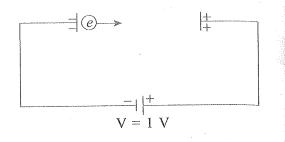
Explain the unit of energy $e{V}$ (electron volt) and define 1 eV .

Answer

→$e V$ is a smallest unit of energy. It is commonly used in atomic and nuclear physics.
→The energy gained by accelerating an electron with a potential difference of 1 volt is called 1 eV Image
→Energy gained by electron,
$K =q V \quad(\because w=\Delta K = V q)$
$\therefore \quad K =e V \quad(\because q=e=$ charge of electron $)$
$K =1.6 \times 10^{-19} \times 1$
$\therefore \quad K =1.6 \times 10^{-19} J$
$\therefore \quad K =1 eV$
$\therefore 1 eV =1.6 \times 10^{-19} J$

Need a full question paper?

Generate a complete, print-ready paper with questions like this in minutes — across 16+ boards, with answer keys.
Start Generating Free

Similar questions

Why is there no dispersion in the light refracted through a rectangular glass slab?
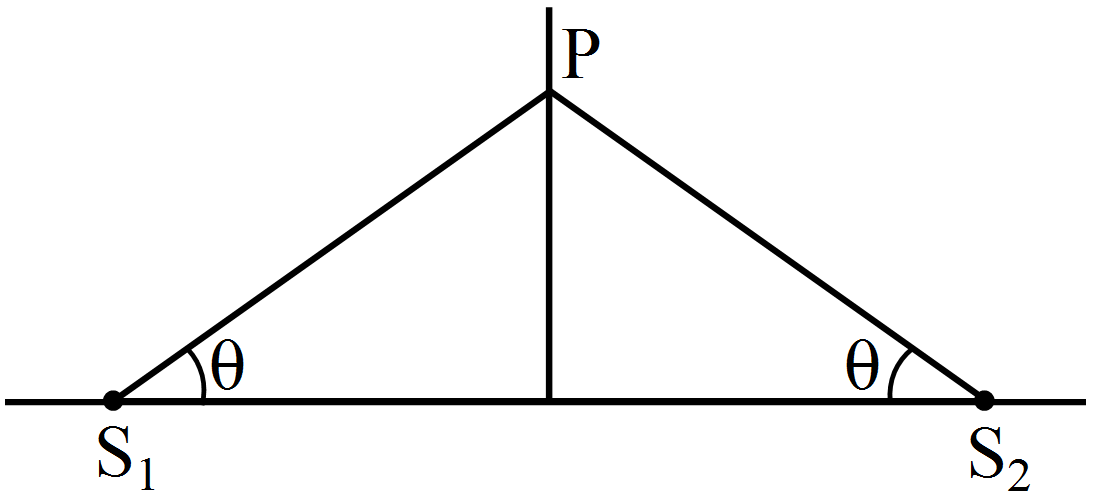
Two sources of sound S1 and S2 vibrate at same frequency and are in phase figure. The intensity of sound detected at a point P as shown in the figure is I0.

  1. If 0 equals 45°, what will be the intensity of sound detected at this point if one of the sources is switched off?
  2. What will be the answer of the previous part if = 60°?

Write the function of a (i) Transducer and (ii) Repeater in a communication system.
A simple microscope is rated 5 for a normal relaxed eye. What will be its magnifying power for a relaxed farsighted eye whose near point is 40cm?
Answer the following questions:
A steady current flows in a metallic conductor of non-uniform cross-section. Which of these quantities is constant along the conductor: current, current density, electric field, drift speed?
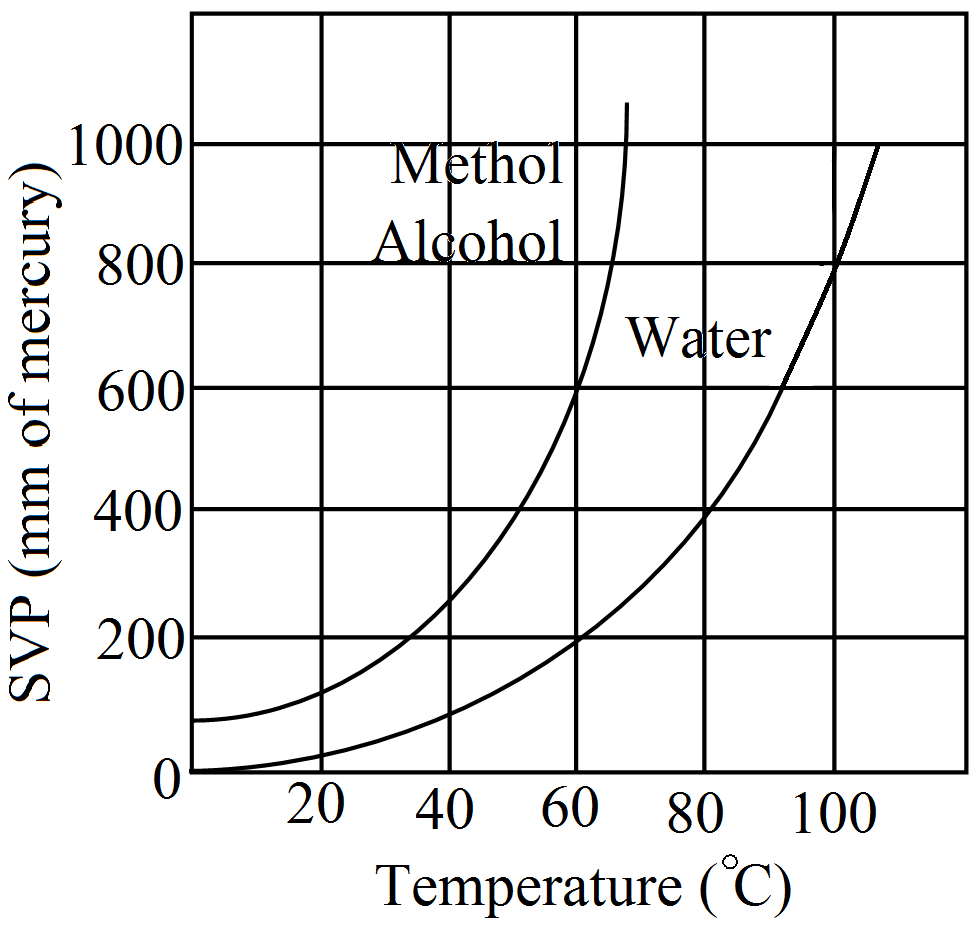
Using figure. of the text, find the boiling point of methyl alcohol at 1atm (760mm of mercury) and at 0.5atm.

Calculate the bulk modulus of air from the following data about a sound wave of wavelength 35cm travelling in air. The pressure at a point varies between $(1.0\times10^5\pm14)$ Pa and the particles of the air vibrate in simple harmonic motion of amplitude 5.5 × 10-6m.
Draw a graph showing the variation of potential energy between a pair of nucleons as a function of their separation. Indicate the regions in which the nuclear force is. (i) attractive, (ii) repulsive.
Two voltameters, one having a solution of silver salt and the other of a trivalent-metal salt, are connected in series and a current of 2A is maintained for 1.50 hours. It is found that 1.00g of the trivalent-metal is deposited.
  1. What is the atomic weight of the trivalent metal?
  2. How much silver is deposited during this period? Atomic weight of silver is 107.9 g/mole.
  1. Find the first excitation potential of He+ ion.
  2. Find the ionization potential of Li++ ion.