Question

Explain the various preventive measures against insect pests.

Answer

Preventive measures against insect pests:

  1. Root cutting type of insects is controlled by mixing insecticides in the soil.

Example: chloropyriphos.

  1. Stem and leaf cutting type of insects can be controlled by dusting or spraying the contact insecticides.

Example: malathion, lindane and thiodan.

  1. All sap sucking insects can be controlled by spraying systematic insecticides.

Example: dimethoate and metasystox.

Need a full question paper?

Generate a complete, print-ready paper with questions like this in minutes — across 16+ boards, with answer keys.

Start Generating Free

Similar questions

Unicellular organisms differ from multicellular ones. How?

Discuss:

  1. Principles of treatment.
  2. Vaccination.
Describe the mechanism of osmosis. Give its importance.
State and explain Kepler’s laws of planetary motion. Draw diagrams to illustrate these laws.
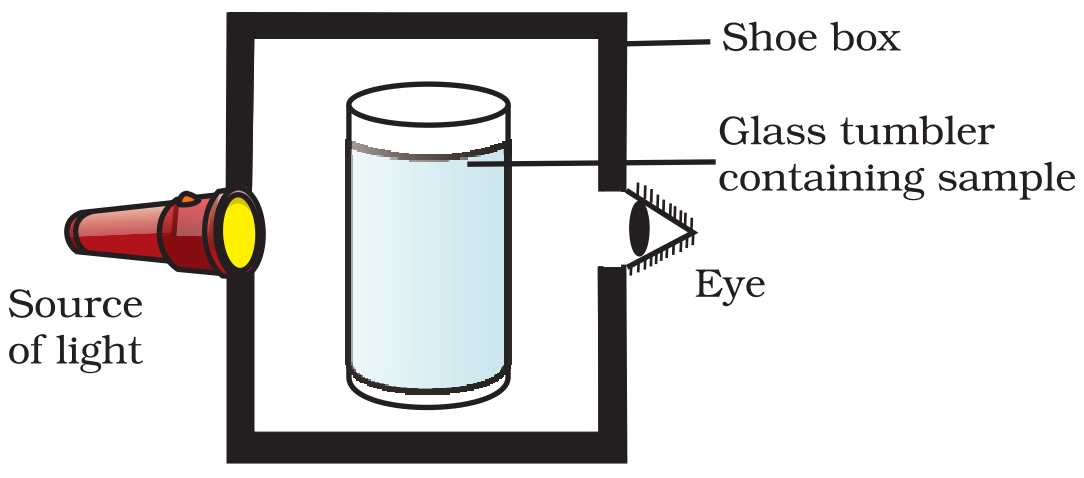
A group of students took an old shoe box and covered it with a black paper from all sides. They fixed a source of light (a torch) at one end of the box by making a hole in it and made another hole on the other side to view the light. They placed a milk sample contained in a beaker/ tumbler in the box as shown in the they were amazed to see that milk taken in the tumbler was illuminated. They tried the same activity by taking a salt solution but found that light simply passed through it?

  1. Explain why the milk sample was illuminated. Name the phenomenon involved.
  2. Same results were not observed with a salt solution. Explain.
  3. Can you suggest two more solutions which would show the same effect as shown by the milk solution?
A boy walks from his classroom to the bookshop along a straight corridor towards North. He covers a distance of 20m in 25 seconds to reach the bookshop. After buying a book, he travels the same distance in the same time to reach back in the classroom. Find (a) average speed, and (b) average velocity, of the boy.
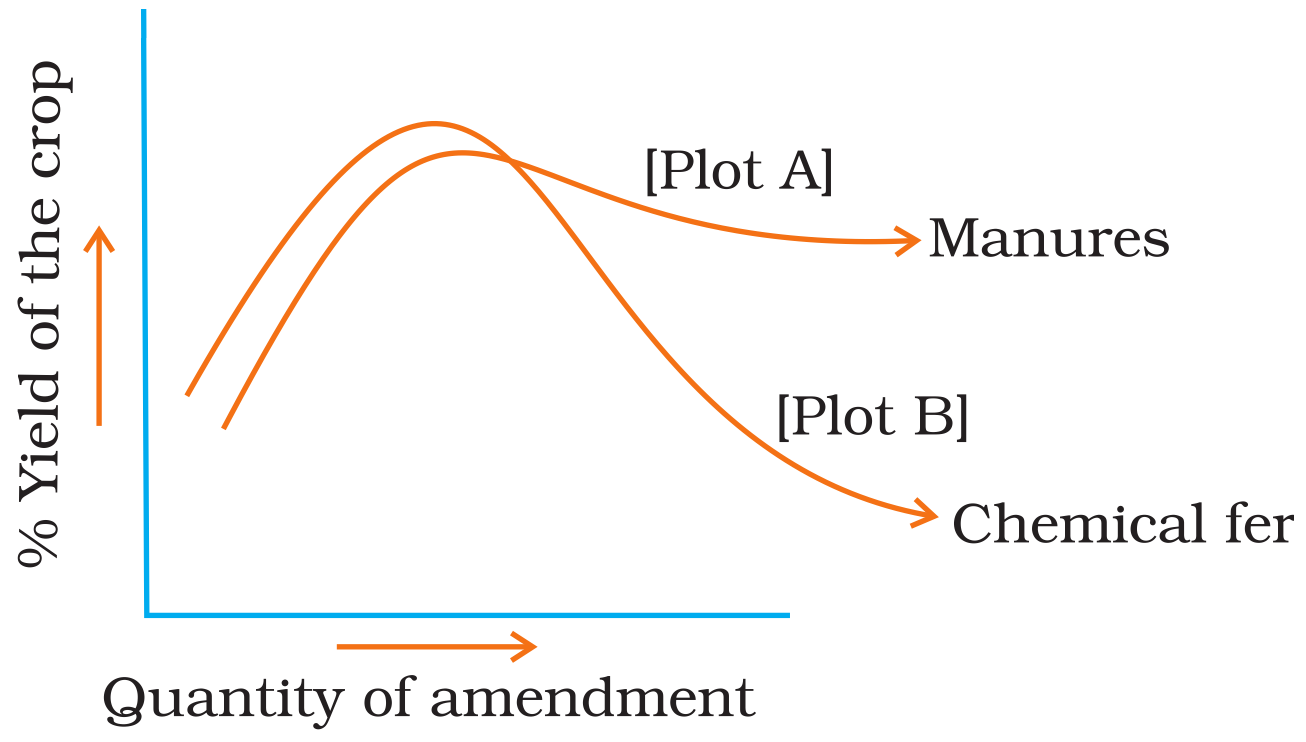
Describe the various cropping patterns.
Draw a neat labelled diagram of an animal cell.
The electronic configuration of an element Z is 2, 8, 8.
  1. What is the atomic number of the element?
  2. State whether element Z is a metal or a non-metal.
  3. What type of ion (if any) will be formed by an atom of element Z? Why?
  4. What is special about the outermost electron shell or the atom of this element?
  5. Give the name and symbol of element Z.
  6. Name the group of elements to which Z belongs.