Question
Explain the various types of sewage.

Answer

There are various types of sewage, depending upon its colour and odour. Some sewage is black and has a very bad odour.
  • Sullage water: Waste water released from the kitchen is called sullage water. The contaminants in sullage water are mild detergents, oils and food particles. Moreover, it contains lots of water released when utensils are washed.
  • Foul waste: Waste water released from toilets is termed as foul waste. It consists of human waste and a lot of bacteria that release gases and bad odour. It is highly infectious.
  • Trade waste: Waste released from industries and commercial organisations is called trade waste. It consists of acids and strong chemicals that are toxic in nature.

Need a full question paper?

Generate a complete, print-ready paper with questions like this in minutes — across 16+ boards, with answer keys.

Start Generating Free

Similar questions

Answer the following:
(i) Draw a schematic diagram showing photosynthesis.
(ii) What are the products of photosynthesis?
(iii) Name the gases utilised and liberated in photosynthesis.
(iv) Can all plants do photosynthesis?
Differentiate between unisexual flower and bisexual flower$?$
In addition to the formation of new products, what changes do the chemical changes accompany?
Write how the following seeds are dispersed?
(I) Seeds with wings
(II) Small and light seeds
(iii) Seeds with spines/hooks
If plant has a requirement for nitrogen, then from where will they obtain it?
Skin acts as an excretory organ by removing waste in the form of sweat in human beings.
Find examples of some animals in which excretion takes place through the skin only.
Complete the following table on the basis of appearance and hardness of the materials:
Object/MaterialAppearance (Shiny/Dull)Hardness (hard/not hard)
Iron
Coal
Sulphur
Aluminium
Copper
Measure the breathing rate of the members of your family. Evaluate
(i) If the breathing rate of males is the same or different from that of females.
(ii) If the breathing rate changes with age.
Table : Finding the speed of trains Name of the railway station nearest to your place of stay Delhi.
Name of the
train
Name of the
next station
Distance till
the next
station (km)
Time taken till the next
station(N)
Speed of the
train between
these two
stations (km/h)
Vande BharatAmbala Cantt.2142h 12 min
Shatabdi ExpressAligarh1581h 30 min
Tejas ExpressKota4652h
Shan-e-PunjabPanipa991h 25 min
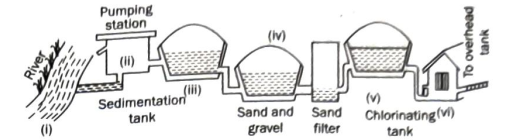
Observe the given figure and answer the following
(a) What does this figure show?
(b) State the functions of each part of the figure.
Image