Question
Explain Valence Bond theory in Coordination compound.

Answer

→ According to this theory, the metal atom or ion under the influence of ligands can use its (n-1)d, ns, np or ns, np, nd orbitals for hybridization to yield a set of equivalent orbitals of definite geometry such as octahedral, tetrahedral, square planar
→ These hybridised orbitals are allowed to overlap with ligand orbitals that can donate electron pairs for bonding.
Number of Orbitals and Types of Hybridizations
Coordination
number
Type of
Hybridisation
Distribution of
hybrid orbitals
in space
4$sp ^3$Tetrahedral
4$dsp ^2$Square planar
5$sp ^3 d$Trigonal
bipyramidal
6$sp ^3 d^2$Octahedral
6$d ^2 sp ^3$Octahedral
→ It is usually possible to predict the geometry of a complex from the knowledge of its magnetic behaviour on the basis of the valence bond theory.

Need a full question paper?

Generate a complete, print-ready paper with questions like this in minutes — across 16+ boards, with answer keys.
Start Generating Free

Similar questions

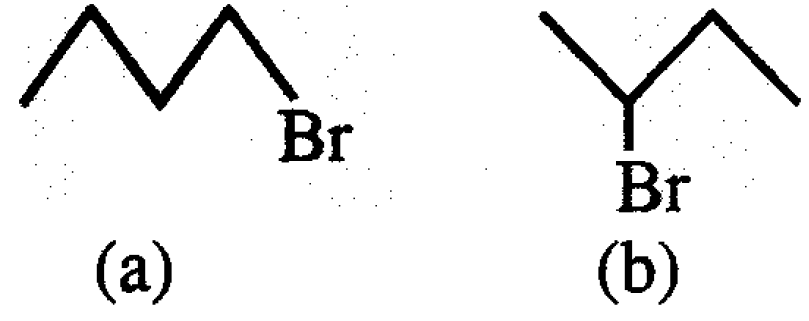
  1. Which alkyl halide from the following pair is chiral and undergoes faster $S_N2$ reaction?
  1. Out of $S_N1$ and $S_N2,$ which reaction occurs with
  1. Inversion of configuration.
  2. Racemisation.
Ferric oxide crystallises in a hexagonal close-packed array of oxide ions with two out of every three octahedral holes occupied by ferric ions. Derive the formula of the ferric oxide.
Which of the ores mentioned in Table can be concentrated by magnetic separation method?
Metal Ores Components
Aluminium Bauxite $AlO_x(OH)3-2x$
$[$where $0 < x < 1]$
Iron
Kaolinite $(a$ form of clay$)$
Haematite
Magnetite
Siderite
Iron pyrites
$[Al_2(OH)_4Si_2O_5]$
$Fe_2O_3$
$Fe_3O_4$
$FeCO_3$
$FeS_2$
Copper
Copper pyrites
Malachite
Cuprite
Copper glance
$CuFeS_2$
$CuCO_3.Cu(OH)_2$
$Cu_2O$
$Cu_2S$
Zinc
Zinc blende or Sphalerite
Calamine
Zincite
$ZnS$
$ZnCO_3$
$ZnO$
How to find out $K_b$ and $K_f$ ?
Explain the displacement of diazonium group of benzene diazonium salt by hydrogen with equation.### Explain the reduction process of benzene diazonium salt by giving an equation.
Explain the limitations of Raoult's law.
What is essentially the difference between a-form of glucose and b-form of glucose? Explain.
Complete the following equations:
  1. $\mathrm{Ag}+\mathrm{PCl}_5 \rightarrow$
  2. $\mathrm{CaF}_2+\mathrm{H}_2 \mathrm{SO}_4 \rightarrow$
Account for the following:
  1. Schottky defects lower the density of related solids.
  2. Conductivity of silicon increases on doping it with phosphorus.
Give reason for the following:
$CH_3CHO$ is more reactive than $CH_3COCH_3$ towards reaction with $HCN.$