Question
Explain why,
  1. A horse cannot pull a cart and run in empty space.
  2. Passengers are thrown forward from their seats when a speeding bus stops suddenly.
  3. It is easier to pull a lawn mower than to push it.
  4. A cricketer moves his hands backwards while holding a catch.

Answer

  1. While trying to pull a cart, ahorse pushes the ground backward with some force. The ground in turn exerts an equal and opposite reaction force upon the feet of the horse. This reaction force causes the horse to move forward.

An empty space is devoid of any such reaction force. Therefore, a horse cannot pull a cart and run in empty space.

  1. This is due to inertia of motion. When a speeding bus stops suddenly, the lower part of a passenger’s body, which is in contact with the seat, suddenly comes to rest. However, the upper part tends to remain in motion (as per the first law of motion). As a result, the passenger’s upper body is thrown forward in the direction in which the bus was moving.
  2. While pulling a lawn mower, a force at an angle $\theta$ is applied on it, as shown in the following figure.
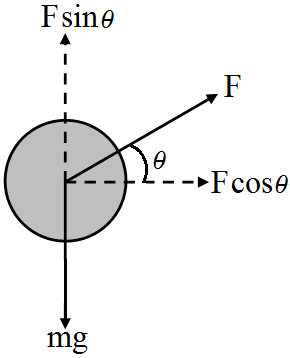
The vertical component of this applied force acts upward. This reduces the effective weight of the mower. On the other hand, while pushing a lawn mower, a force at an angle $\theta$ is applied on it, as shown in the following figure.
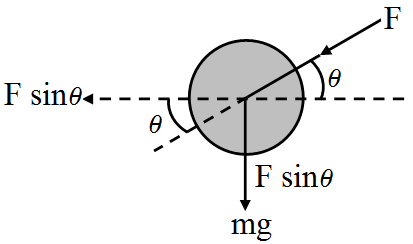
In this case, the vertical component of the applied force acts in the direction of the weight of the mower. This increases the effective weight of the mower.

Since the effective weight of the lawn mower is lesser in the first case, pulling the lawn mower is easier than pushing it.

  1. According to Newton’s second law of motion, we have the equation of motion:

$\text{F}=\text{ma}=\frac{\text{m}\triangle\text{v}}{\triangle\text{t}}\ ....(\text{i})$

Where,

F = Stopping force experienced by the cricketer as he catches the ball

m = Mass of the ball

$\triangle\text{t}$ = Time of impact of the ball with the hand

It can be inferred from equation (i) that the impact force is inversely proportional to the impact time, i.e.,

$\frac{\text{F}\propto1}{\triangle\text{t}}\ ...(\text{ii})$

Equation (ii) shows that the force experienced by the cricketer decreases if the time of impact increases and vice versa.

While taking a catch, a cricketer moves his hand backward so as to increase the time of impact $(\triangle\text{t})$. This is turn results in the decrease in the stopping force, thereby preventing the hands of the cricketer from getting hurt.
Need a full question paper?

Generate a complete, print-ready paper with questions like this in minutes — across 16+ boards, with answer keys.

Start Generating Free

Similar questions

An LR circuit with emf $\in$ is connected at t = 0.
  1. Find the charge Q which flows through the battery during 0 to t.
  2. Calculate the work done by the battery during this period.
  3. Find the heat developed during this period.
  4. Find the magnetic field energy stored in the circuit at time t.
  5. Verify that the results in the three parts above are consistent with energy conservation.
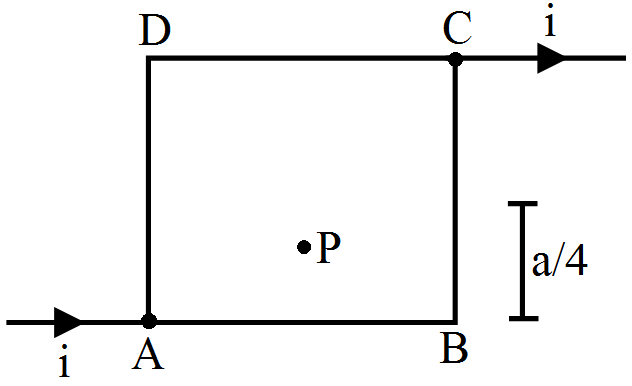
Figure shows a square loop of edge a made of a uniform wire. A current i enters the loop at the point A and leaves it at the point C. Find the magnetic field at the point P which is on the perpendicular bisector of AB at a distance $\frac{\text{a}}{4}$ from it.

Two identical heavy spheres are separated by a distance 10 times their radius. Will an object placed at the mid point of the line joining their centres be in stable equilibrium or unstable equilibrium? Give reason for your answer.
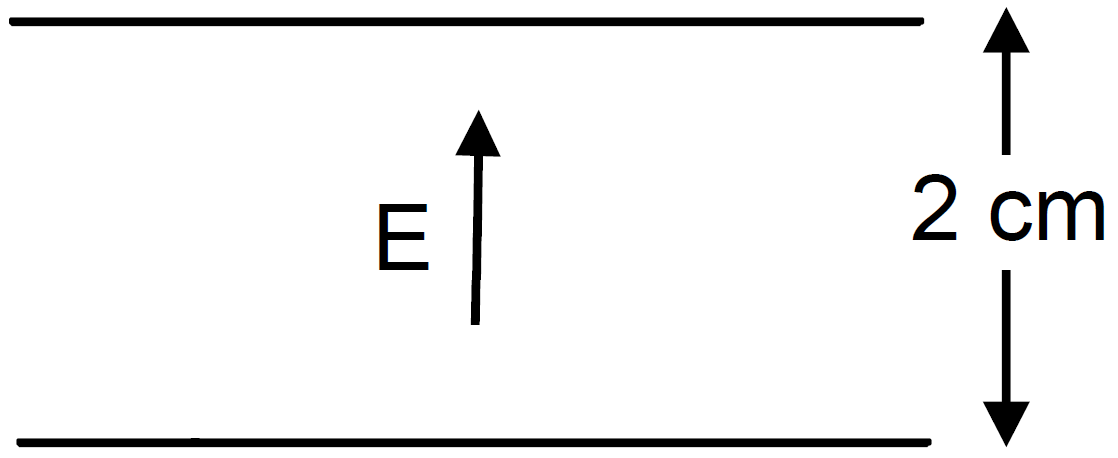
An electric field of magnitude 1000NC-1 is produced between two parallel plates having a separation of 2.0cm as shown in figure.

  1. What is the potential difference between the plates?
  2. With what minimum speed should an electron be projected from the lower plate in the direction of the field so that it may reach the upper plate?
  3. Suppose the electron is projected from the lower plate with the speed calculated in part (b). The direction of projection makes an angle of 60° with the field. Find the maximum height reached by the electron.

A body cools from 80 °C to 50 °C in 5 minutes. Calculate the time it takes to cool from 60°C to 30 °C. The temprature of the surroundings is 20°C.
Figure (a) shows a thin liquid film supporting a small weight = 4.5 × 10⁻²N. What is the weight supported by a film of the same liquid at the same temperature in Fig. (b) and (c)? Explain your answer physically.

A small block of mass m and a concave mirror of radius R fitted with a stand lie on a smooth horizontal table with a separation d between them. The mirror together with its stand has a mass m. The block is pushed at t = 0 towards the mirror so that it starts moving towards the mirror at a constant speed V and collides with it. The collision is perfectly elastic. Find the velocity of the image:
  1. At a time $\text{t}<\frac{\text{d}}{\text{V}}$
  2. At a time $\text{t}>\frac{\text{d}}{\text{V}}.$
A regular polygon of n sides is formed by bending a wire of total length $27\pi\text{r}$ which carries a current i.
  1. Find the magnetic field B at the centre of the polygon.
  2. By letting $\text{n}\rightarrow\infty,$ deduce the expression for the magnetic field at the centre of a circular current.
Two discs of moments of inertia I1 and I2 about their respective axes (normal to the disc and passing through the centre), and rotating with angular speeds $\omega_1$ and $\omega_2$ are brought into contact face to face with their axes of rotation coincident.
  1. What is the angular speed of the two-disc system?
  2. Show that the kinetic energy of the combined system is less than the sum of the initial kinetic energies of the two discs. How do you account for this loss in energy? Take $\omega_1\neq\omega_2$
  1. Show that the pressure exerted by a liquid column is proportional to its height.
  2. State Pascal's law.