Question
Explain why BeH2 molecule has a zero dipole moment although the Be–H bonds are polar.

Need a full question paper?

Generate a complete, print-ready paper with questions like this in minutes — across 16+ boards, with answer keys.
Start Generating Free

Similar questions

56kg of N2(g) and 10kg of H2(g) are mixed to produce NH3 (g). Calculate the number of moles of ammonia gas formed.
(Atomic mass/ g mol-1 N = 14, H = 1)
If the density of methanol is 0.793kg L–1, what is its volume needed for making 2.5L of its 0.25M solution?
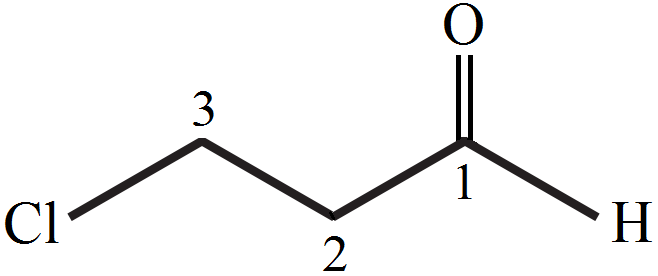
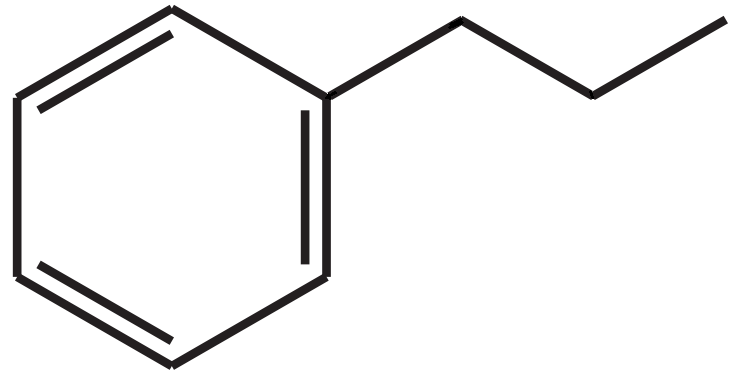
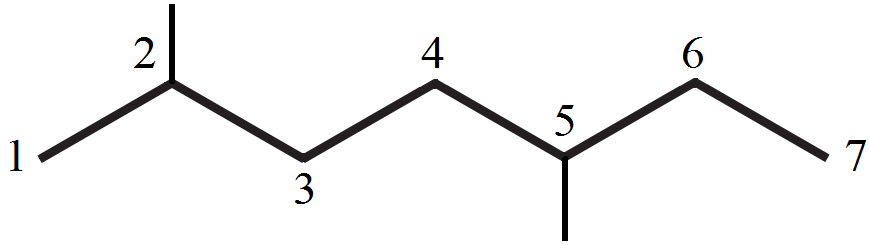
Write IUPAC names of the following:

  1.  

  1.  

  1.  

  1. In the following redox reactions, identify the oxidation and reducing agents:
  1. $\text{H}_3\text{PO}\text{(aq)}+2\text{HgCl}_2+2\text{H}_2\text{O}\text{(aq)}\\ \xrightarrow{ \ \ \ \ }\text{H}_3\text{PO}_4\text{(aq)}+2\text{Hg(l)}+4\text{HCl(aq)}$

  2. $\text{O}_2\text{(g)}+\text{PtF}_6\text{g}\xrightarrow{ \ \ \ \ }\text{O}_2^+[\text{PtF}_6]^\ominus\text{(s)}$

  1. Why does H2S acts as reducing agent only whereas SO2 acts as bot oxidant as wells as rductant?

For the following bond cleavages, use curved-arrows to show the electron flow and classify each as homolysis or heterolysis. Identify reactive intermediate produced as free radical, carbocation and carbanion.

Discuss the concept of hybridisation. What are the different types of hybridization that carbon can exhibit?
The quantum numbers of six electrons are given below. Arrange them in order of increasing energies. If any of these combination(s) has/ have the same energy lists:
  1. $\text{n}=4,\text{l}=2,\text{m}_\text{l}=-2,\text{m}_{\text{s}}=-\frac{1}{2}$
  2. $\text{n}=3,\text{l}=2,\text{m}_\text{l}=1,\text{m}_{\text{s}}=+\frac{1}{2}$
  3. $\text{n}=4,\text{l}=1,\text{m}_\text{l}=0,\text{m}_{\text{s}}=+\frac{1}{2}$
  4. $\text{n}=3,\text{l}=2,\text{m}_\text{l}=-2,\text{m}_{\text{s}}=-\frac{1}{2}$
  5. $\text{n}=3,\text{l}=1,\text{m}_\text{l}=-1,\text{m}_{\text{s}}=+\frac{1}{2}$
  6. $\text{n}=4,\text{l}=1,\text{m}_\text{l}=0,\text{m}_{\text{s}}=+\frac{1}{2}$
In a reaction
$A + B _2 \rightarrow AB _2$
Identify the limiting reagent, if any, in the following reaction mixtures.
(i) 300 atoms of A + 200 molecules of B
(ii) 2 mol A + 3 mol B
(iii) 100 atoms of A + 100 molecules of B
(iv) 5 mol A + 2.5 mol B
(v) 2.5 mol A + 5 mol B
In each of the following pairs of compounds, which one is more covalent and why?
  1. AgCl, Agl
  2. BeCl2, MgCl2
  3. SnCl2, SnCl4
  4. CuO, CuS
Which is more stable and why?

  1. $\text{C}_6\text{H}_5-\stackrel{\oplus\ \ \ \ }{\text{CH}_2}\text{ or }\text{C}_6\text{H}_{11}\stackrel{\oplus\ \ \ \ }{\text{CH}_2}$

  2. $(\text{C}_6\text{H}_5)\stackrel{\bf.\ \ \ }{\text{CH}}\text{ or }\text{C}_6\text{H}_5\stackrel{\bf.\ \ \ \ \ }{\text{CH}_2}$

  3. $(\text{C}_6\text{H}_5)\stackrel{\bf.\ \ \ }{\text{CH}}_2\text{ or }\text{CH}_2=\text{CH}-\stackrel{\bf.\ \ \ \ \ }{\text{CH}_2}$