Question
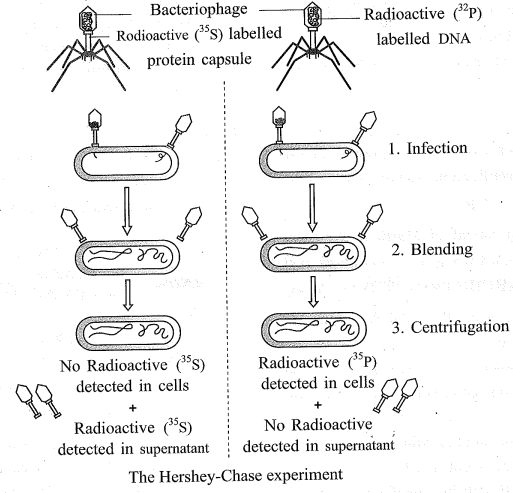
Explain with diagram - Hershey and Chase experiment.###On the basis of experimental proof explain the diagram that DNA is genetic material.###How did Hershey and Chase differentiate between DNA and protein in their experiment while proving that DNA is the genetic material?

Answer

→ The unequivocal proof that DNA is the genetic material came from the experiments of Alfred Hershey and Martha Chase (1952). They worked with viruses that infect bacteria called bacteriophages.
→ The bacteriophage attaches to the bacteria and its genetic material then enters the bacterial cell.
→ The bacterial cell treats the viral genetic material as if it was its own and subsequently manufactures more virus particles.
→ Hershey and Chase worked to discover whether it was protein or DNA from the viruses that entered the bacteria.
→ They grew some viruses on a medium that contained radioactive phosphorus and some others on medium that contained radioactive sulfur.
→ Viruses grown in the presence of radioactive phosphorus contained radioactive DNA but not radioactive protein because DNA contains phosphorus but protein does not.
→ Similarly, viruses grown on radioactive sulfur contained radioactive protein but not radioactive DNA because DNA does not contain sulfur.
→ Radioactive phages were allowed to attach to E.coli bacteria.
→ Then, as the infection proceeded, the viral coats were removed from the bacteria by agitating them in a blender.
→ The virus particles were separated from the bacteria by spinning them in a centrifuge.
→ Bacteria which was infected with viruses that had radioactive DNA were radioactive, indicating that DNA was the material that passed from the virus to the bacteria.
→ Bacteria that were infected with viruses that had radioactive proteins were not radioactive.
→ This indicates that proteins did not enter the bacteria from the viruses.
→ DNA is therefore the genetic material that is passed from virus to bacteria.
Image

Need a full question paper?

Generate a complete, print-ready paper with questions like this in minutes — across 16+ boards, with answer keys.

Start Generating Free

Similar questions

Read the following and answer any four questions from (i) to (v) given below:

Alcohols are important industrial solvents. Ethanol, methanol, propanol and butanol are produced commercially by fermentation activity of some fungi, majorly yeasts. During fermentation, yeast cells convert cereal derived sugars into ethanol and CO2 At the same time hundreds of secondary metabolites that influence the aroma and taste of alcohol are produced. Sugar concentration affects the rate of fermentation reactions. Yeast cannot grow in very strong sugar solution. In case of complex carbohydrate containing nutrient media, 1% malt or Rhizopus is used along with yeasts. Hydrolysis of starch is carried out at high temperature for 30 ruins. 'Tile crushed food mixed with hot water for obtaining malt in called mash. 'Tile nutrient medium prior to fermentation in called wort. Wort is cooled down to appropriate temperature and inoculated with strain of yeast.

  1. Tile rate of alcohol production is measured on the basis of:
  1. Amount of sugar present in the medium.
  2. Amount of CO2 produced per unit time.
  3. Amount of yeast added in the medium.
  4. All of these.
  1. A number of chemicals are produced at the time of alcoholic fermentation with the change of nutrient media, pH and aeration. Select such by-product from the following.
  1. Phenylethanol.
  2. Amyl alcohol.
  3. Glycerol.
  4. All of these.
  1. During alcoholic fermentation of cereals and potato, the crushed food mixed with hot water for obtaining malt is called:
  1. Juice.
  2. Mash.
  3. Wort.
  4. None of these.
  1. Distilled alcohol with 95% ethanol content is called:
  1. Absolute alcohol.
  2. Rectified spirit.
  3. Gin.
  4. Brandy.
  1. Assertion: Rhizopus or 1% malt is used in the nutrient medium when it contains complex carbohydrates.

Reason: Yeast does not possess sufficient diastase or amylase. 

  1. Both assertion and reason are true and reason is the correct explanation of assertion.
  2. Both assertion and reason are true but reason is not the correct explanation of assertion.
  3. Assertion is true but reason is false.
  4. Both assertion and reason are false.
Write a note Lac operon
A regulatory body working under MoEF for the release of transgenic crop is ____________:
  1. NBPGR
  2. NSC
  3. NIPGR
  4. GEAC
Read the following and answer any four questions from (i) to (v) given below:

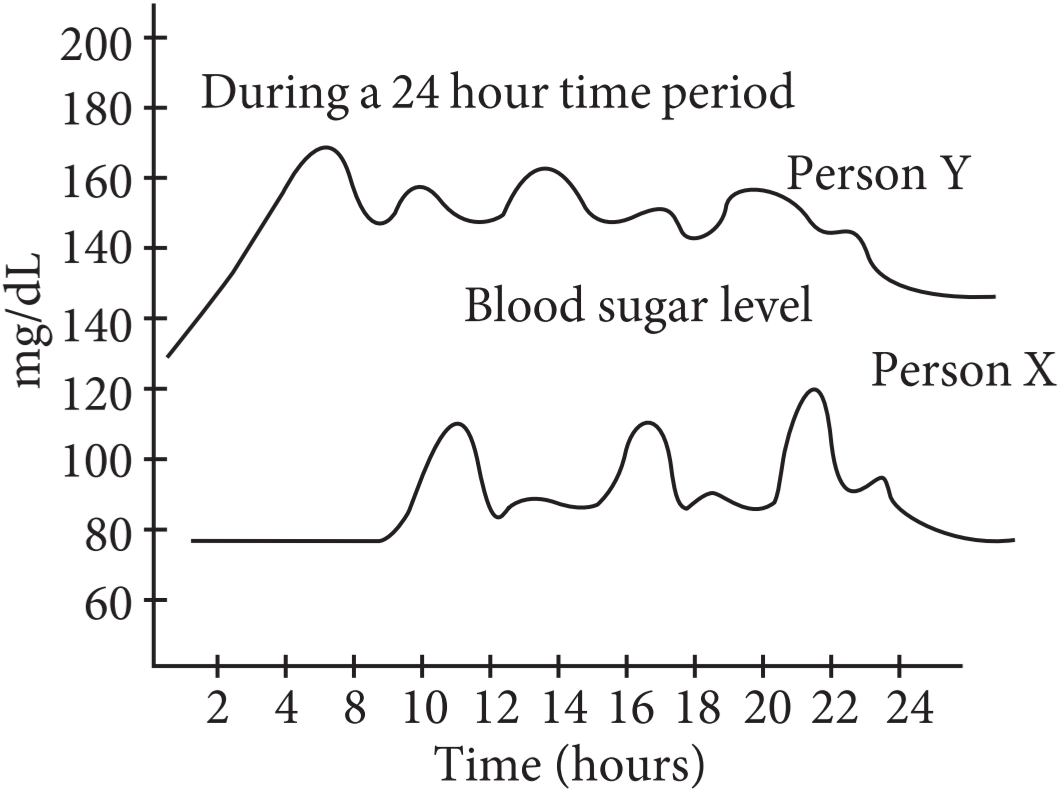
The given graphs show fluctuations in blood sugar of person X and Y during a 24 hour time period.

Based on the above information, answer the following questions.
  1. Which of the following holds true for person X?
  1. Person X is suffering from type I diabetes.
  2. Person X shows severe insulin deficiency and beta cell depletion.
  3. Person X is normal and shows good control of blood sugar level.
  4. Person X is subjected to excessive urination and abnormal thrust.
  1. The given graph indicates that person Y is suffering from.
  1. Diabetes
  2. Hypertension
  3. Atherosclerosis
  4. Rheumatic heart disease.
  1. Which of the following conditions are common in person Y?
  1. Excretion of glucose in urine and excessive urination.
  2. Polydipsia and mild beta cell depletion.
  3. Progressive erosion of articular cartilage at synovial joint.
  4. Both (a) and (b).
  1. A person suffering from diabetes mellitus becomes weak because.
  1. The cells are unable to utilise glucose and other carbohydrates for energy production.
  2. Degradation of fat increases production of toxic ketone bodies.
  3. Cells utilise proteins for obtaining energy
  4. All of these.
  1. Assertion: Type I diabetes involves failure of insulin to facilitate the movement of glucose into cells.

Reason: Type II diabetes is caused by failure of beta cells to produce adequate amount of insulin due to beta cell depletion.

  1. Both assertion and reason are true, and reason is the correct explanation of assertion.
  2. Both assertion and reason are true, but reason is not the correct explanation of assertion.
  3. Assertion is true, but reason is false.
  4. Both assertion and reason are false.
Read the following text carefully and answer the questions that follow:
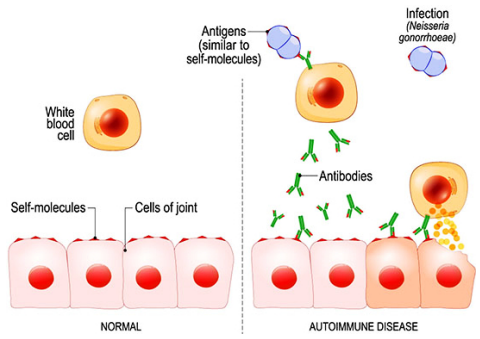
A healthy immune system defends the body against disease and infection. But if the immune system malfunctions, it mistakenly attacks healthy cells, tissues, and organs. Called autoimmune disease, these attacks can affect any part of the body, weakening bodily function and even turning life-threatening.
Image
i. Why are autoimmune diseases called degenerative diseases? (1)
ii. Name the autoimmune disease of body muscles. (1)
iii. Which types of immunity is provided by T-lymphocytes? (2)
OR
Which immune cells form humoral immune system? (2)
Describe tissue culture.
Explain Predation as population interaction with different example.
Read the following text carefully and answer the questions that follow:
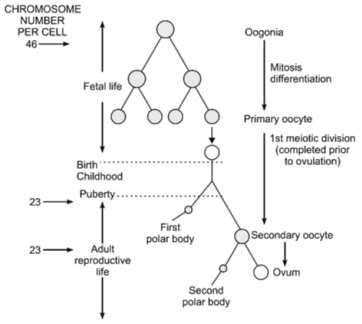
The process of formation of a mature female gamete is called oogenesis which is markedly different from spermatogenesis. A schematic representation of Oogenesis is shown below study the flow chart carefully.

Image
i. How is a primary oocyte different from a secondary oocyte? (1)
ii. Mention the changes taking place during the transition of a secondary follicle to Graafian follicle in the oogonia. (1)
iii. How many primary follicles are left in each ovary in a human female at puberty? (2)
OR
What happen to graafuan follicle after ovulation? (2)
Read the following text carefully and answer the questions that follow:
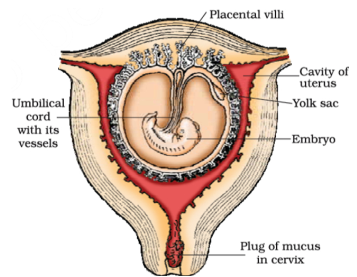
After implantation, finger-like projections appear on the trophoblast called chorionic villi which are surrounded by the uterine tissue and maternal blood. The chorionic villi and uterine tissue become interdigitated with each other and jointly form a structural and functional unit between the developing embryo (foetus) and the maternal body.
Image
i. Name the hormone crucial in parturition. Does the parturition signal originate from the mother or the fetus?(1)
ii. When and where do chorionic villi appear in humans? (1)
iii. Woman has conceived and implantation has occurred. Discuss the impact of progesterone and estrogen. (2)
OR
Fetal ejection reflex leads to parturition. Justify (2)
Read the following text carefully and answer the questions that follow:
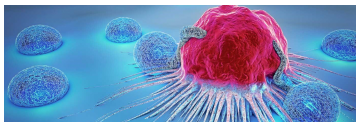
Cancer refers to any one of a large number of diseases characterized by the development of abnormal cells that divide uncontrollably and have the ability to infiltrate and destroy normal body tissue. Cancer often has the ability to spread throughout your body. Cancer is the second-leading cause of death in the world.
Image
i. How does a cancerous cell differ from a normal cell? (1)
ii. Benign tumor is less dangerous than malignant tumor. Why? (1)
iii. Describe causes of cancer. (2)
OR
Mention two methods of treatment of the disease. (2)