Question
Express the given information in Scientific notation (standard form) and then arrange them in ascending order of their size.
  Deserts of the world Area (in sq km)
$1$ Kalahari, South Africa $932,400$
$2$ Thar, India $199,430$
$3$ Gibson, Australia $155,400$
$4$ Great Victoria, Australia $647,500$
$5$ Sahara, North Africa $8,598,800$

Answer

1. Area of Kalahari, South Africa $=932,400$
$=932400.00\left[\therefore \text { standard form a } \times 10^{k}\right]$
$=9324 \times 10^2$
$=9.324 \times 10^3 \times 10^2$
$=9.324 \times 10^6$
2. Area of Thar, India $=199,430$
$=199430.00$
$=19943 \times 10^1$
$=1.9943 \times 10^4 \times 10^1$
$=1.9943 \times 10^5$
3. Area of Gibson, Australia $=155,400$
$=155400.00$
$=1554 \times 10^2$
$=1.554 \times 10^3 \times 10^2$
$=1.554 \times 10^5$
4. Area of Great Victoria, Australia $=647,500$
$=647500.00$$=6475 \times 10^2$
$=6.475 \times 10^3 \times 10^5$
$=6475 \times 10^5$
5. Area of Sahara, North-Africa $=8,598,800$
$=8598800.00$
$=85988 \times 10^2$
$=8.5988 \times 10^4 \times 10^2$
$=85988 \times 10^6$
Two numbers written in scientific notation can be compared.
The number with the larger power of $10$ is greater than the number with the smaller power of $10$.
If the powers of ten are the same, then the number with larger factor is the larger number.
Hence, required ascending order of the size will be
Gibson, Australia < Thar, India < Great Victoria, Australia < Kalahari, South Africa < Sahara, North-Africa.

Need a full question paper?

Generate a complete, print-ready paper with questions like this in minutes — across 16+ boards, with answer keys.

Start Generating Free

Similar questions

Draw a line l and draw another line m parallel to l at a distance of $4.3\ cm$ from it.
If $P=a^2-b^2+2 a b, Q=a^2+4 b^2-6 a b, R=b^2+b, S=a^2-4 a b$ and $T=-2 a^2+b^2-a b+a$.
Find $P+Q+R+S-T$.
Below $u, v, w$ and $x$ represent different integers, where $u = –4$ and $\text{x}\neq1$ By using following equations, find each of the values: $u \times v = u x \times w = w u + x = w$
$a. v$
$b. w$
$c. x$
Find the products given below and case verify the result for $a = 1, b = 2$ and $c = 3$. $\Big(\frac{4}{9} \text{abc}^3\Big)\times \Big(\frac{-27}{5} \text{a}^3 \text{b}^2\Big)\times(-8 \text{b}^3 \text{c})$
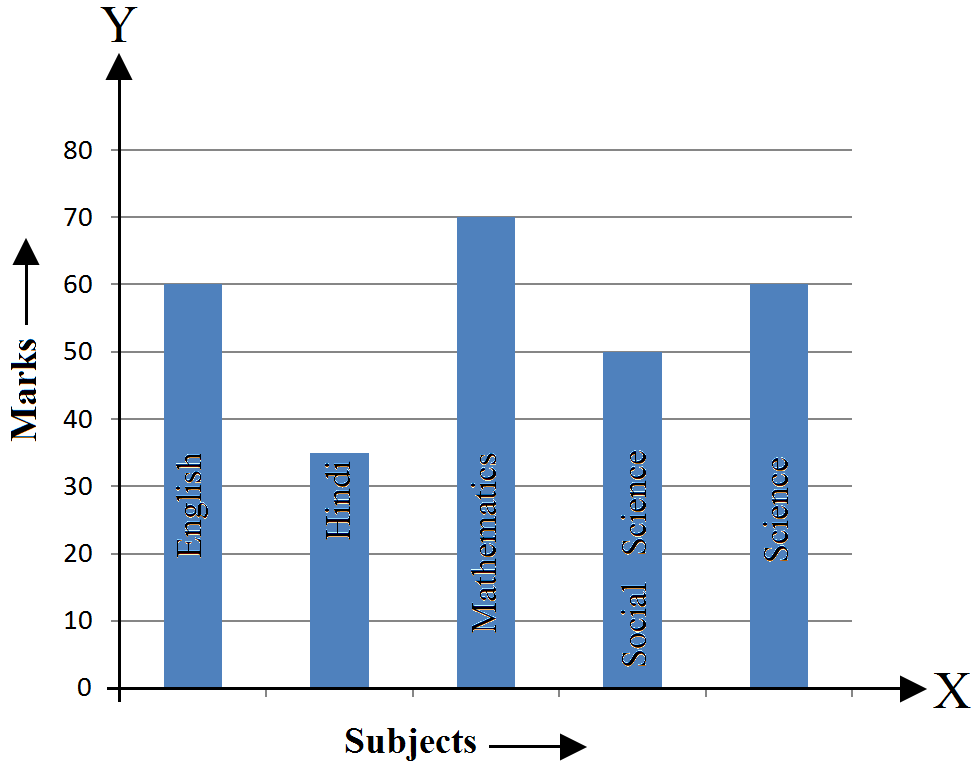
Look at the bar graph given below.

Read it care fully and answer the following questions.
$i.$ What information does the bar graph give?
$ii.$ In which subject is the student very good?
$iii.$ In which subject is the poor?
$iv.$ What is the average of his marks?
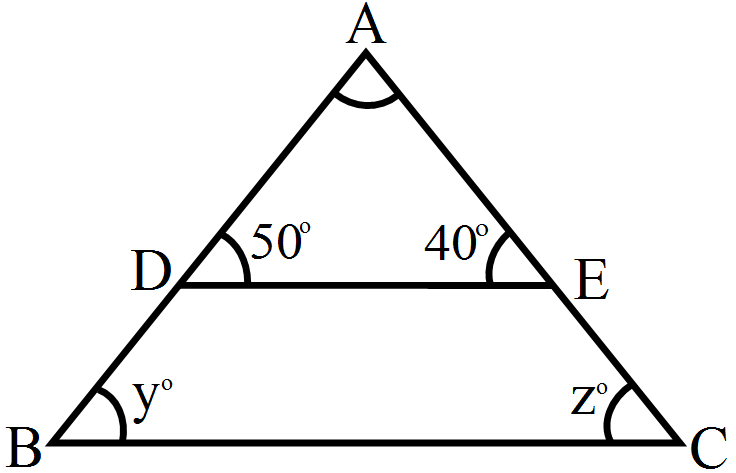
Find $x, y, z$ (whichever is required) from the figure given below:
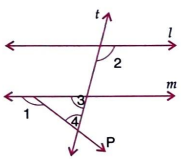
In Fig. line $l \| m, \angle 1=120^{\circ}$ and $\angle 2=100^{\circ}$, find out $\angle 3$ and $\angle 4$.
Image
The following table shows the life expectancy (average age to which people live) in various countries in a particular year. Represent this data by a bar graph.
Country
Japan
India
Britain
Ethiopia
Cambodia
Life expectancy (in years)
$76$
$57$
$70$
$43$
$36$
A dice is thrown $100$ times and the outcomes are noted as given below:
Outcome
$1$
$2$
$3$
$4$
$5$
$6$
Frequency
$21$
$14$
$18$
$15$
$23$
$9$
When a dice is thrown at random, what is the probability of getting a $(i)\ 3,\ (ii)\ 6,\ (iii)\ 6,\ (iv) \ 1?$
Find the missing value of p for the following distribution whose mean is $12.58$
x:
$5$ $8$
$10$
$12$
$p$ $20$ $25$
f:
$2$
$5$
$8$
$22$ $7$ $4$ $2$