Question
Factorise the expression and divide them as directed: $4yz (z^2+ 6z – 16) \div 2y (z + 8)$

Answer

$4yz (z^2+ 6z – 16) \div 2y (z + 8)$
$ = \frac{{4yz({z^2} + 6z - 16)}}{{2y(z + 8)}}$
$ = \frac{{2z({z^2} + 6z - 16)}}{{z + 8}}$
$ = \frac{{2z({z^2} + 8z - 2z - 16)}}{{z + 8}}$. . . . [Using Identity $IV]$
$ = \frac{{2z[z(z + 8) - 2(z + 8)]}}{{z + 8}}$
$ = \frac{{2z(z + 8)(z - 2)}}{{z + 8}}$
$= 2z (z – 2)$

Need a full question paper?

Generate a complete, print-ready paper with questions like this in minutes — across 16+ boards, with answer keys.
Start Generating Free

Similar questions

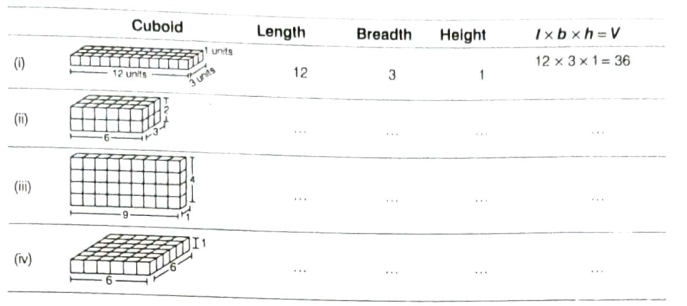
Take 36 cubes of equal size (i.e. length of each cube is same). Arrange them to form a cuboid. You can arrange them In many ways.
Observe the following table and fill in the blanks.
Image
Find the area of a trapezium whose parallel sides are of length $16\ dm$ and $22\ dm$ and whose height is $12\ dm.$
Verify the following:
$\frac{3}{7}\times\Big(\frac{5}{6}+\frac{12}{13}\Big)=\Big(\frac{3}{7}\times\frac{5}{6}\Big)+\Big(\frac{3}{7}\times\frac{12}{13}\Big)$
Find the side of a cube whose volume is $\frac{24389}{216}\text{m}^3.$
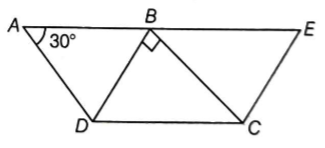
In the given figure, ABCD and BDCE are parallelograms with common base $D C$. If $B C \perp B D$, then find $\angle B E C$.
Image
Campus and Welfare Committee of school is planning to develop a blue shade for painting the entire school building. For this purpose various shades are tried by mixing containers of blue paint and white paint. In each of the following mixtures, decide which is a lighter shade of blue and also find the lightest blue shade among all of them.

If one container has one litre paint and the building requires $105$ litres for painting, how many container of each type is required to paint the building by darkest blue shade?
For each of the non-perfect cubes in Q. No. $20$ find the smallest number by which it must be. Divided so that the quotient is a perfect cube.
A decimal number is multiplied by itself. If the product is $51.84$, find the number.
The marks scored by $20$ students in a test are given below: $54, 42, 68, 56, 62, 71, 78, 51, 72, 53, 44, 58, 47, 64, 41, 57, 89, 53, 84, 57.$ Complete the following frequency table:
(Marks in class intervals) Tally marks Frequency (no. of children)
$40-50$    
$50-60$    
$60-70$    
$70-80$    
$80-90$    
What is the class interval in which the greatest frequency occurs$?$
The weekly pocket expenses (in rupees) of $30$ students of a class are given below: $62, 80, 110, 75, 84, 73, 60, 62, 100, 87, 78, 94, 117, 86, 65, 68, 90, 80, 118, 72, 95, 72, 103, 96, 64, 94, 87, 85, 105, 115$. Construct a frequency table with class intervals $60-70$ (where $70$ is not included), $70-80, 80-90$, etc.
