Question
Financial statements are prepared following the consistent accounting concepts, principles, procedures and also the legal environment in which the business organisations operate. These statements are the sources of information on the basis of which conclusions are drawn about the profitability and financial position of a company so that their users can easily understand and use them in their economic decisions in a meaningful way.
From the above statement, identify any two values that a company should observe while preparing its financial statements. Also, state under which major headings and sub-headings the following items will be presented in the Balance Sheet of a company as per Schedule III of the Companies Act, 2013:
  1. Capital Reserve.
  2. Calls-in-Advance.
  3. Loose Tools.
  4. Bank Overdraft.

Answer

Values that a company must observe while preparing its financial statements.
  1. The financial statements must be drawn following the accounting concepts, principles, procedures.
  2. The financial statements must be drawn following the ethical and legal framework.
Item
Major Head
Sub-Head
Capital Reserve.
Shareholder's Funds.
Reserves & Surplus.
Calls-in-Advance.
Current Liabilities.
Other Current Liabilities.
Loose Tools.
Current Assets.
Inventories.
Bank Overdraft.
Current Liabilities.
Short Term Borrowings.

Need a full question paper?

Generate a complete, print-ready paper with questions like this in minutes — across 16+ boards, with answer keys.

Start Generating Free

Similar questions

State the objectives of ‘Analysis of Financial Statements’.
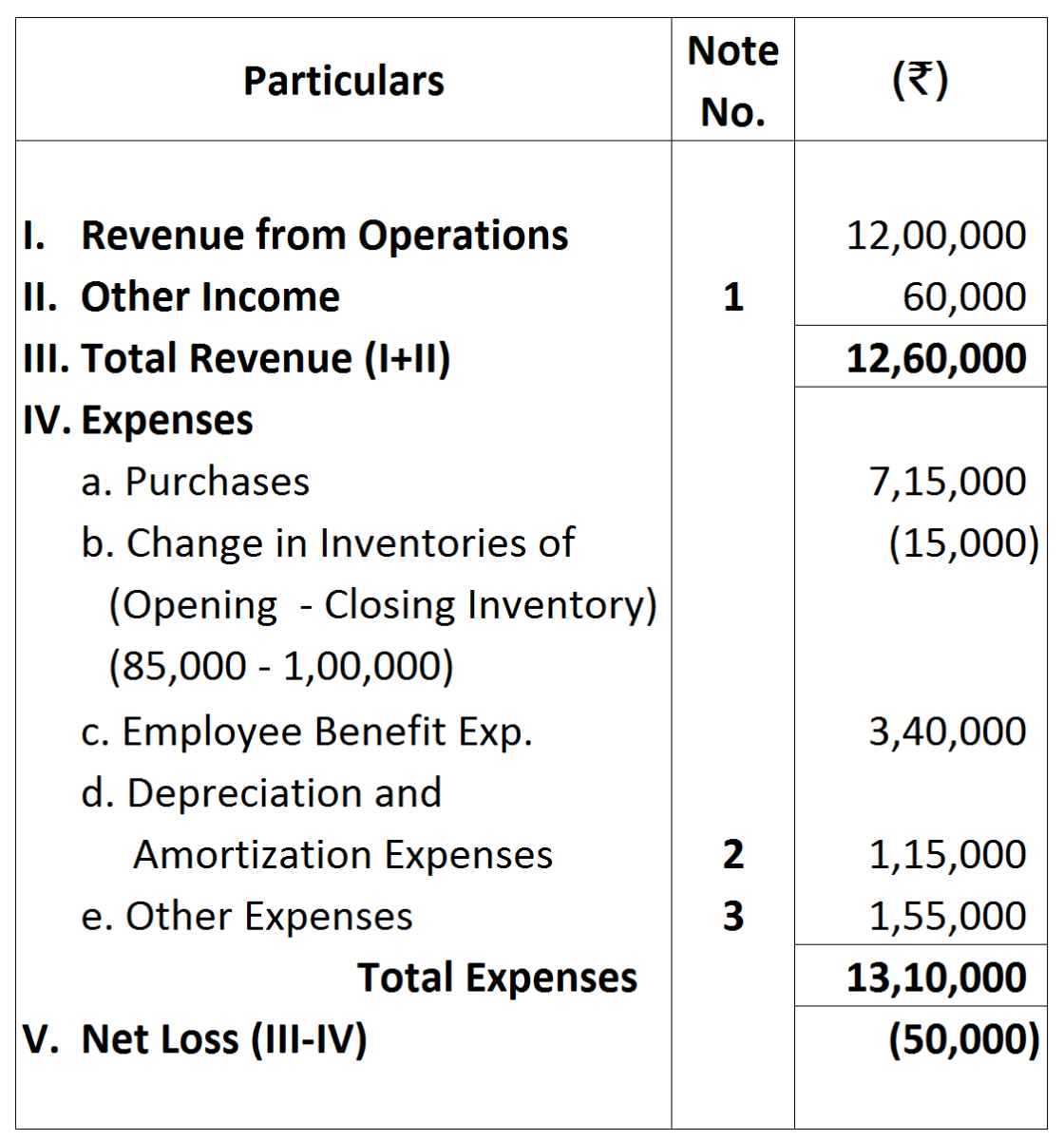
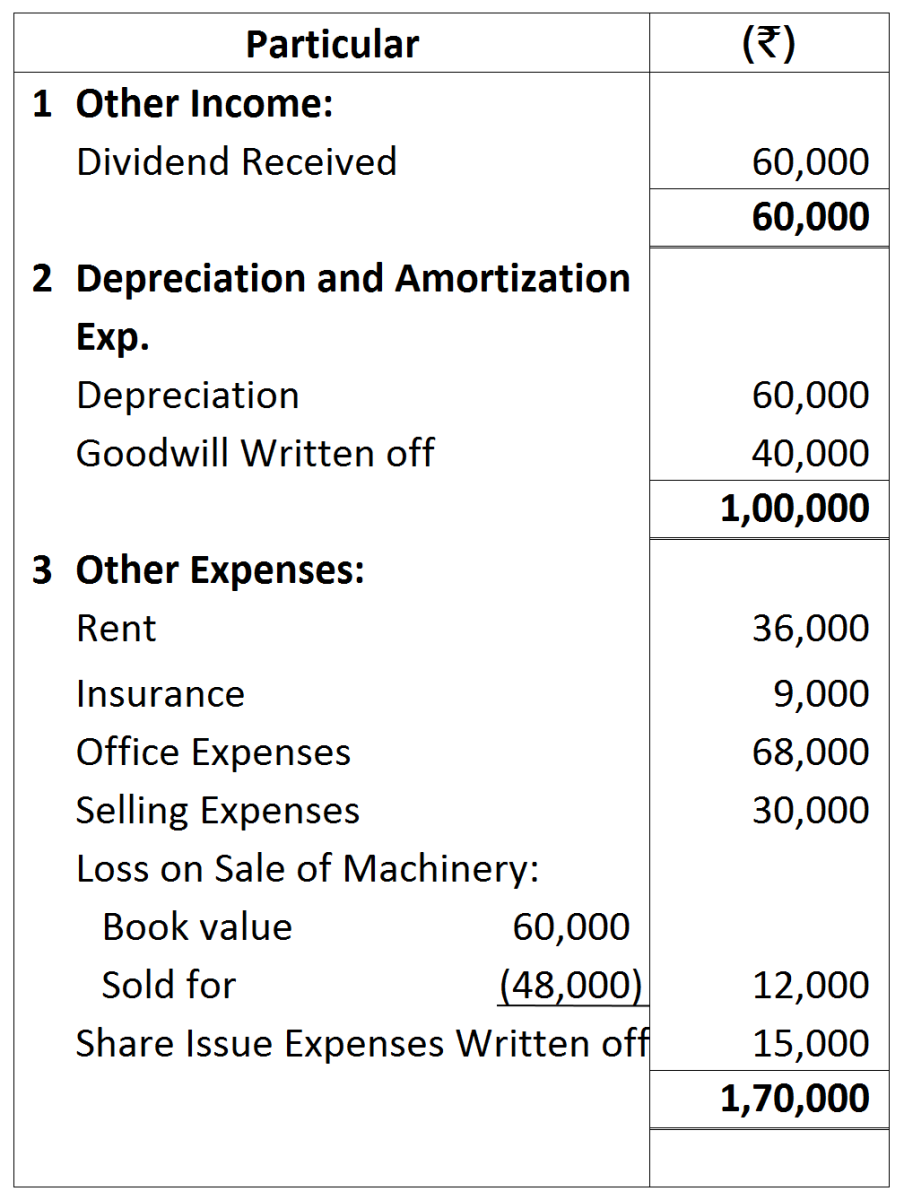
From the following Statement of Profit & Loss for the year ended on 31st March, 2018, calculate the amount of 'Cash generated from operating activities':
Notes:
Additional Information:
Outstanding Wages
40,000
Outstanding Salaries
30,000
Prepaid Insurance
3,000
A.Ltd. issued 50,00,000, 8% Debenture of ₹ 100 at a discount of 6% on April 01, 2000 redeemable at premium of 4% by draw of lots as under:
  1. 20,00,000 Debentures on March, 2002.
  2. 10,00,000 Debentures on March, 2004.
  3. 20,00,000 Debentures on March, 2005.
Compute the amount of discount to be written-off in each year till debentures are paid. Also prepare discount/loss on issue of debenture account.
XYZ Ltd. issued 5,000, 10% Debentures of ₹ 100 each on 1st April, 2015 at a discount of 10% redeemable at a premium of 10% after 4 years. Give journal entries for the year ended 31st March, 2016, assuming that the interest was payable half-yearly on 30th September and 31st March. Tax is to be deducted @ 10%.
Average Inventory ₹ 60,000; Inventory Turnover Ratio 5 Times; Selling price 40% above cost. Calculate Gross Profit Ratio.
Calculate Return on Investment (ROI) from the following details: Net Profit after Tax ₹ 6,50,000; Rate of Income Tax 50%; 10% Debentures of ₹ 100 each ₹ 10,00,000; Fixed Assets at cost ₹ 22,50,000; Accumulated Depreciation on Fixed Assets up to date ₹ 2,50,000; Current Assets ₹ 12.00,000: Current Liabilities ₹ 4,00,000.
What is Comparative Statement of Profit & Loss? How is it prepared?
Show the Share Capital in Company's balance sheet with imaginary figures.
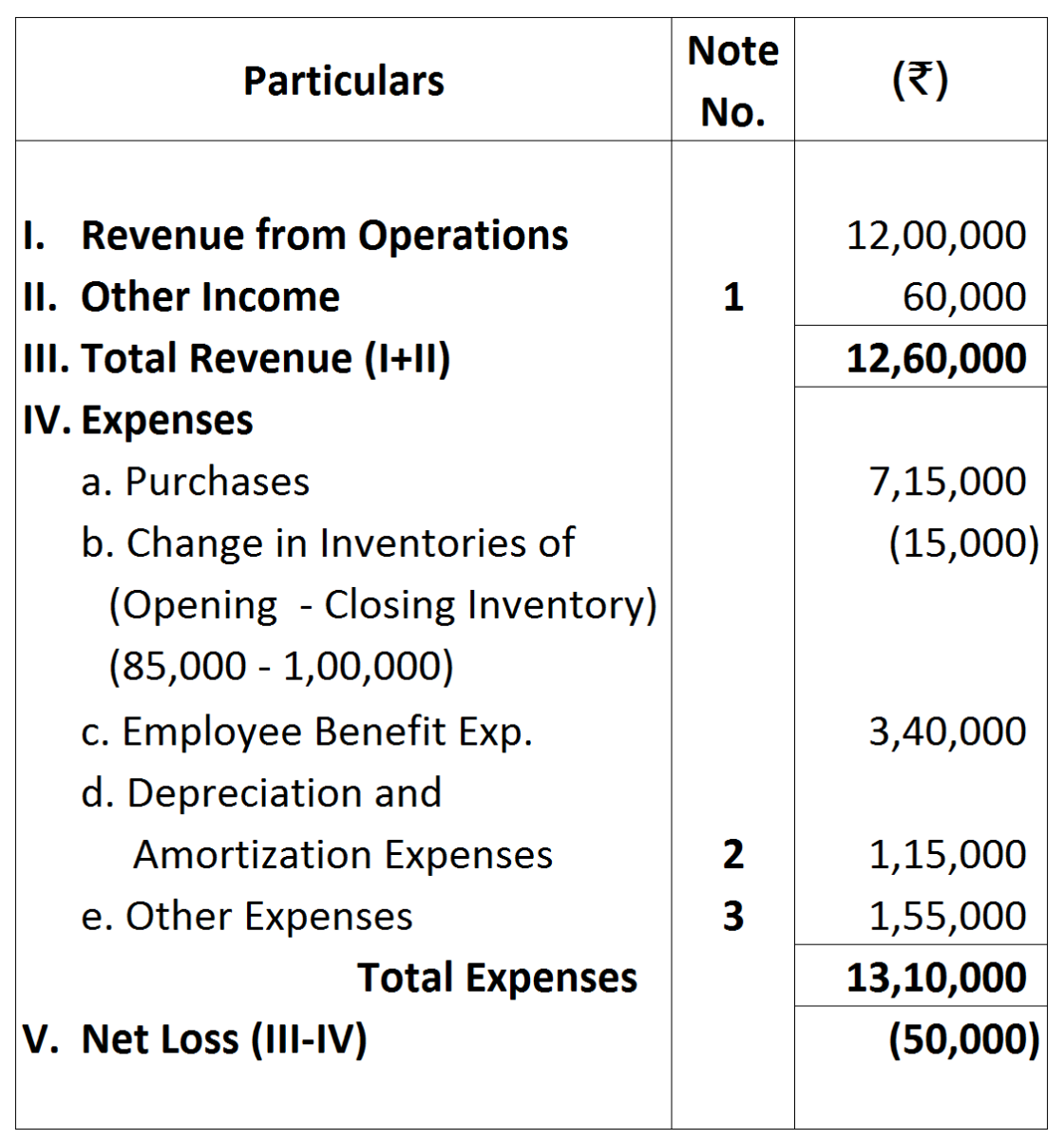
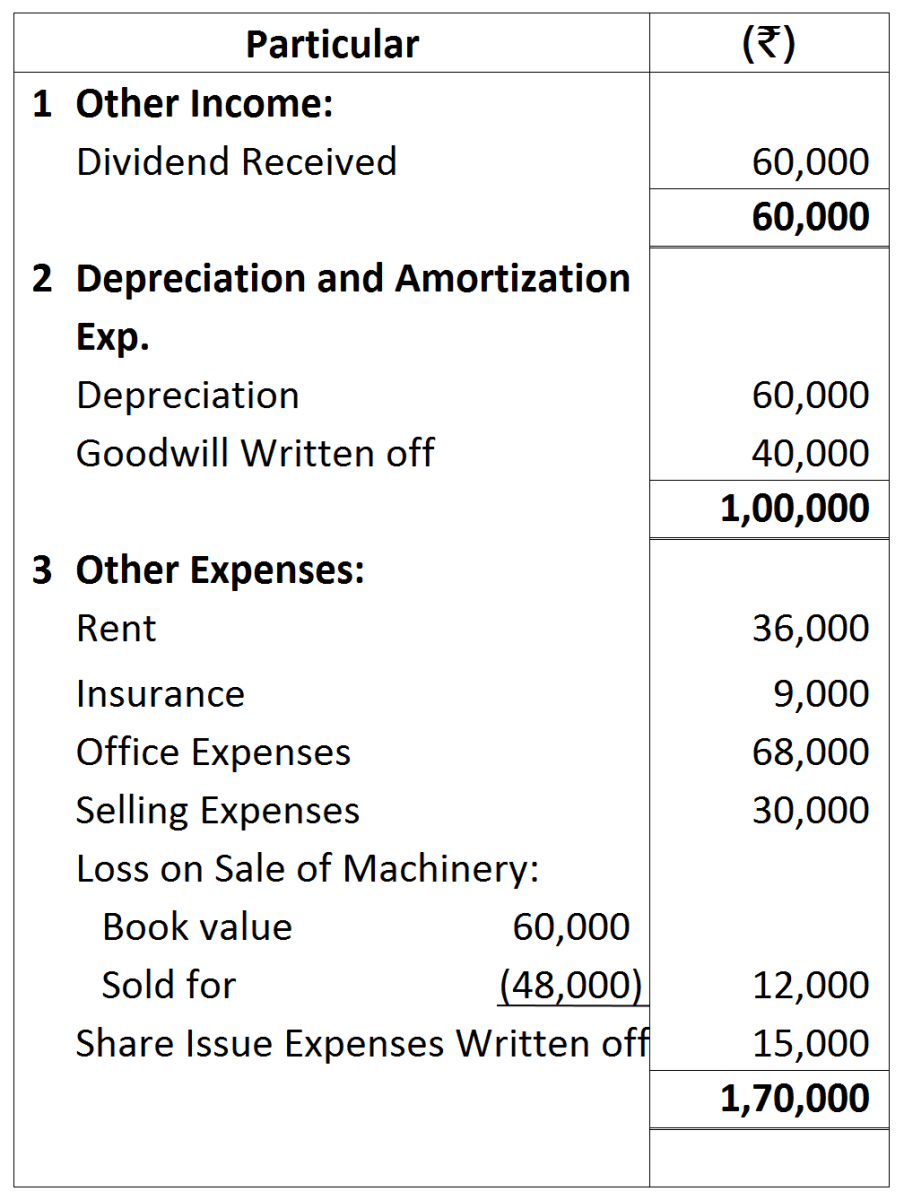
From the following Statement of Profit & Loss for the year ended on 31st March, 2018, calculate the amount of 'Cash generated from operating activities':
Notes:
Additional Information:
Outstanding Wages
40,000
Outstanding Salaries
30,000
Prepaid Insurance
3,000
Under which major headings the following items will be presented in the Balance Sheet of a company as per Schedule VI Part I of the Companies Act, 1956?
  1. Loans provided repayable on demand
  2. Goodwill
  3. Copyrights
  4. Loose tools
  5. Cheques
  6. General Reserve
  7. Stock of finished goods and
  8. 9% Debentures repayable after three years.