MCQ
Find the odd one out:
  • A
    Permanent change.
  • Reversible.
  • C
    Change in composition.
  • D
    Formation of new substance.

Answer

Correct option: B.
Reversible.
Permanent change, change in composition and formation of new substance all these are characteristics of a chemical changes while reversibility is not a characteristic of chemical changes.

Need a full question paper?

Generate a complete, print-ready paper with questions like this in minutes — across 16+ boards, with answer keys.
Start Generating Free

Similar questions

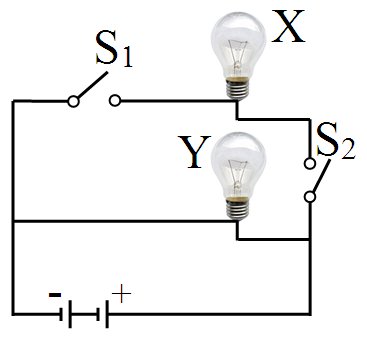
In the given diagram, there are two switches $S_1$ and $S_2$ and two bulbs $X$ and $Y.$ If switch $S_1,$ is closed and switch $S_2$ is open then:
_________ are microscopic plants living in water.
Directions: Read the passages given below and answer the questions that follow Passage Copper statues exposed to carbon dioxide and water in the air become coated with patina. The patina is not copper, it is not carbon dioxide, and not water. It is a new substance formed by the reaction of these chemicals with one another. The appearance of patina on copper statues when these are exposed to moist air is which type of change?
Which of the following sources of protein is different from others?
Which of the following part of cotton plant is used to obtain cotton fibre?
Select the object $(s)$ from the following options which has shine.
Name the phenomenon due to which our right ear appears as left ear when we see our face in the mirror.
DIRECTIONS: Read the passage (s) given below and answer the questions that/ allow Passage - Apart from drinking, there are so many activities for which we use water. Most of the water is in oceans and seas. We draw drinking water from taps which is further drawn from a well or a lake etc. We need water for which of the following?
In a rose flower, we find:
Read the given passage and fill in the blanks by choosing an appropriate option. Iron nails when new are grey and bright. When exposed to ___________ $(i)$ ___________, they get covered with a ___________ $(ii)$ ___________ coating. This process is called ___________ $(iii)$ ___________ and it is a ___________ $(iv)$ ___________ change.