MCQ
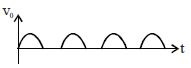
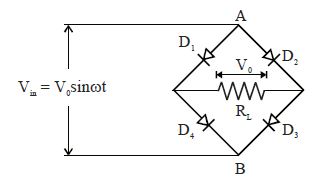
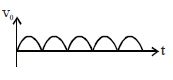
For a given circuit output voltage across load Resistance will be
  • A

  • B

  • Zero
  • D
    None of these

Answer

Correct option: C.
Zero
c

Need a full question paper?

Generate a complete, print-ready paper with questions like this in minutes — across 16+ boards, with answer keys.
Start Generating Free

Similar questions

A rectangular film of liquid is extended from $(4 \,\,cm \times 2\, cm)$ to $(5\,\, cm \times 4\, cm).$ If the work done is $3 \times 10^{-4}\, J,$ the value of the surface tension of the liquid is ............ $Nm^{-1}$
A uniform force of $(3\hat i + \hat j)$ newton acts on a particle of mass $2\, \ kg.$ Hence the particle is displaced from position $(2\hat i +\hat k)$ metre to position $(4\hat i+3\hat j-\hat k)$ metre. The work done by the force on the particle is $............. \mathrm{J}$
A ray of light is incident from a denser to a rarer medium. The critical angle for total internal reflection is ${\theta _{iC}}$ and Brewster's angle of incidence is ${\theta _{iB}}$, such that $\sin \,{\theta _{iC}}/\sin \,{\theta _{iB}} = \eta  = 1.28$. The  relative refractive index of the two media is
A $150\, m$ long train is moving to north at a speed of $10 \,m/s$. A parrot flying towards south with a speed of $5\, m/s$ crosses the train. The time taken by the parrot the cross to train would be........$s$
Two identical thin isosceles prisms of refracting angle $‘A’$ and refractive index $\mu$ are placed with their bases touching each other. Two parallel rays of light are incident on this system as shown. The distance of the point where the rays converge from the prism is :
For a particular ideal gas which of the following graphs represents the variation of mean squared velocity of the gas molecules with temperature?
The maximum potential energy of a block executing simple harmonic motion is $25\,J$. A is amplitude of oscillation. At $A / 2$, the kinetic energy of the block is $...............$
The work done by a force $\vec F = \left( { - 6{x^3}\hat i} \right)\,N$, in displacing a particle from $x = 4\, m$ to $x = -2\, m$ is  ................ $\mathrm{J}$
If $10^{9}$ electrons move out of a body to another body every second. how much time is required to get a total charge of $1 \,C$ on the other body?
A body starts moving unidirectionally under the influence of a sourceof constant power. Which one of the graph correctly shows the variation of displacement $(s)$ with time $(t)$?