MCQ
For a telescope to have large resolving power the
  • A
    Focal length of its objective should be large
  • B
    Focal length of its eye piece should be large
  • C
    Focal length of its eye piece should be small
  • Aperture of its objective should be large

Answer

Correct option: D.
Aperture of its objective should be large
d
(d) Resolving power $\propto$ aperture.

Need a full question paper?

Generate a complete, print-ready paper with questions like this in minutes — across 16+ boards, with answer keys.
Start Generating Free

Similar questions

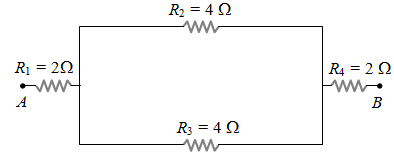
In the given figure, the equivalent resistance between the points A and B is
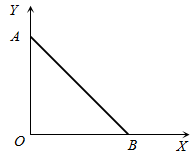
As per this diagram a point charge +q is placed at the origin O. Work done in taking another point charge -Q from the point A [co-ordinates (0, a) ] to another point B [co-ordinates (a, 0)] along the straight path AB is
A uniform wire of resistance $9\, ohm$ is bent in the form of a circle. The effective resistance across the points $A$ and $B$ is ............... $\Omega$
$X-$ rays are produced due to
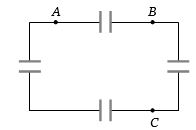
Four capacitors of each of capacity $3\,\mu F$ are connected as shown in the adjoining figure. The ratio of equivalent capacitance between $A$ and $B$ and between $A$ and $C$ will be
Two particles each of mass m and charge q are attached to the two ends of a light rigid rod of length 2R. The rod is rotated at constant angular speed about a perpendicular axis passing through its centre. The ratio of the magnitudes of the magnetic moment of the system and its angular momentum about the centre of the rod is
The de-Broglie wavelength of a particle accelerated with $150 volt$ potential is ${10^{ - 10}}m$. If it is accelerated by $600 volts$ $ p.d.$, its wavelength will be ........... $\mathop A\limits^o $
If the minimum wavelength obtained in an $X-$ ray tube is $2.5 \times {10^{ - 10}}m$, the operating potential of the tube will be.....$kV$
A particle of mass $m$ and charge $q$ enters a magnetic field $B$ perpendicularly with a velocity $v$, The radius of the circular path described by it will be
Half lives of two radioactive substances A and B are respectively 20 minutes and 40 minutes. Initially the sample of A and B have equal number of nuclei. After 80 minutes, the ratio of remaining number of A and B nuclei is