MCQ
For the following two acid-base reactions, which statement is True ?

$(I){\mkern 1mu} C{H_3}CH_2^ - {\mkern 1mu}  + {\mkern 1mu} \mathop {C{H_3}N{H_2}}\limits_{p{K_a} = 35}  \rightleftharpoons \mathop {C{H_3}C{H_3}}\limits_{p{K_a} = 50}  + C{H_3}N{H^ - }$

$(II){\mkern 1mu} {F^ - }{\mkern 1mu}  + {\mkern 1mu} \mathop {{H_2}O}\limits_{p{K_a} = 15.7}  \rightleftharpoons \mathop {HF}\limits_{p{K_a} = 3.2}  + H{O^ - }$

  • A
    $I$ is favoured to the right, $II$ is favoured to the left
  • B
    $I$ is favoured to the left, $II$ is favoured to the right
  • C
    $I$ is favoured to the right, $II$ is favoured to the right
  • D
    $I$ is favoured to the left; $II$ is favoured to the left
Answer

$(a)$ Acid base reaction favours formation of weak acid & weak base.

Need a full question paper?

Generate a complete, print-ready paper with questions like this in minutes — across 16+ boards, with answer keys.

Start Generating Free

Similar questions

Total planes in $CH_4$ which contains maximum number of atoms?
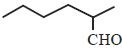
has correct $IUPAC$ name
Which of the following compound can show geometrical isomerism ?
The blotting paper absorbs liquids because :
Two equilibria, $AB \rightleftharpoons {A^ + } + {B^ - }$ and $AB + {B^ - } \rightleftharpoons AB_2^ - $ are simultaneously maintained in a solution with equilibrium constants, $K_1$ and $K_2$ respectively. The ratio of $[A^+]$ to $[AB_2^-]$ in the solution is
Dilution processes of different aqueous solutions, with water, are given in LIST-I. The effects of dilution of the solutions on $\left[ H ^{+}\right]$are given in $LIST-II$.

(Note: Degree of dissociation ( $\alpha$ ) of weak acid and weak base is $<<1$; degree of hydrolysis of salt $<<1 ;\left[ H ^{+}\right]$represents the concentration of $H ^{+}$ions)

$LIST-I$ $LIST-II$

$P$ $(10 mL $of  $0.1 M NaOH +20 mL$ $of 0.1 M $  acetic acid) diluted to  $60 mL$

$1$ the value of $\left[ H ^{+}\right]$does not change on dilution

$Q $ $(20 mL $ of $ 0.1 M NaOH +20 mL $of $0.1 M $ acetic acid) diluted to $ 80 mL$

$2$ the value of $\left[ H ^{+}\right]$changes to half of its initial value on dilution the value of $\left[ H ^{+}\right]$changes to two times of its initial value on dilution

$R$ $(20 mL $ of $ 0.1 M HCl +20 mL$of $0.1 M$ ammonia solution) diluted to $80 mL$

$3$ the value of $\left[ H ^{+}\right]$changes to $1 / \sqrt{2}$ times of its initial value on dilution

$S$ $10 mL$ saturated solution of Ni $( OH )_2$in equilibrium with excess

solid  Ni $( OH )_2$ s diluted to  $20 mL$ (solid  Ni $( OH )_2$ is still present afterdilution).

$4$the value of $\left[ H ^{+}\right]$changes to $\sqrt{2}$ times of its initial value on dilution
  $5$ the value of $\left[ H ^{+}\right]$changes to $\sqrt{2}$ times of its initial value on dilution

Match each process given in $LIST-I$ with one or more effect(s) in $LIST-II$. The correct option is

Which among the following elements has the highest first ionization enthalpy?
Supposing the electron of the $H-$atom is present in the $L-$shell. If it liberates $10.2\,eV,$ what is the energy of the system ? ............. $\mathrm{eV}$
What is the final temperature of $0.10\,mole$ monoatomic ideal gas that performs $75\,cal$ of work adiabatically if the initial temperature is $227\,^oC$ ?....$K$ (use $R = 2\,cal/K-mol$ ) 
Given below are two statements:

Statement $I$: $\mathrm{PF}_5$ and $\mathrm{BrF}_5$ both exhibit $\mathrm{sp}^3 \mathrm{~d}$ hybridisation.

Statement $II$: Both $\mathrm{SF}_6$ and $\left[\mathrm{Co}\left(\mathrm{NH}_3\right)_6\right]^{3+}$ exhibit $\mathrm{sp}^3 \mathrm{~d}^2$ hybridisation.

In the light of the above statements, choose the correct answer from the options given below: