Question
For the propagation of light wave, medium is required. This is according to:

Answer

  1. Huygen's theory
Explanation:
Huygens suggested that light may be a wave phenomenon produced by mechanical vibrations of an all pervading hypothetical homogenous medium called eather just like those in solids and liguid .This medium was supposed to be mass less with extremely high elasticity and very low density.

Need a full question paper?

Generate a complete, print-ready paper with questions like this in minutes — across 16+ boards, with answer keys.
Start Generating Free

Similar questions

A biconvex lens forms a real image of an object placed perpendicular to its principal axis. Suppose the radii of curvature of the lens tend to infinity. Then the image would(a) Disappear(b) Remain as real image still(c) Be virtual and of the same size as the object(d) Suffer from aberrations


Angle of minimum deviation for a prism of refractive index 1.5 is equal to the angle of prism. The angle of prism is (cos 41° = 0.75)(a) 62°(b) 41°(c) 82°(d) 31°
       
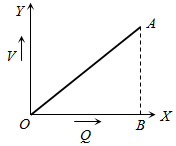
Change $Q$ on a capacitor varies with voltage $V$ as shown in the figure, where $Q$ is taken along the $X-$axis and $V$ along the $Y-$axis. The area of triangle $\text{OAB}$ represents
A galvanometer can be used as a voltmeter by connecting a(a) High resistance in series(b) Low resistance in series(c) High resistance in parallel(d) Low resistance in parallel
   
   
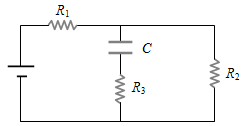
In the circuit here, the steady state voltage across capacitor $C$ is a fraction of the battery $\text{e.m.f.}$ The fraction is decided by
A $\pi^0$ at rest decays into $2\gamma$  rays $\pi^0 \rightarrow \gamma+\gamma .$ Then which of the following can happen
The distance between the body centred atom and a corner atom in sodium (a = 4.225 Å) is(a) 3.66 Å(b) 3.17 Å(c) 2.99 Å  (d) 2.54 Å
       
The dispersive power is maximum for the material(a) Flint glass(b) Crown glass(c) Mixture of both(d) None of the above
       
(USS 133) Indium impurity in germanium makes(a) N-type(b) P-type(c) Insulator(d) Intrinsic
       
A certain piece of silver of given mass is to be made like a wire. Which of the following combination of length (L) and the area of cross-sectional (A) will lead to the smallest resistance(a) L and A(b) 2L and A/2(c) L/2 and 2 A(d) Any of the above, because volume of silver remains same