MCQ
For $x \in R,\,\,\,\mathop {\lim }\limits_{x \to \infty } \,{\left( {\frac{{x - 3}}{{x + 2}}} \right)^x}$ is equal to
  • A
    $e$
  • B
    ${e^{ - 1}}$
  • ${e^{ - 5}}$
  • D
    ${e^5}$

Answer

Correct option: C.
${e^{ - 5}}$
c
(c) $\mathop {\lim }\limits_{x \to \infty } {\left( {\frac{{x + 2 - 5}}{{x + 2}}} \right)^x} = \mathop {\lim }\limits_{x \to \infty } {\left[ {{{\left( {1 - \frac{5}{{x + 2}}} \right)}^{\frac{{x + 2}}{{ - 5}}}}} \right]^{ - \,\frac{{5x}}{{x + 2}}}} = {e^{ - 5}}$ 

$\left( {\because \,\mathop {\lim }\limits_{x \to \infty } \frac{{ - 5x}}{{x + 2}} = \,\mathop {\lim }\limits_{x \to \infty } \frac{{ - 5}}{{1 + \frac{2}{x}}} =  - 5} \right)$.

Need a full question paper?

Generate a complete, print-ready paper with questions like this in minutes — across 16+ boards, with answer keys.
Start Generating Free

Similar questions

If a circle of unit radius is divided into two parts by an arc of another circle subtending an angle $60^o$ on the circumference of the first circle, then the radius of the arc is
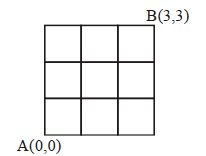
Total number of possible ways in which a person can go from $A$ to $B$ if he can travel only to the right or upward along the lines, is equal to
The point whose abscissa is equal to its ordinate and which is equidistant from the points $(1,0)$ and $(0,3)$ is
If $\tan \theta = \frac{{x\,\sin \,\phi }}{{1 - x\,\cos \,\phi }}$ and $\tan \,\phi = \frac{{y\sin \,\theta }}{{1 - y\,\cos \,\theta }}$, then $\frac{x}{y} = $
The inclination of the straight line passing through the point (-3, 6) and the mid-point of the line joining the point (4, -5) and (-2, 9) is:
If $\mathop {\lim }\limits_{n \to \infty } \frac{{{1^a} + {2^a} + ....... + {n^a}}}{{{{\left( {n + 1} \right)}^{a - 1}}\left[ {\left( {na + 2} \right) + ......\left( {na + n} \right)} \right]}} = \frac{1}{{60}}$ for some positive real number $a$, then $a$ is equal to 
Let $E$ denote the parabola $y^2=8 x$. Let $P=(-2,4)$, and let $Q$ and $Q^{\prime}$ be two distinct points on $E$ such that the lines $PQ$ and $PQ$ ' are tangents to $E$. Let $F$ be the focus of $E$. Then which of the following statements is (are) $TRUE$?

$(A)$ The triangle $PFQ$ is a right-angled triangle

$(B)$ The triangle $QPQ ^{\prime}$ is a right-angled triangle

$(C)$ The distance between $P$ and $F$ is $5 \sqrt{2}$

$(D)$ $F$ lies on the line joining $Q$ and $Q ^{\prime}$

The sides of a right angled triangle are in arithmetic progression. If the triangle has area $24$ , then what is the length of its smallest side ?
Let f : R × R be a function defined by $ \text{f}(\text{x}) = \cos(2\text{x} + 5)$, then f is:
Two vertices of a triangle $\mathrm{ABC}$ are $\mathrm{A}(3,-1)$ and $\mathrm{B}(-2,3)$, and its orthocentre is $\mathrm{P}(1,1)$. If the coordinates of the point $\mathrm{C}$ are $(\alpha, \beta)$ and the centre of the circle circumscribing the triangle $\mathrm{PAB}$ is $(h, k)$, then the value of $(\alpha+\beta)+2(h+k)$ equals :