MCQ
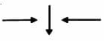
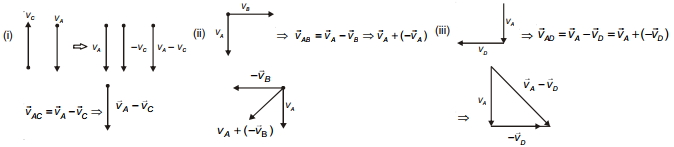
Four particles $A, B, C$ and $D$ are moving with constant speed $v$ each. At the instant shown relative velocity of $A$ with respect to $B, C$ and $D$ are in directions
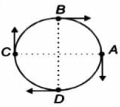
  • B

  • C

  • D

Answer

Correct option: A.

a
(a)

Need a full question paper?

Generate a complete, print-ready paper with questions like this in minutes — across 16+ boards, with answer keys.
Start Generating Free

Similar questions

Three capacitors are connected to $D.C.$ source of $100\;volts$ shown in the adjoining figure. If the charge accumulated on plates of ${C_1},\;{C_2}$ and ${C_3}$ are ${q_a},\;{q_b},\;{q_c},{q_d}.{q_e}$ and ${q_f}$ respectively, then
 A nucleus  $_n{X^m}$ emits one $\alpha$ particle and two $\beta$ particles. The resulting nucleus is
$64$ drops of mercury each charged to a potential of $10\,V$. They are combined to form one bigger drop. The potential of this drop will be.......$V$ (Assume all the drops to be spherical)
A uniform string resonates with a tuning fork, at a maximum tension of $32 \,N$. If it is divided into two segments by placing a wedge at a distance one-fourth of length from one end, then to resonance with same frequency the maximum value of tension for string will be ........... $N$
The maximum peak to peak voltage of an $AM$ wire is $24 \,mV$ and the minimum peak to peak voltage is $8\, mV$. The modulation factor is.....$\%$
The plots of intensity versus wavelength for three black bodies at temperatures $T_1, T_2$ and $T_3$ respectively are as shown. Their temperature are such that
A copper ball of radius $1\, cm$ and work function $4.47\,eV$ is irradiated with ultraviolet radiation of wavelength $2500\mathop A\limits^o $. The effect of irradiation results in the emission of electrons from the ball. Further the ball will acquire charge and due to this there will be a finite value of the potential on the ball. The charge acquired by the ball is
In charging a battery of motor-car, the following effect of electric current is used
A person is producing wave in string by moving his hand first up and then down. If frequency is $\frac{1}{8}\,Hz$ then find out time taken by particle which is at a distance of $9\,m$ from source to move to lower extreme first time .... $s$ . (Given $\lambda  = 24\, m$)
Two identical thin plano-convex glass lenses (refractive index $1.5$) each having radius of curvature of $20\,\, cm$ are placed with their convex surfaces in contact at the centre. The intervening space is filled with oil of refractive index $1. 7$ .  The focal length of the combination is.......$cm$