Question
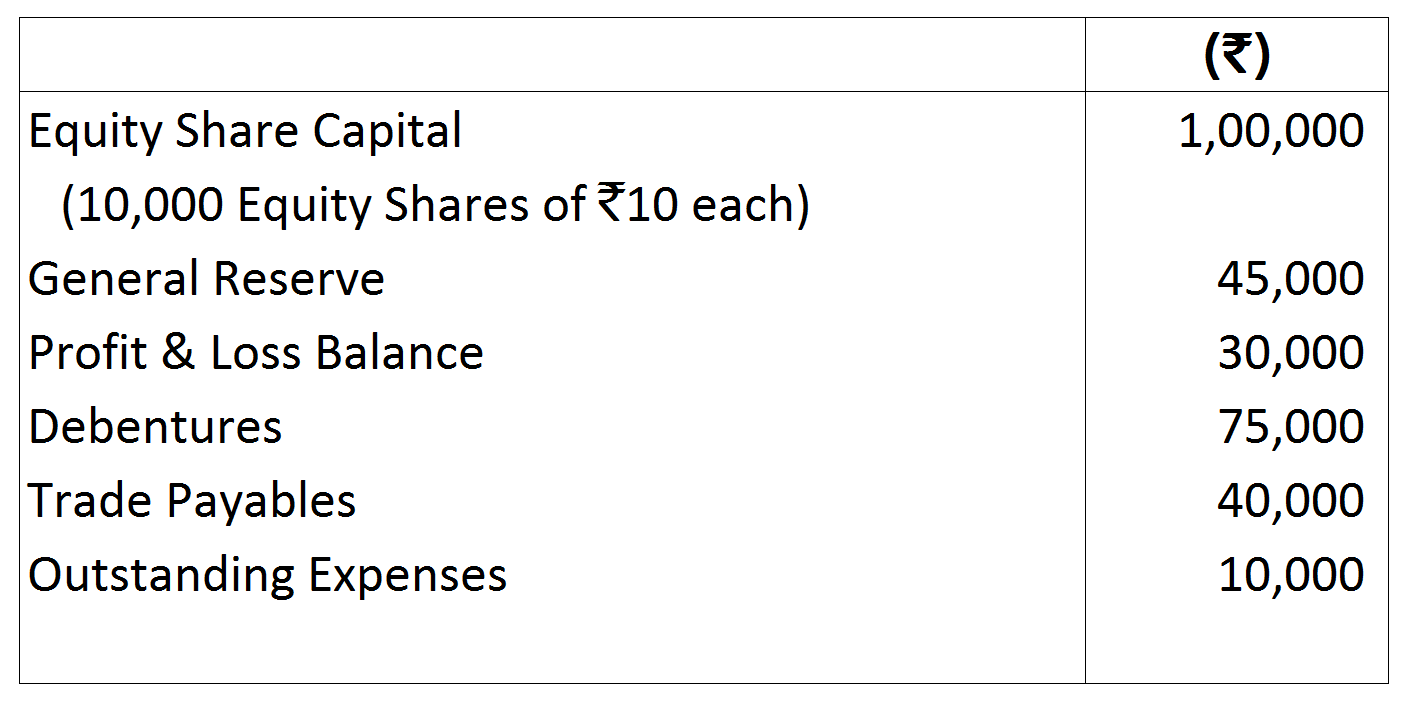
From the following, calculate the Debt-Equity Ratio:

Answer

Debt-Equity Ratio $=\frac{\text{Debt}}{\text{Equity}}= \frac{\text{Long Term Debts}}{\text{Shareholder's Funds}}$ Shareholder's Funds = Equity Share Capital + General Reserve + Profit & Loss Balance.
= ₹ 1,00,000 + ₹ 45,000 + ₹ 30,000
= ₹ 1,75,000
$=\frac{₹\ 75,000 }{₹\ 1,75,000}=0.43:1$

Need a full question paper?

Generate a complete, print-ready paper with questions like this in minutes — across 16+ boards, with answer keys.
Start Generating Free

Similar questions

From the following information, compute the amount to be shown in Note to Accounts on Employees Benefit Expenses:
Wages ₹ 5,40,000; Salaries ₹ 7,20,000; Bonus ₹ 1,05,000; Staff Welfare Expenses ₹ 60,000; and Business Promotion Expenses ₹ 50,000.
‘Tractors India Ltd.’ is registered with an authorized capital of ₹ 10,00,000 divided into 1,00,000 equity shares of ₹ 10 each. The company issued 50,000 equity shares at a premium of ₹ 5 per share. ₹ 2 per share were payable with application, ₹ 8 per share including premium on allotment and the balance amount on first and final call. The issue was fully subscribed and all the amount due was received except the first and final call money on 500 shares allotted to Balaram.Present the ‘Share Capital’ in the Balance Sheet of ‘Tractors India Ltd.’ as per Schedule VI Part I of the Companies Act, 1956. Also prepare Notes to Accounts for the same.
Net Profit after Interest but before Tax ₹ 65,000; Shareholder's Funds ₹ 3,00,000; 15% Long-Term Debt ₹ 1,00,000. Calculate Return on Investment.
Quick Assets ₹ 1,50,000; Inventory (Stock) ₹ 40,000; Prepaid Expenses ₹ 10,000; Working Capital ₹ 1,20,000. Calculate Current Ratio.
Hints:
  1. Current Assets = Quick Assets + Inventory + Prepaid Expenses.
  2. Current Liabilities = Current Assets - Working Capital.
A Company's inventory is ₹ 2,00,000. Total liquid assets are ₹ 8,00,000 and quick ratio is 2 : 1. Calculate the current ratio.
Z Ltd. purchased machinery from K Ltd. Z Ltd. paid K Ltd as follows:
  1. By issuing 5,000 equity shares of ₹ 10 each at a premium of 30%.
  2. By issuing 1000, 8% Debentures of ₹ 100 each at a discount of 10%.
  3. Balance by giving a promissory note of ₹ 48,000 payable after two months.
Pass necessary journal entries for the purchase of machinery and payment to K Ltd. in the books of Z Ltd.
From the following information, calculate Change in Inventory of Finished Goods:
Opening Inventory and Closing Inventory of Finished Goods ₹ 2,00,000 and ₹ 1,75,000 respectively.
Calculate Inventory Turnover Ratio from the following:
Opening ₹ 42,500; Closing Inventory ₹ 37,500; Revenue from Operations ₹ 3,00,000 (Sales); Gross Profit 20% on cost.
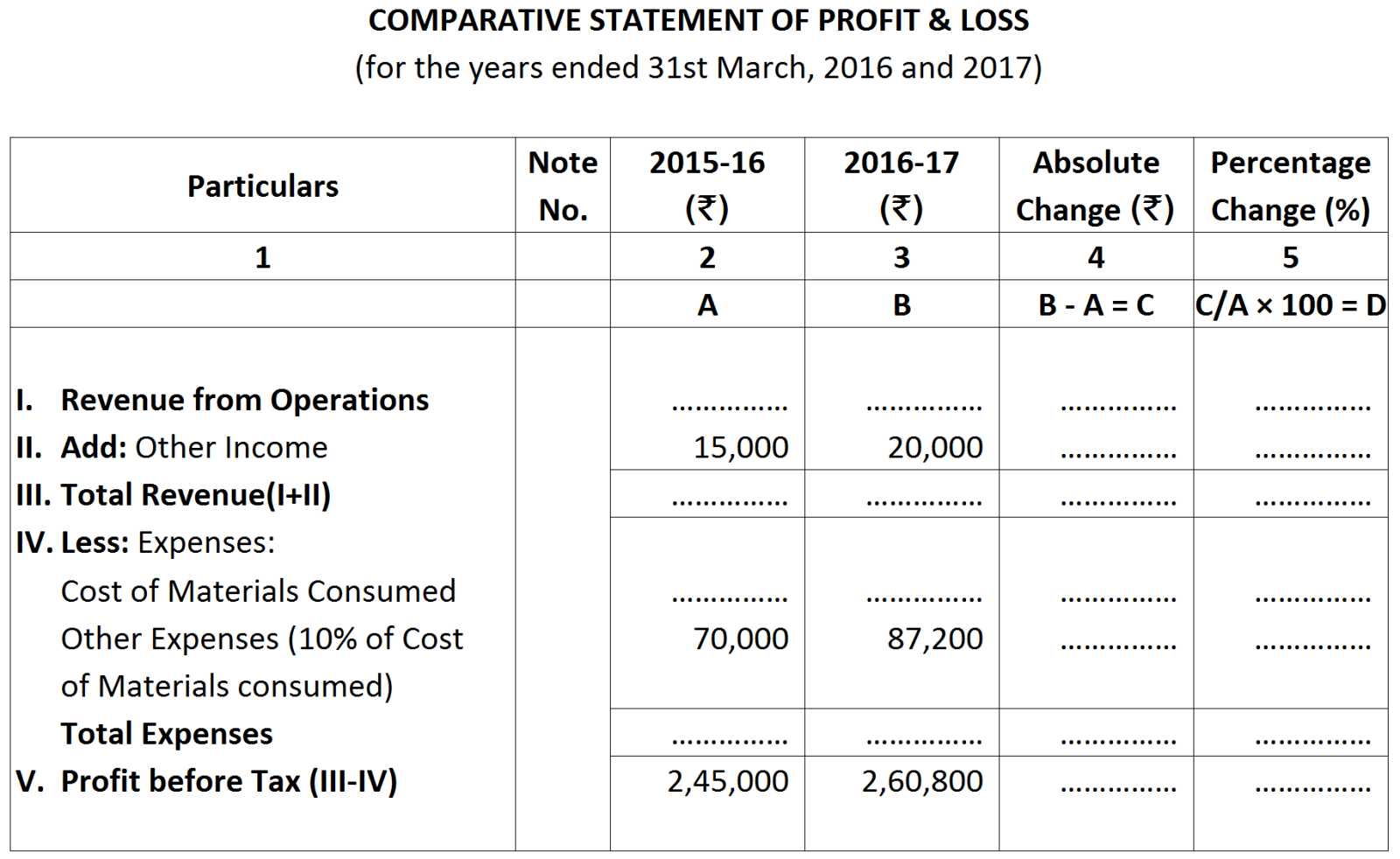
Jai Ltd. is into the business of shoe manufacturing. On the occasion of its silver jubilee, it decided to distribute 1,000 shoes free of cost to the students belonging to economically weaker section of the society. Following is the Comparative Statement of Profit & Loss of the Company:
You are required to:
  1. Fill in the missing figures in the Comparative Statment of Profit & Loss.
  2. Identif y the values involved.
Y Ltd. issued 12% Debentures of the face value of ₹ 6,00,000 at a discount of 5% repayable at par in equal proportion at the end of 5, 10 and 15 years.
Show the amount of discount to be written off at the end of each year.