Question
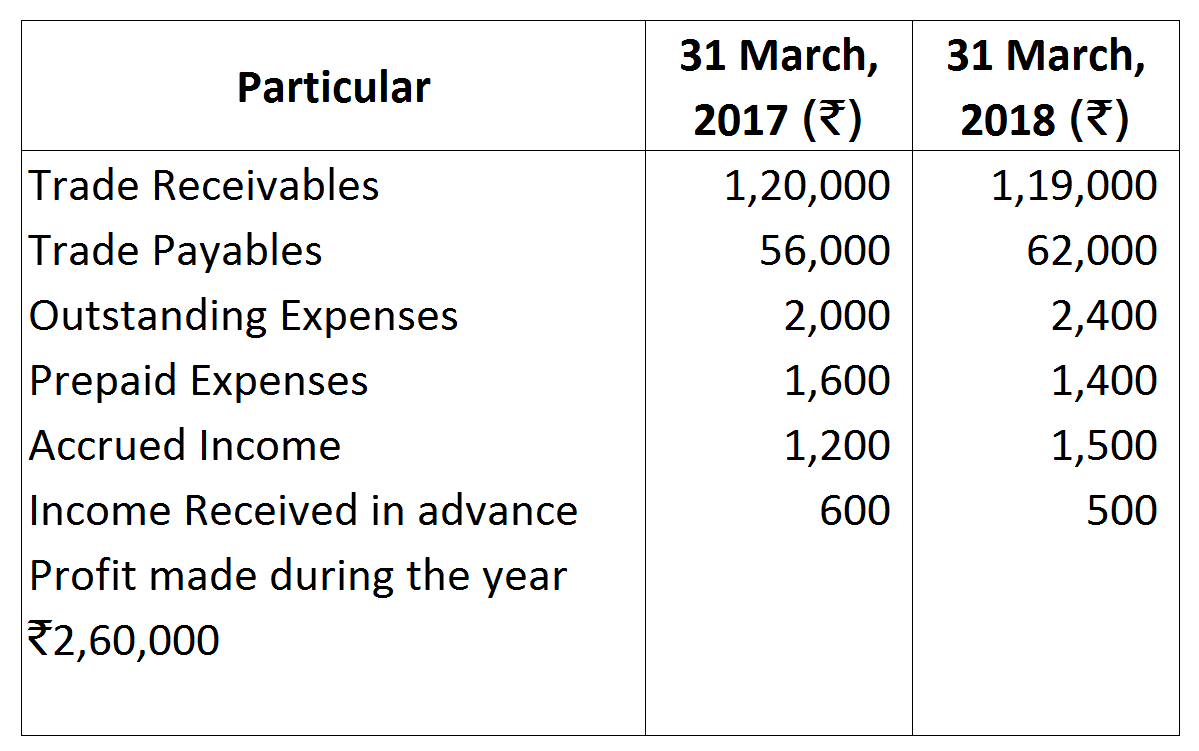
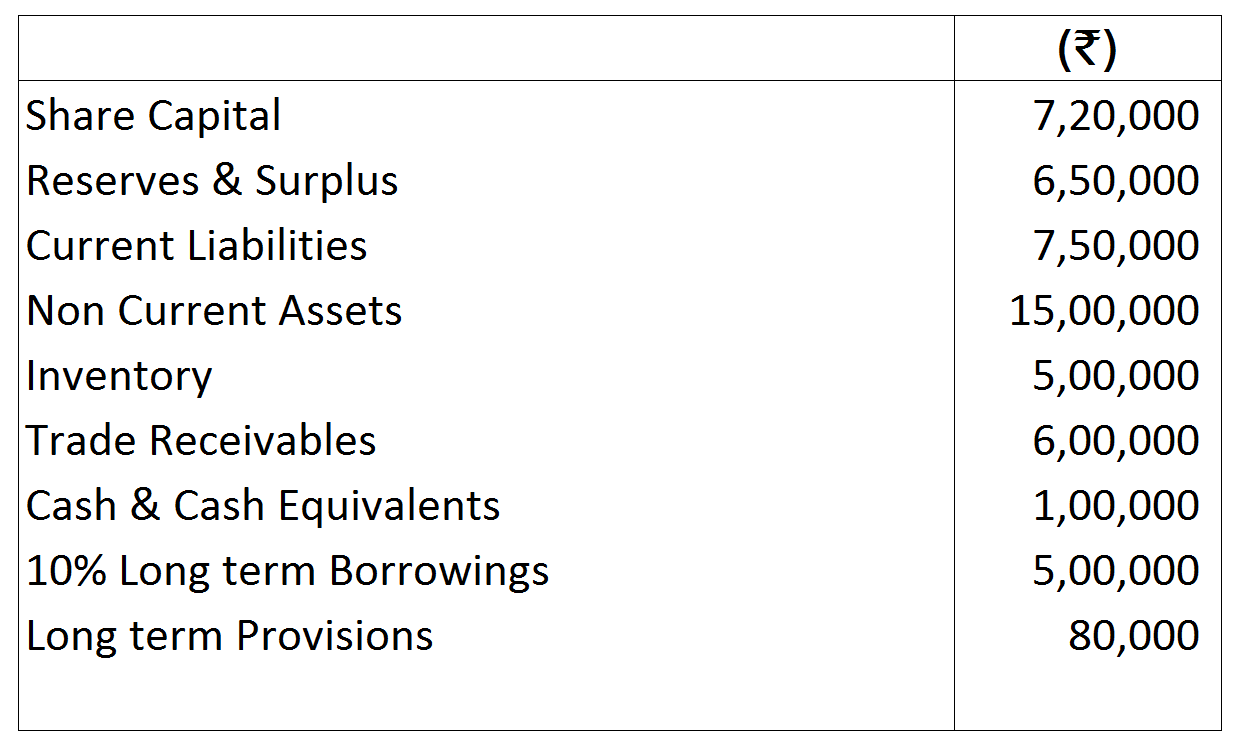
From the following figures, calculate Cash from operating activities:
Answer

Get the step-by-step solution for this question inside the Vidyadip app.

Get the answer in the app

Need a full question paper?

Generate a complete, print-ready paper with questions like this in minutes — across 16+ boards, with answer keys.
Start Generating Free

Similar questions

Average Inventory carried by a trader is ₹ 60,000; Inventory turnover ratio is 10 times. Goods are sold at a profit of 10% on cost. Find out the profit.
Revenue from Operations ₹ 4,00,000; Gross Profit ₹ 1,00,000; Closing Inventory ₹ 1,20,000; Excess of Closing Inventory over Opening Inventory ₹ 40,000. Calculate Inventory. Turnover Ratio.
Sandesh Ltd. took over the assets of ₹ 7,00,000 and liabilities of ₹ 2,00,000 from Sanchar Ltd. for a purchase consideration of ₹ 4,59,500. ₹ 8,500 were paid by accepting a draft in favour of Sanchar Ltd. payable after three months and the balance was paid by issue of equity shares of 10 each at a premium of 10% in favour of Sanchar Ltd.
Pass necessary journal entries for the above transactions in the books of Sandesh Ltd.
Cost of Revenue from Operations (Cost of Goods Sold) ₹ 5,00,000; Purchases ₹ 5,50,000; Opening Inventory ₹ 1,00,000. Calculate Inventory Turnover Ratio.
[Hint: Closing Inventory = Opening Inventory + Purchases - Cost of Revenue from Operations (Cost of Goods Sold).]
Calculate Operating Profit Ratio in the following:
Revenue from Operations (Net Sales) ₹ 3,60,000; Gross Profit 20% on Sales. Operating Expenses ₹ 18,000.
Z Ltd. purchased furniture costing ₹ 2,20,000 from C.D Ltd. The payment was to be made by issue of 9% Preference Shares of ₹ 100 each ata premium of ₹ 10 per share. Pass necessary Journal entries in the books of Z Ltd.
Equity Share Capital ₹ 15,00,000; Gross Profit on Revenue from Operations, i.e., Net Sales $33\frac{1}{3} \ \% ;$ Cost of Revenue from Operations or cost of Goods Sold ₹ 20,00,000; Current Assets ₹ 10,00,000; Current Liabilities ₹ 2,50,000. Calculate Working Capital Turnover Ratio.
Name any two items that are shown under the head 'other current liabilities and any two items that are shown under the head 'other current assets' in the balance sheet of a company as per Schedule III of the Companies Act, 2013.
Calculate Return on Capital Employed from the following:
Net Profit before tax ₹ 2,50,000.
From the following balance sheet of a company, calculate Debt-Equity Ratio:
Balance Sheet
ParticularsNote No.
I. Equity and Liabilities  
1. Shareholders' funds  
(a) Share capital 8,00,000
(b) Reserves and Surplus11,00,000
2. Share application money pending allotment 2,00,000
3. Non-Current Liabilities  
Long-term borrowings 1,50,000
Current liabilities 1,50,000
  14,00,000
II. Assets  
1. Non-Current Assets  
a) Fixed assets  
-Tangible assets211,00,000
2. Current Assets  
a) Inventories  
b) Trade receivables 90,000
c) Cash and cash equivalents 1,10,000
  14,00,000
Notes to Accounts 
 
1. Share Capital 
Equity Share Capital6,00,000
Preference Share Capital2,00,000
 8,00,000
Fixed Assets 
 
2. Tangible Assets: 
Plant and Machinery5,00,000
Land and Building4,00,000
Motor Car1,50,000
Furniture50,000
 11,00,000