Question
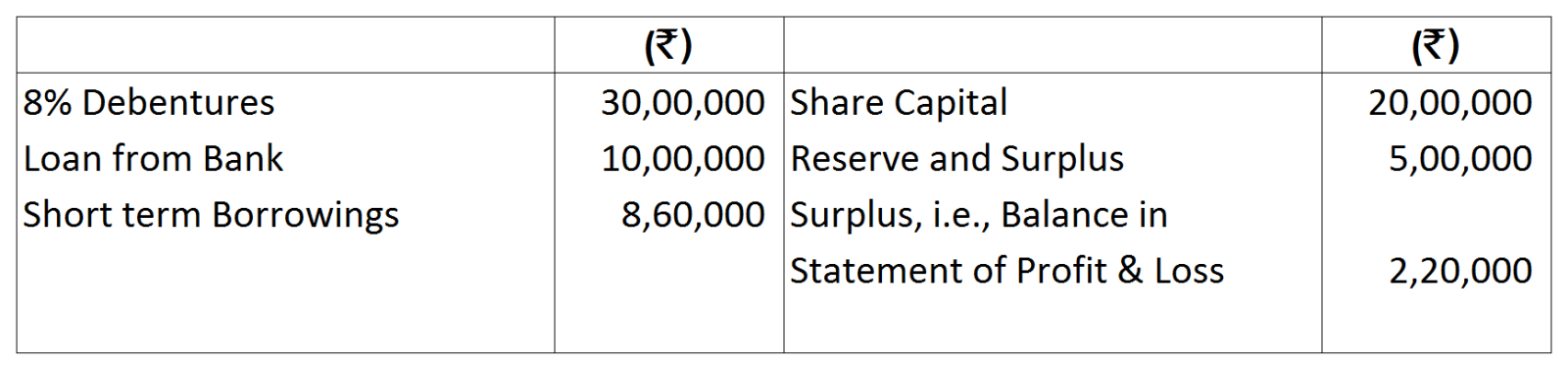
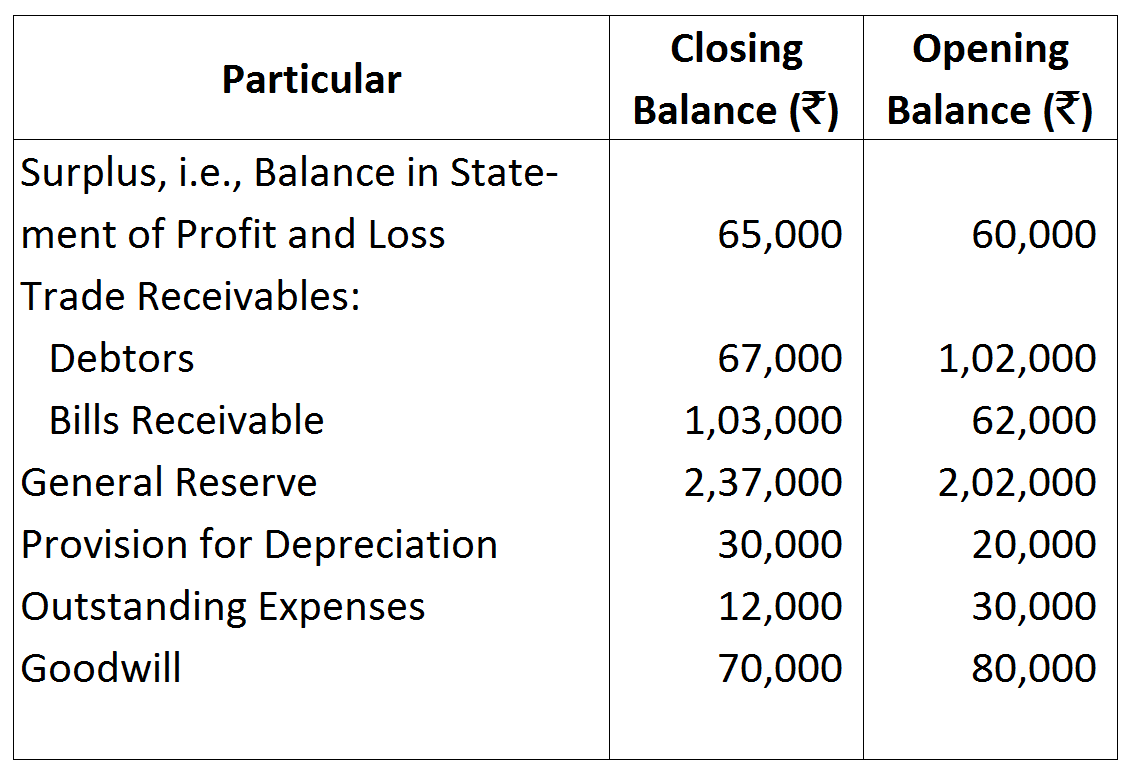
From the following information, calculate Total Assets to Debt Ratio:
Answer

Total Assets to Debt Ratio $=\frac{\text{Total Assets}}{\text{Long term Debts}}$
Long Term Debts = 8% Debentures + Loan from Bank.
= ₹ 30,00,000 + ₹ 10,00,000 = ₹ 40,00,000
Total Assets = Shareholder's Funds (i.e., Share Capital + Reserve and Surplus) + Total Debts (i.e., 8% Debentures + Loan from Bank + Short term Borrowings).
= ₹ 20,00,000 + ₹ 5,00,000 + ₹ 30,00,000 + ₹ 10,00,000 + ₹ 8,60,000 = ₹ 73,60,000
Total Assets to Debt Ratio $=\frac{73,60,000}{40,00,000}=1.84:1$
Note: Surplus i.e., Balance in Statement of Profit & Loss will be ignored since it is already included in Reserve and Surplus.

Need a full question paper?

Generate a complete, print-ready paper with questions like this in minutes — across 16+ boards, with answer keys.
Start Generating Free

Similar questions

On January 01, 1998, X. Ltd. issues 5,000, 8% Debentures of ₹ 100 each repayable at par at the end of three years. It has been decided to set up a cumulative sinking fund for the purpose of their redemption. The investments are expected to realise 4% net. The Sinking Fund Table shows that ₹ 0.320348 amounts to one rupee @4% per annum in three years. On December 31, 2000 the balance at bank was ₹ 2,42,360 and the investments realised ₹ 3,25,000. The debentures were paid off.
Give journal entries and show ledger account.
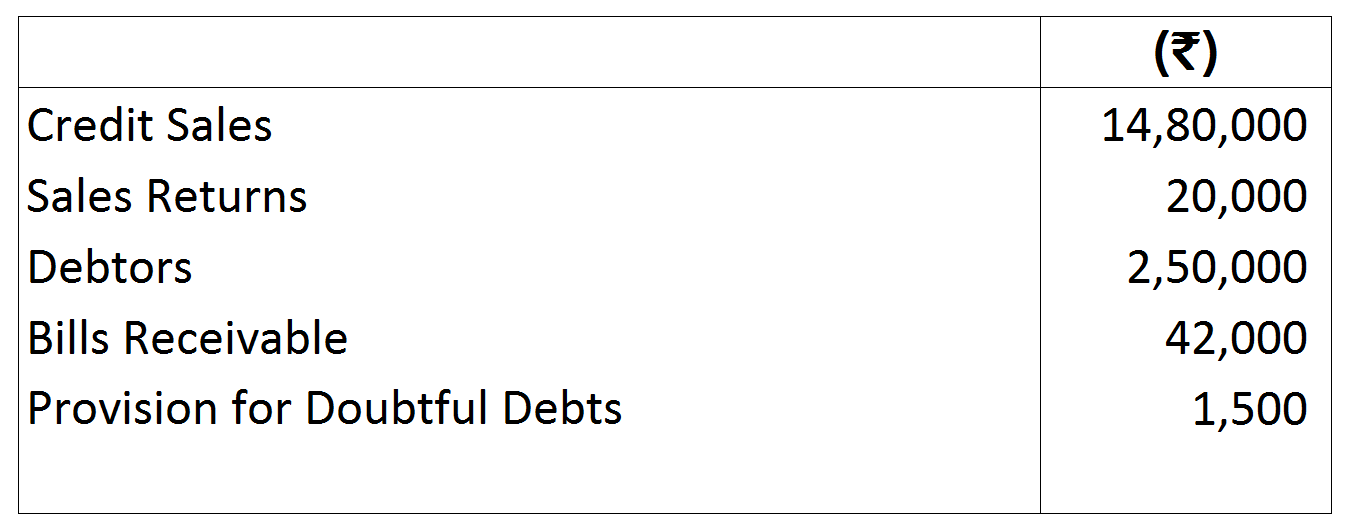
From the following information, calculate trade receivables turnover ratio and average collection period:
Compute Cash Flow from Operating Activities from the following:
An asset costing ₹ 40,000 having book value of ₹ 28,000 was sold for ₹ 36,000.
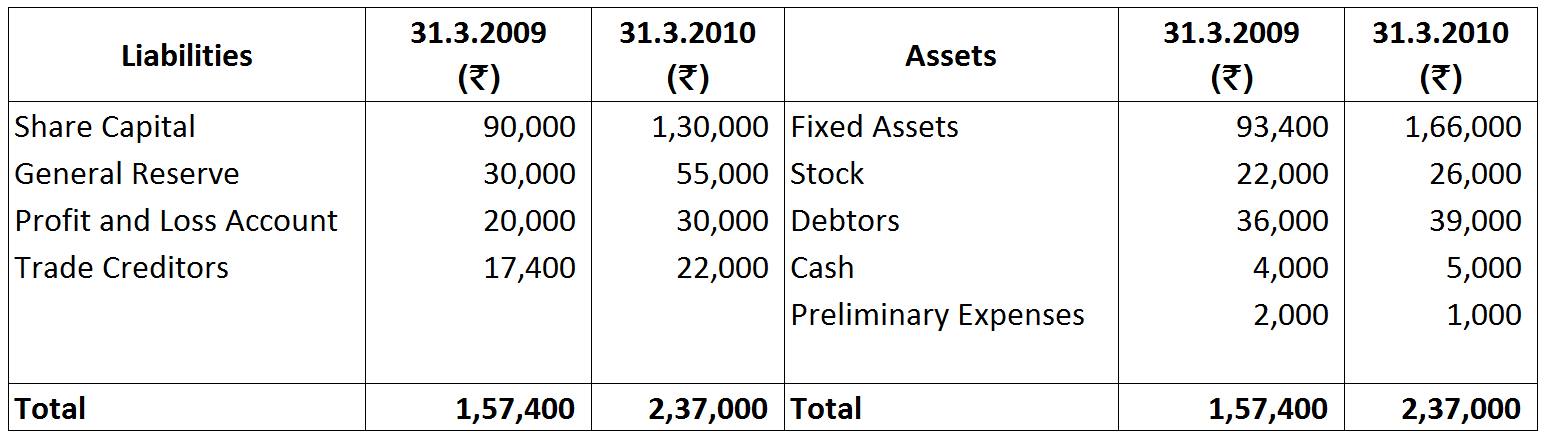
From the following Balance Sheets of Vikas Ltd. as on 31.3.2009 and 31.3.2010, prepare a Cash Flow Statement:

Additional Information:
  1. Depreciation charged on fixed assets for the year 2009 - 2010 was ₹ 20,000.
  2. Income Tax ₹ 5,000 has been paid in advance during the year.
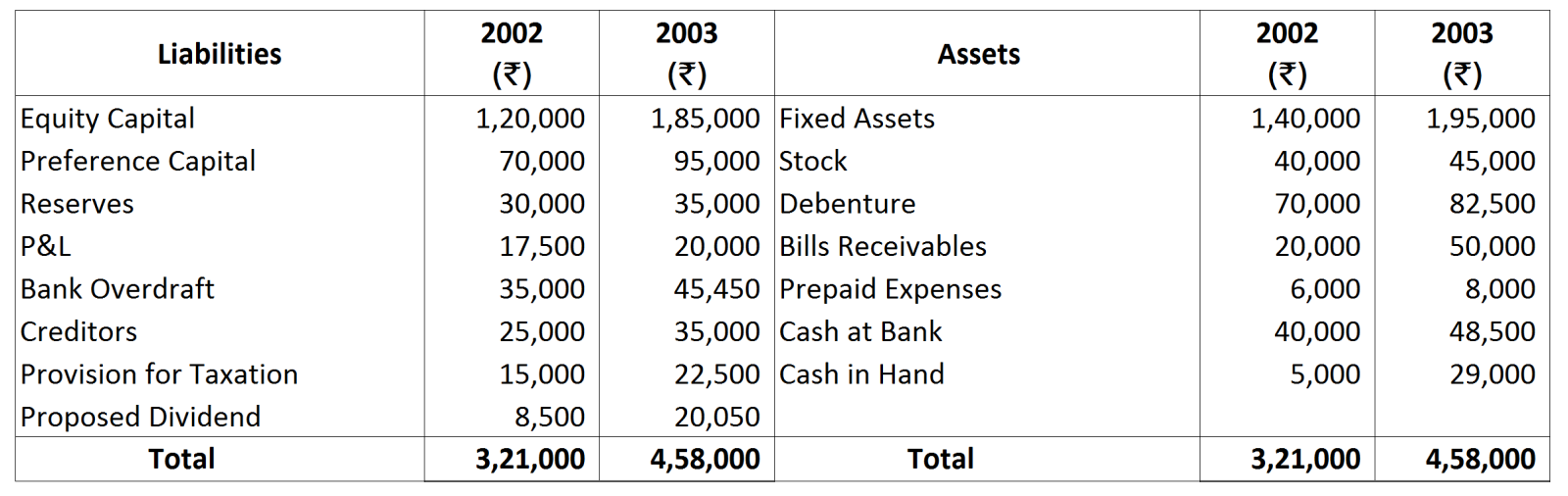
The following are the balance sheets of Devi Co. Ltd at the end of 2002 and 2003. Prepare a Comparative Balance Sheet and study the financial position of the concern.
Gopal Ltd. was registered with an authorised capital of ₹ 50,00,000 divided into Equity Shares of ₹ 100 each. The company offered for public subscription all the shares. Public applied for 45,000 shares and allotment was made to all the applicants. All the calls were made and were duly received except the final call of ₹ 20 per share on 500 shares.
Prepare the Balance Sheet of the company showing the different types of share capital.
Show the forfeiture and reissue entries under the following cases:
Z Ltd. forfeited 250 shares of ₹ 10 each, fully called-up held by Mr. C for non-payment of allotment money of 3 per share and first and final call money of 4 per share. these shares were reissued @ ₹ 8 per share as fully paid-up to Mr.P.
From the following information, calculate Net Profit before Tax and Extraordinary Items:
Surplus, i.e., Balance in Statement of Profit and Loss (Opening)
1,00,000
Surplus, i.e., Balance in Statement of Profit and Loss (Closing)
3,36,000
Dividend paid in the current year
72,000
Interim Dividend Paid during the year
90,000
Transfer to Reserve
1,00,000
Provision for Tax for the current year
1,50,000
Refund of Tax
3,000
Loss due to Earthquake
2,00,000
Insurance Proceeds from Earthquake disaster settlement
1,00,000
SRCC Ltd. was registered with a capital of ₹ 25,00,000 in shares of ₹ 10 each. It issued a prospectus inviting applications for 25,000 shares at 40% premium payabl;e as follows:
On application ₹ 5 (including ₹ 1 premium), on Allotment ₹ 4 (including ₹ 1 premium), on first call ₹ 3 (including ₹ 1 premium), on second and final call ₹ 2 (including ₹ 1 premium).
Applications were received for 25,000 shares. All money was duly received. Pass the necessary Journal entries.
  1. Net Profit after Interest but before tax: ₹ 1,40,000; 15% long-term debts: ₹ 4,00,000; Shareholders funds: ₹ 2,40,000; Tax rate 50%. Calculate Return on Capital Employed.
  2. Opening Stock: ₹ 60,000; Closing Stock: ₹ 1,00,000; Stock Turnover Ratio 8 times; Selling price 25% above cost. Calculate the Gross Profit Ratio.