Question
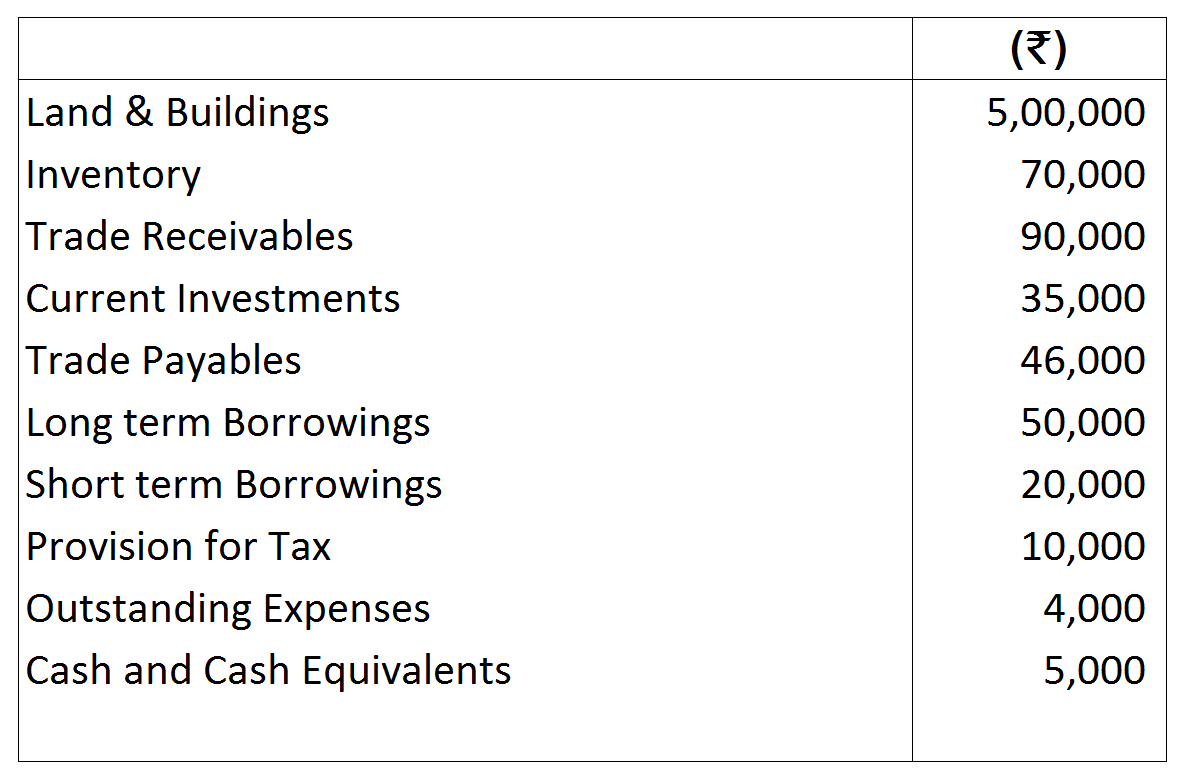
From the following particulars compute the Current Ratio:
Answer

Current Ratio $=\frac{\text{Current Assets}}{\text{Current Liabilities}}$
Current Assets = Inventory + Trade Receivables + Current Investments + Cash and Cash Equivalents.
= ₹ 70,000 + ₹ 90,000 + ₹ 35,000 + ₹ 5,000
= ₹ 2,00,000
Current Liabilities = Trade Payables + Short term Borrowings + Provision for Tax + Outstanding Expenses.
= ₹ 46,000 + ₹ 20,000 + ₹ 10,000 + ₹ 4,000
= ₹ 80,000
Current Ratio $=\frac{₹\ 2,00,000}{₹\ 80,000}=2.5:1$

Need a full question paper?

Generate a complete, print-ready paper with questions like this in minutes — across 16+ boards, with answer keys.
Start Generating Free

Similar questions

Z Ltd. purchased furniture costing ₹ 2,20,000 from C.D Ltd. The payment was to be made by issue of 9% Preference Shares of ₹ 100 each ata premium of ₹ 10 per share. Pass necessary Journal entries in the books of Z Ltd.
Journalise the following:
Y Ltd. forfeited 400 shares of ₹ 100 each, issued at a premium of ₹ 5 per share (to be paid at the time of allotment) for non-payment of a first call of ₹ 20 per share. The second and final call of ₹ 20 has not yet been called. Out of these, 100 shares were re-issued on fully paid-up for ₹ 110 per share.
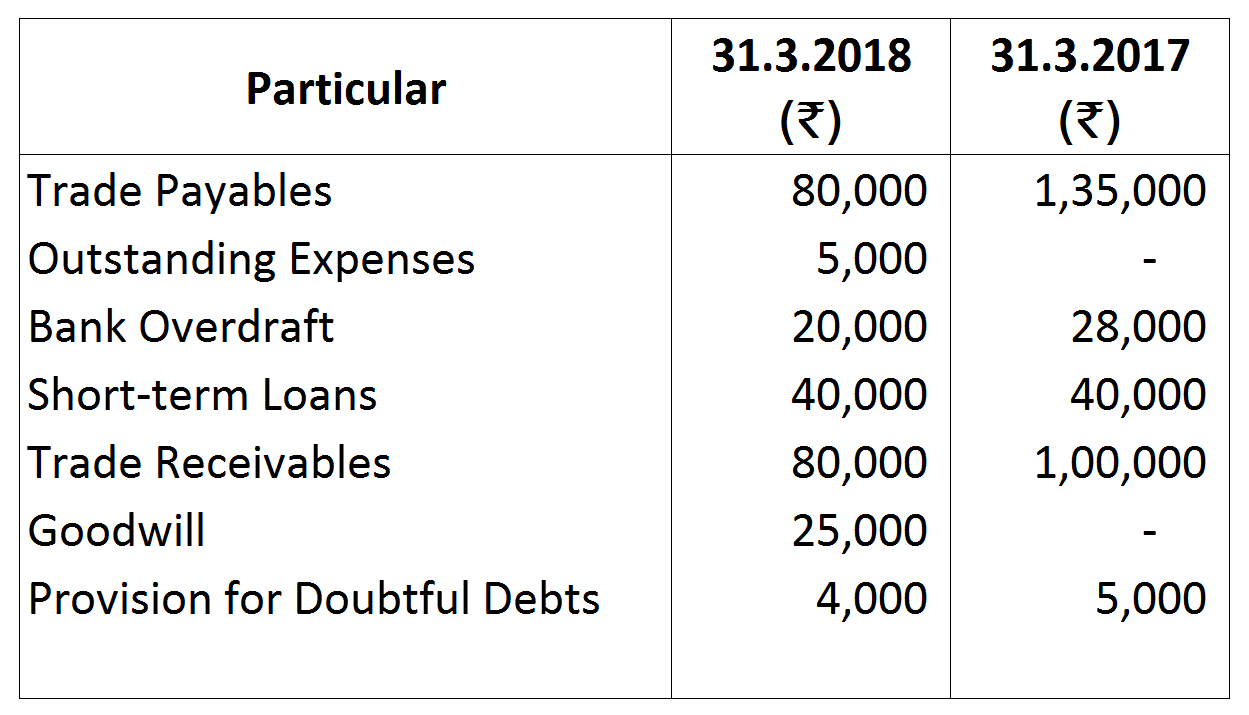
Following is the position of Current Assets and Current Liabilities of Z Ltd.

The Company incurred a loss of ₹ 30,000 during the year. Calculate Cash from operating activities.
Can a company purchase its own debentures in the open market? Explain.
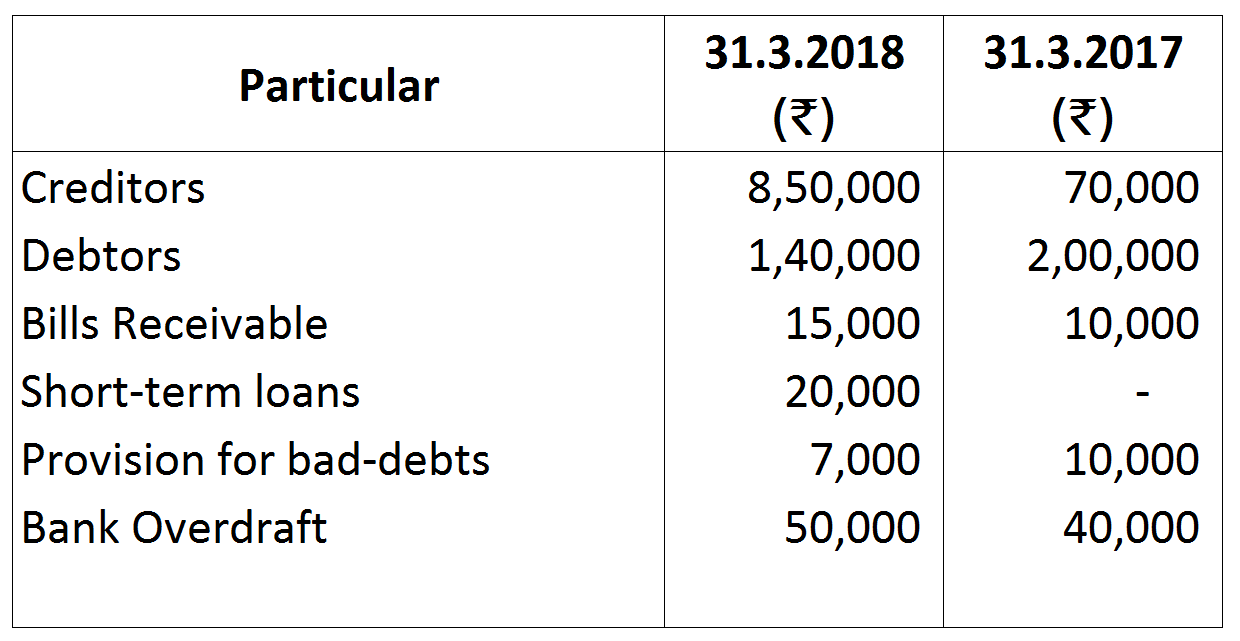
Following is the position of Current Assets and Current Liabilities of X Ltd.:

The company incurred a loss of ₹ 37,000 during the year. Calculate 'Cash from operating activities'.
Total Debt ₹ 40,00,000; Share Capital ₹ 15,00,000; Reserve and Surplus ₹ 8,00,000; Current Liabilities ₹ 5,00,000; Working Capital ₹ 7,00,000. Calculate Total Assets to Debt Ratio.
From the following information, calculate Oprating Ratio:
Cost of Revenue
From Operation (Cost of Goods Sold).
52,000
Operating Expenses.
18,000
Revenue from Operation  
Gross Sales. 88,000
Sales Return. 8,000
Mr. Arun Birla owns a business and gives the following figures for two successive years:
 
1st Year
2nd Year
 
Revenue from Operations
60,000
1,20,00
Gross Profit
15,000
24,000
Mr. Arun Birla speaks very high of his Manager who has increased the profits from ₹ 15,000 to ₹ 24,000 and describes him very 'Efficient'. Do you agree with him? If not, why?
Identify the major heads and sub-heads under which the following items will be shown in the Balance Sheet of a company as per Schedule III of Companies Act, 2013:
i. Patents
ii. Patents being developed by the Company
iii. Current Maturities of Long term Debts
iv. Computer and related equipment
v. Goods acquired for trading
vi. 10% Debentures
vii. Debentures with maturity period in current financial period.
Credit Revenue from Operations ₹ 5,60,000; Trade Receivables Turnover Ratio 7 times; Closing Trade Receivables were three times than that in the beginning. Calculate Opening and Closing Trade Receivables.