MCQ
Fusion reactions take lace at high temperature because:
  • A
    Atoms are ionized at high temperature.
  • B
    Molecules break up at high temperature.
  • C
    Nuclei break up at high temperature.
  • D
    Kinetic energy is high enough to overcome repulsion between nuclei.
Answer

  1. Kinetic energy is high enough to overcome repulsion between nuclei.
Explanation:

Extremely high temps needed for fusion because K.E. should large enough to overcome repulsion between nuclei.
Need a full question paper?

Generate a complete, print-ready paper with questions like this in minutes — across 16+ boards, with answer keys.

Start Generating Free

Similar questions

The magnetic dipole moment of a current loop is independent of:

Demagnetisation of magnets can be done by

(a) Rough handling

(b) Heating

(c) Magnetising in the opposite direction

(d) All the above

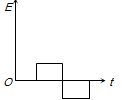
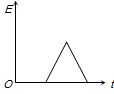
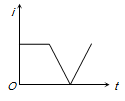
The current i in an induction coil varies with time t according to the graph shown

in figure. Which of the following graphs shows the induced emf (e) in the coil with time

(a)

(b)

(c)

(d)

Cyclotron is used to accelerate

(a) Electrons

(b) Neutrons

(c) Positive ions

(d) Negative ions

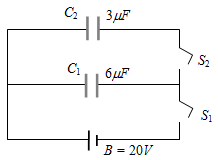
In the circuit shown here  and battery B = 20V. The switch  is first closed. It is then opened and afterwards   is closed. What is the charge finally on

(a) 120 μC

(b) 80 μC

(c) 40 μC

(d) 20 μC

Potential gradient is defined as

(a) Fall of potential per unit length of the wire

(b) Fall of potential per unit area of the wire

(b) Fall of potential per unit area of the wire

(d) Potential at any one end of the wire

A proton moving with a velocity, 2.5  , enters a magnetic field of intensity 2.5T making an angle 30°  with the magnetic field. The force on the proton is

(a) 3  

(b) 5  

(c) 6

(d) 9  

Which of the following quantities are always zero in a simple harmonic motion?

  1. $\overrightarrow{\text{F}}\times\overrightarrow{\text{a}}$

  2. $\overrightarrow{\text{v}}\times\overrightarrow{\text{r}}$

  3. $\overrightarrow{\text{a}}\times\overrightarrow{\text{r}}$

  4. $\overrightarrow{\text{F}}\times\overrightarrow{\text{r}}$

The area of the plates of a parallel plate condenser is A and the distance between the plates is 10 mm. There are two dielectric sheets in it, one of dielectric constant 10 and thickness 6mm and the other of dielectric constant 5 and thickness 4mm. The capacity of the condenser is

(a)  

(b)

(c)     

(d) 1500

A transformer has 100 turns in the primary coil and carries 8 A current. If input power is one kilowatt, the number of turns required in the secondary coil to have 500V output will be

(a) 100

(b) 200

(c) 400

(d) 300