Question
Gene flow and Genetic drift.

Answer

Gene flowGenetic drift
1. Gene flow is the alteration in the gene frequency due to migrations.1. Genetic drift is alteration in the gene frequency by pure chance.
2. Gene flow occurs due to exchange of genes in the adjacent populations through interbreeding.2. Genetic drift occurs due to accidental and sudden elimination of a particular gene.
3. Larger populations tend to show more migrations and hence more gene flow.3. Smaller populations have greater chances of genetic drift.
4. Gene flow occurs due to emigration and immigration.4. Genetic drift occurs only within the specified population.

Need a full question paper?

Generate a complete, print-ready paper with questions like this in minutes — across 16+ boards, with answer keys.
Start Generating Free

Similar questions

Explain the development of a secondary oocyte (ovum) in a human female from the embryonic stage upto its ovulation. Name the hormones involved in this process.OR
When does oogenesis start in humans? Name the three hormones and their sources, linked with oogenesis. How do they influence the process of oogenesis? Explain.
  1. Why are catalytic converters recommended for vehicles?
  2. Why should such vehicles use only unleaded petrol?
  3. Why is CNG preferred to diesel as a fuel in vehicles?
Write about the various theories of evolution.
Describe the morphology of thyroid gland. Or With the help of a suitable diagram describe the structure of thyroid gland.
Elaborate how invasion by an alien species reduces the species diversity of an area.
Differentiate between the following:
  1. Polygenic inheritance and Pleiotropy.
  2. Dominance, Codominance and Incomplete dominance.
Read the following and answer any four questions from (i) to (v) given below:
Gene therapy is the technique of genetic engineering to replace a faulty gene by a normal healthy functional gene. It is a way of treating genetic disease by introducing a piece of DNA into the cells of an affected individual. Liposomes can be used for gene therapy as they target the cells affected by a genetic disease.
  1. A patient suffers from adenosine deaminase (ADA) deficiency, an autosomal recessive immune deficiency in which bone marrow lymphoblasts cannot replicate to generate immuno-competent lymphocytes. The treatment option that would cure the patient is:
  1. Germ-line gene therapy to replace one ADA gene copy.
  2. Germ-line gene therapy to replace both ADA gene copies.
  3. Somatic cell gene therapy to replace both ADA gene copies in circulating lymphocytes.
  4. Somatic cell gene therapy to replace one ADA gene copy in bone marrow lymphoblasts.
  1. Which type of gene therapy is least effective in transferring DNA to the nucleus?
  1. Adenoviruses.
  2. DNA attached to a ligand.
  3. Liposomes.
  4. Retroviruses.
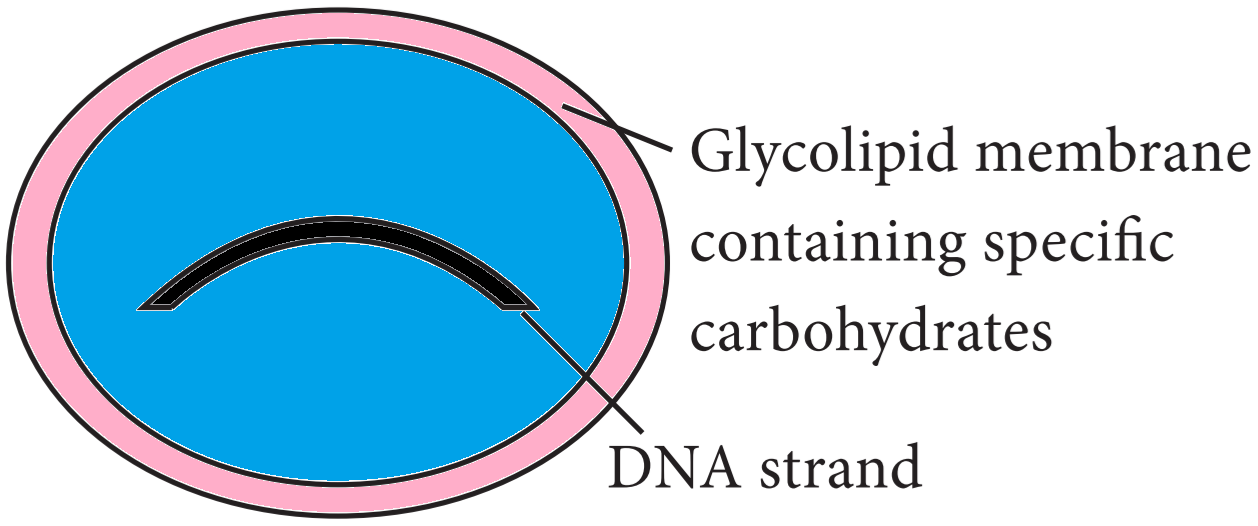
  1. Liposomes can be used for gene therapy as they target the cells affected by a genetic disease. The diagram shows the structure of a liposome.


What feature of a cell surface membrane allows the liposome to target cells affected by a genetic disease?
  1. Carrier molecules.
  2. Phosphate groups.
  3. Protein channels.
  4. Receptor molecules.
  1. Which of the following disorders would gene therapy be least effective?
  1. Cystic fibrosis.
  2. Huntington's disease.
  3. Sickle cell anaemia.
  4. Type II diabetes.
  1. Following are some reasons explaining why gene therapy is not yet fully an effective treatment for genetic diseases.
  1. Lack of knowledge of DNA sequences.
  2. Lack of efficient and safe gene delivery system.
  3. Cost of the technology.
  4. Some diseases involve multiple genes.
  5. Problems with appropriate gene regulation.
Select the correct option.
  1. I, III and V only
  2. II, IV and V only
  3. Ill, IV and V only
  4. I, III and IV only
Omithophily.
Describe the process of translation in protein synthesis.
Comment on the growth curve given below.