Question
Give examples to prove that social differences cross-cut each other.

Answer

  1. If social differences cross-cut one another, it is difficult to put one group of people against the other.
  2. It means the groups that share a common interest on one issue are likely to be on different sides on a different issue.
  3. In Northern Ireland, class and religion overlap each other. A Catholic is more likely to be poor and they suffer discrimination.
  4. In Netherlands, class and religion tend to cross-cut each other. Catholics and Protestants are both likely to be poor or rich. The result is that Catholics and Protestants have had conflicts in Northern Ireland, while they do not do so in the Netherlands.
That’s why cross-cutting social differences are easier to accommodate.

Need a full question paper?

Generate a complete, print-ready paper with questions like this in minutes — across 16+ boards, with answer keys.

Start Generating Free

Similar questions

‘‘The first clear expression of nationalism came with the ‘French Revolution’ in 1789.’’ Examine the statement.
  1. How are deposits of bauxite formed and aluminium obtained?
  2. What is the utility of aluminium?
  3. Describe the distribution of aluminium.
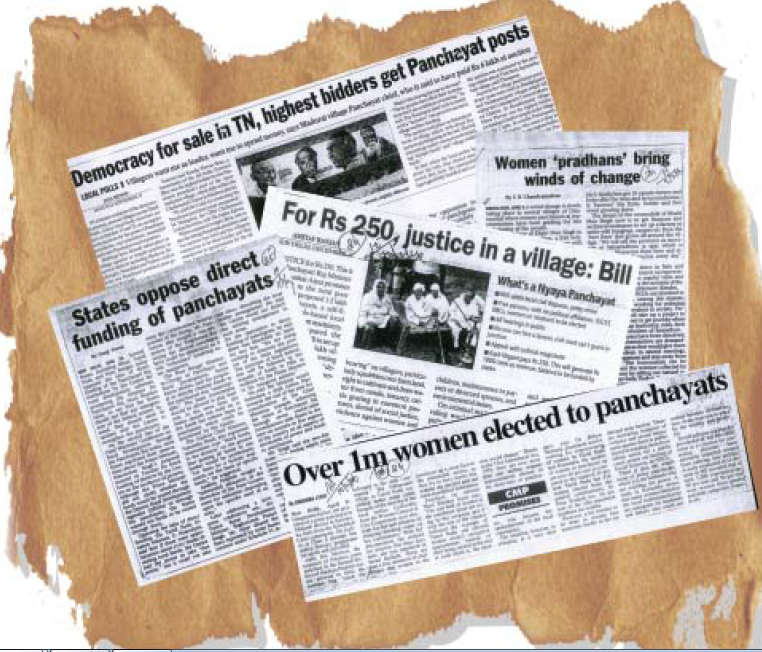
See the following newspaper clippings. What do they want to say about efforts for decentralisation in India?
What is required to maintain safety and quality of products and services?
How were floating exchange rates introduced?
“Only fair globalisation can give, new shape to the world economy.” Explain.OR
How can globalisation be made more fair?
Discuss the structure and composition of rural local self-government.
Explain three major features of global agricultural economy that had taken shape towards the close of the 19$^{th}$ century.
Read the extract and answer the questions that follow:
Reporting on the Koshtis, a community of weavers, the Census Report of Central Provinces stated:
'The Koshtis, like the weavers of the finer kinds of cloth in other parts of India have fallen upon evil times. They are unable to compete with the showy goods which Manchester sends in such profusion, and they have of late years emigrated in great numbers, chiefly to Berar, where, as day labourers they are able to obtain wages.'
Census Report of Central Provinces, 1872, quoted in Sumit Guha, 'The handloom industry in Central India, 1825-1950, The Indian Economic and Social History Review.
  1. Who were the Koshtis?
  2. Why did they migrate to Berar? What did they do there?
“Poverty and Occupation are directly linked to each other”. Substantiate this statement with four arguments.