Question
Give information about $C-O-H$ bond angle in alcohol, phenol and ether with suitable example.
Answer

$\rightarrow$ In alcohols, the oxygen of $-OH$ group is attached to carbon by a sigma $(\sigma)$ bond formed by the overlap of an $sp^3$ hybridised orbital of carbon with $sp^3$ hybridised orbital of oxygen.
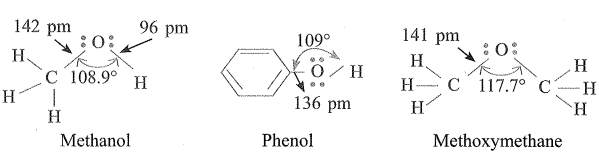
$\rightarrow$ Figure depicts structural aspects of methanol, phenol and methoxymethane.
Image
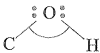
$\rightarrow$ The bond angle Imagein alcohols is slightly less than the tetrahedral angle $(109^\circ -28 \ ').$
$\rightarrow$ It is due to the repulsion between the unshared electron pairs of oxygen.
$\rightarrow$ In phenols, the $OH$ group is attached to $sp^2$ hybridised carbon of an aromatic ring.
$\rightarrow$ The carbon$-$oxygen bond length $(136 \ pm)$ in phenol is slightly less than that in methanol.
$\rightarrow$ This is due to $(i)$ partial double bond character on account of the conjugation of unshared electron pair of oxygen with the aromatic ring and $(ii) \ sp^2$ hybridised state of carbon to which oxygen is attached.
$\rightarrow$ In ethers, the four electron pairs, i.e., the two bond pairs and two lone pairs of electron on oxygen are arranged approximately in a tetrahedral arrangement.
$\rightarrow$ The bond angle is slightly greater than the tetrahedral angle due to the repulsive interaction between the two bulky $(-R)$ groups.
$\rightarrow$ The $C-O$ bond length $(141\ pm)$ is almost the same as in alcohols.

Need a full question paper?

Generate a complete, print-ready paper with questions like this in minutes — across 16+ boards, with answer keys.
Start Generating Free

Similar questions

Give the reaction of chlorobenzene with Hydroxyl group.
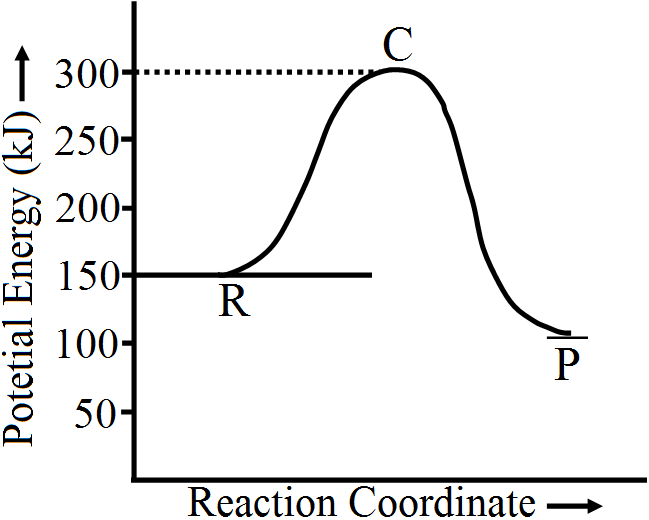
Answer the following questions on the basis of the given plot of potential energy vs reaction coordinate:
  1. What is the threshold energy for the reaction?
  2. What is the activation energy for forward reaction?
  3. What is the activation energy for backward reaction?
  4. What is enthalpy change for the forward reaction?
Answer the following questions.
Write about the following on protein synthesis:
  1. Name the location where protein synthesis occurs.
  2. How do 64 codons code for only 20 amino acids?
  3. Which of the two bases of the codon are more important for coding?
How do size of particles of adsorbent, pressure of gas and prevailing temperature influence the extent of adsorption of a gas on a solid?
Write the equations of the reactions of forming primary amines by the following methods:
(a) Hydrolysis of alkyl isocyanide
(b) Reductive amination of carbonyl compounds
(c) Alkaline hydrolysis of alkyl isocyanate
An aromatic compound $A \ ($Molecular formula $C_8H_8O)$ gives positive $2, 4-\text{DNP}$ test. It gives a yellow precipitate of compound $B$ on treatment with iodine and sodium hydroxide solution. Compound $A$ does not give Tollen's or Fehling's test. On drastic oxidation with potassium permanganate it forms a carboxylic acid $C ($Molecular formula $C_7H_6O_2),$ which is also formed along with the yellow compound in the above reaction. Identify $A, B$ and $C$ and write all the reactions involved.
Answer the following questions:
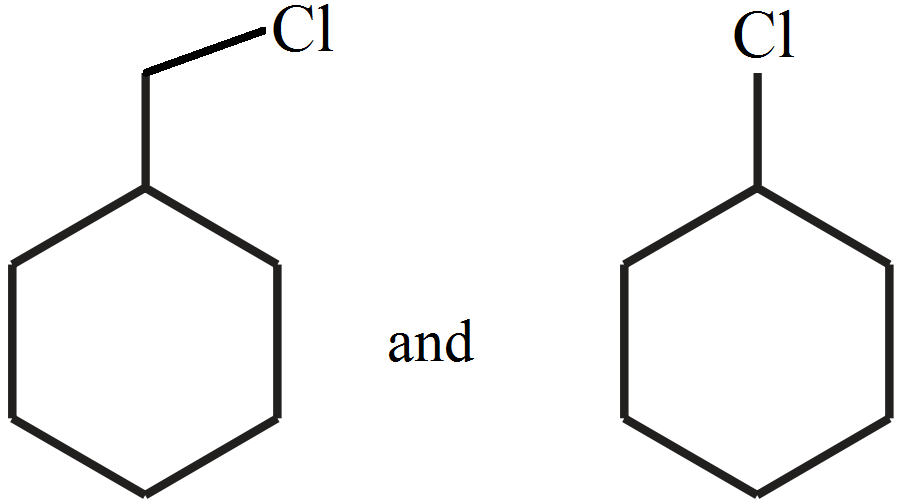
In the following pairs of halogen compounds, which would undergo $S_N1$ reaction faster? Explain.
Give reasons:
  1. Acetylation of aniline reduces its activation effect.
  2. $CH_3NH_2$ is more basic than $C_6H_5NH_2.$
  3. Although $–NH_2$ is o/p directing group, yet aniline on nitration gives a significant amount of m-nitroaniline.
How would you account for the following:
i. Phenols are much more acidic than alcohols.
ii. The boiling point of ethers are much lower than those of the alcohols of comparable molar masses.
How will the rate of the reaction be affected when:
  1. Surface area of the reactant is reduced.
  2. Catalyst is added in a reversible reaction.
  3. Temperature of the reaction is increased?