Question
Give one difference between diffusion and osmosis.
| No. | Osmosis | Diffusion |
| 1. | It is limited only to the liquid medium. | Occurs in all mediums – Solid, Liquid and gas. |
| 2. | Requires a semipermeable membrane. | Do not require a semipermeable membrane. |
| 3. | Depends on the number of solute particles dissolved in the solvent. | Depends on the presence of other particles. |
| 4. | Requires water for the movement of particles. | Do not require water for the movement of particles. |
| 5. | Only the solvent molecules can diffuse. | Both the molecules of solute and solvent can diffuse. |
| 6. | The flow of particles occurs only in one direction. | The flow of particles occurs in all the directions. |
Generate a complete, print-ready paper with questions like this in minutes — across 16+ boards, with answer keys.
Write down four general characters of phylurn Arthropoda. Give two examples.
Write down four general characters of cnidarians (coelenterates). Give two examples.
Doctor diagnosed that Radha was suffering from HIV-AIDS. List any two methods by which she might have contracted the disease. Name the organ affected by this disease.
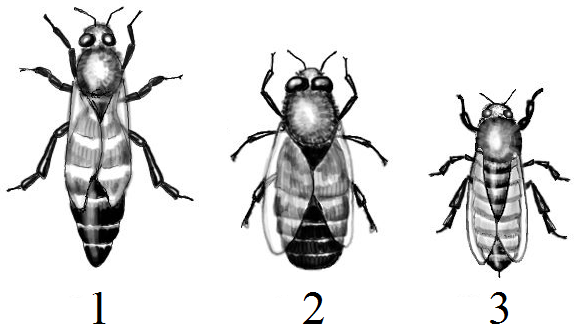
Look at Figures 1, 2 and 3 given alongside and answer the following questions.