Question
Give reasons -
(a) Ethanol has the a higher melting point than methoxy methane.
(b) Ethanol is easily soluble in water.
(c) Phenol is more stronger acid in comparison to alcohol.
Answer

(a) Boiling Point (Ethanol vs. Methoxy methane): Ethanol $\left( CH _3 CH _2 OH \right)$ molecules are associated through intermolecular hydrogen bonding due to the presence of the polar - OH group. Methoxy methane $\left( CH _3 OCH _3\right)$ lacks this bonding and only has weak dipoledipole interactions. Consequently, more energy is required to break the hydrogen bonds in ethanol, giving it a higher boiling point.
(b) (b) Solubility of Ethanol in Water: Ethanol is easily soluble in water because it can form hydrogen bonds with water molecules. The hydroxyl $(- OH )$ group of ethanol interacts with the polar $H _2 O$ molecules, allowing them to mix uniformly.
(c) Acidity (Phenol vs. Alcohol): Phenol is a stronger acid than alcohol because the phenoxide ion formed after losing a proton is stabilized by resonance within the benzene ring. In contrast, the alkoxide ion ( $R-O^{-}$) formed by alcohols is destabilized by the $+I$ effect of the alkyl group, which concentrates the negative charge on the oxygen atom.

Need a full question paper?

Generate a complete, print-ready paper with questions like this in minutes — across 16+ boards, with answer keys.

Start Generating Free

Similar questions

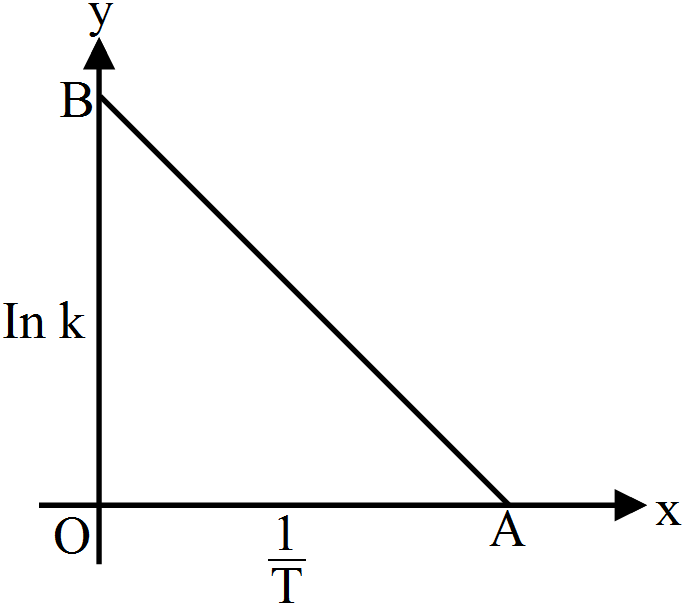
A graph between ln k and $\frac{1}{\text{t}}$ for a reaction is given. Here k is rate constant and T is temperature in Kelvin.

If OA = a and OB = b, answer the following:

  1. What is the activation energy (Ea) of the reaction?
  2. What is the frequency factor (A) for the reaction?

In the following cases rearrange the compounds as directed:

  1. In an increasing order of basic strength:

C6H5NH2, C6H5N(CH3)2, (C2H5)6NH and CH3NH2.

  1. In a decreasing order of basic strength:

Aniline, p-nitroaniline and p-toluidine.

  1. In an increasing order of pKb values:

C2H5NH2, C6H5 NHCH3, (C2H5)2NH and C6H5NH2.

Give the structures of A and B in the following sequence of reactions:
  1. $\text{CH}_3\text{COOH}\xrightarrow[\Delta]{\text{NH}_3\ \ \ }\text{A}\ \ \ \xrightarrow{\text{NaOBr}}\text{B}$
  2. $\text{C}_6\text{H}_5\text{No}_2\xrightarrow{\text{Fe}/ \text{ HCl}}\text{A}\ \ \ \ \ \xrightarrow[0^\circ-5^\circ\text{C}]{\text{NaNo}_2+\text{HCl}}\text{B}$
  3. $\text{C}_6\text{H}_5\text{N}_2^+\text{Cl}^{-}\xrightarrow[\Delta]{\text{CuCN}}\text{A}\ \ \ \ \xrightarrow{\text{H}_2\text{O}/\text{ H}^+}\text{B}$
A first order reaction takes 20 minutes for 25% decomposition. Calculate the time when 75% of the reaction will be completed. (Given : log 2 = 0·3010, log 3 = 0·4771, log 4 = 0·6021)
Explain Crystal field splitting in tetrahedral complax.
In the button cells widely used in watches and other devices the following reaction takes place :
$Zn _{( s )}+ Ag _2 O _{( s )}+ H _2 O _{( l )} \rightarrow Zn _{( aq )}^{2+}+2 Ag _{( s )}+2 OH _{( aq )}^{-}$
Determine $\Delta_{ r } G ^{\circ}$ and $E ^{\circ}$ for the reaction.
Nalorphene $\left( C _{19} H _{21} NO _3\right)$, similar to morphine, is used to combat withdrawal symptoms in narcotic users. Dose of nalorphene generally given is 1.5 mg. Calculate the mass of $1.5 \times 10^{-3} m$ aqueous solution required for the above dose.
Calculate the mass of a non-volatile solute (molar mass 40 g mol–1) which should be dissolved in 114 g octane to reduce its vapour pressure to 80%.
The monoamino monocarboxylic acids have two pKa values.
Write down the IUPAC name for the following complex and indicate the oxidation state, electronic configuration and coordination number. Also give stereochemistry and magnetic moment of the complex:
K[Cr(H2O)2(C2O4)2].3H2O