Question
Give scientific : Cuscuta plant does not have chlorophyll.

Answer

  1. Cuscuta is a parasitic plant. It is commonly found growing on hedge plant.
  2. It derives its nutrition directly from the host plant on which it thrives by parasitizing it.
  3. Since it does not prepare its own food by photosynthesis, it loses chlorophyll from the leaves.

Need a full question paper?

Generate a complete, print-ready paper with questions like this in minutes — across 16+ boards, with answer keys.
Start Generating Free

Similar questions

In general, the male gametes are motile while the female gametes are stationary. Mention two types of exceptions to this, with an example for each.
Name the type of food chains responsible for the flow of larger fraction of energy in an aquatic and a terrestrial ecosystem respectively. Mention one difference between the two food chains.
What are the probable factors that contributed to population explosion in India?
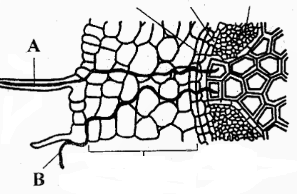
Identify and define 'A' and 'B' in relation to uptake of water by the root:
Image
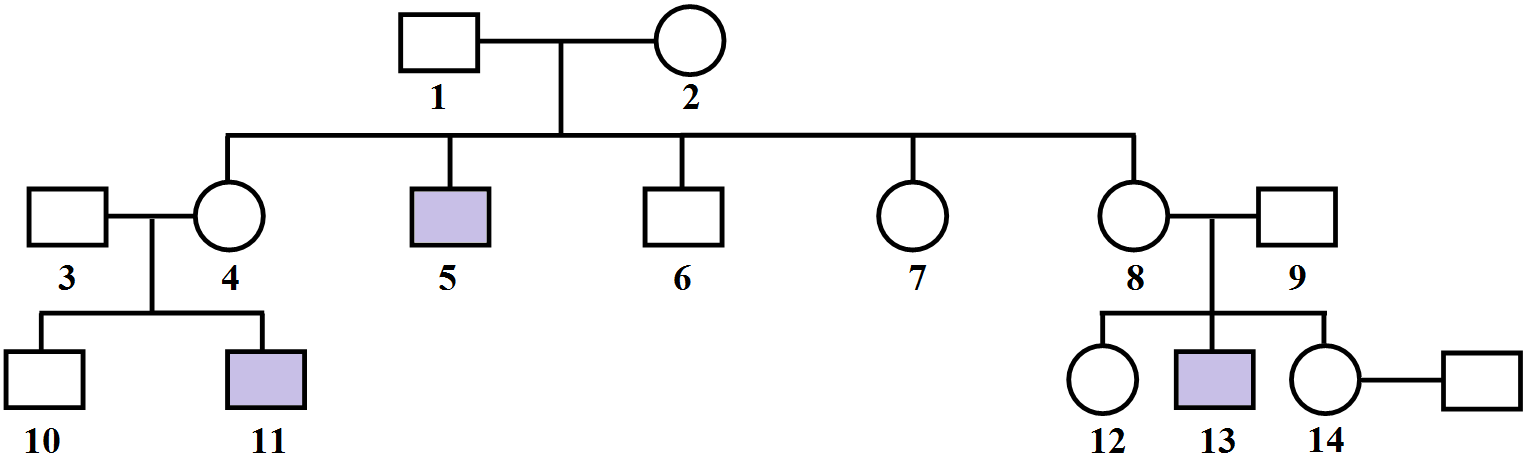
Haemophilia is a sex–linked recessive disorder of humans. The pedigree chart given below shows the inheritance of haemophilia in one family. Study the pattern of inheritance and answer the questions given.

  1. Give all the possible genotypes of the members $4, 5$ and $6$ in the pedigree chart.
  2. A blood test shows that the individual $14$ is a carrier of haemophilia. The member numbered $15$ has recently married the member numbered $14$. What is the
Name the type of food chains responsible for the flow of larger fraction of energy in an aquatic and a terrestrial ecosystem, respectively. Mention one difference between the two food chains.
  1. What are the after effects of the degradation of ozone?
  2. How does it affect human health?
Explain briefly how the principle of natural selection can be applied to the development of resistance in mosquitoes for DDT.
Based on your understanding of genetic code, explain the formation of any abnormal hemoglobin molecule. What are the known consequences of such a change?
Refer the graph and answer the questions that follow.
  1. The graph depicts which type of natural selection?
  2. Explain the other two effects/ types of natural selection.
​​​​​​​