Question
Given $a_1,a_2,a_3.....$ form an increasing geometric progression with common ratio $r$ such that $log_8a_1 + log_8a_2 +.....+ log_8a_{12} = 2014,$ then the number of ordered pairs of integers $(a_1, r)$ is equal to

Answer

c
$\log _{8}\left(a_{1} a_{2} \dots a_{12}\right)=2014 \Rightarrow a_{1}^{12}. r^{66}=2^{6042} \dots(i)$

Let $a_{1}=2^{m}$ and $r=2^{n}$

$\therefore(1) \Rightarrow 2^{12 m+66 n}=2^{6042}$     ....$(i)$

$\Rightarrow 2 \mathrm{m}+11 \mathrm{n}=1007 \Rightarrow \mathrm{m}=\frac{1007-11 \mathrm{n}}{2} \in \mathrm{N}$

$\therefore$ allowed values of $n$ are $n=1,3,5,7, \ldots 91$

$\therefore$ total ordered pairs $=46$

Need a full question paper?

Generate a complete, print-ready paper with questions like this in minutes — across 16+ boards, with answer keys.

Start Generating Free

Similar questions

The total number of natural numbers of six digits that can be made with digits $1, 2, 3, 4$, if all digits are to appear in the same number at least once, is
The arithmetic mean of the nine numbers in the given set $\{9,99,999,...., 999999999\}$ is a $9$ digit number $N$, all whose digits are distinct. The number $N$ does not contain the digit
Let $k \in R$. If $\lim _{x \rightarrow 0^{+}}(\sin (\sin k x)+\cos x+x)^{\frac{2}{x}}= e ^6$, then the value of $k$ is
If the real part of the complex number $z=\frac{3+2 i \cos \theta}{1-3 i \cos \theta}, \theta \in\left(0, \frac{\pi}{2}\right)$ is zero, then the value of $\sin ^{2} 3 \theta+\cos ^{2} \theta$ is equal to $.....$
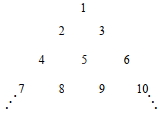
Let the positive integers be written in the form :

$Image$

If the $\mathrm{k}^{\text {th }}$ row contains exactly $\mathrm{k}$ numbers for every natural number $\mathrm{k}$, then the row in which the number $5310$ will be, is.........
Number of integral values of $a$ for which smaller root of quadratic equation $x^2 -2ax -4 + a^2 = 0$ is smaller than $1$ and bigger root is greater than $6$ is
The angle between the tangents drawn from the origin to the parabola ${y^2} = 4a(x - a)$ is ............... $^\circ$
${\log _{\frac{1}{8}\cos e{c^2}\frac{\pi }{8}}}\,{\sin ^2}\frac{{3\pi }}{8}$ equals to
The number of real roots of the equation $\mathrm{e}^{4 \mathrm{x}}+2 \mathrm{e}^{3 \mathrm{x}}-\mathrm{e}^{\mathrm{x}}-6=0$ is :
Let $\alpha, \beta, \gamma$ be the real roots of the equation, $x ^{3}+ ax ^{2}+ bx + c =0,( a , b , c \in R$ and $a , b \neq 0)$ If the system of equations (in, $u,v,w$) given by $\alpha u+\beta v+\gamma w=0, \beta u+\gamma v+\alpha w=0$ $\gamma u +\alpha v +\beta w =0$ has non-trivial solution, then the value of $\frac{a^{2}}{b}$ is