MCQ
Given below are two statement one is labeled as 
Assertion (A) and the other is labeled as Reason (R). 
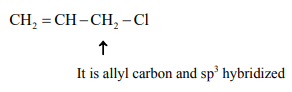
Assertion (A): $CH _2$. = CH – CH2 – Cl is an example of allyl halide 
Reason (R): Allyl halides are the compounds in which the halogen atom is attached to $sp ^2$ hybridised carbon atom.
In the light of the two above statements, choose the most appropriate answer from the options given below: 
  • A
    (A) is true but (R) is false
  • B
    Both (A) and (R) are true but (R) is not the correct explanation of (A)
  • C
    (A) is false but (R) is true
  • D
    Both (A) and (R) are true and (R) is the correct explanation of (A)
Answer

Need a full question paper?

Generate a complete, print-ready paper with questions like this in minutes — across 16+ boards, with answer keys.

Start Generating Free

Similar questions

Accumulation of lactic acid $(HC_3H_5O_3),$ a monobasic acid in tissues leads to pain and a feeling of fatigue. In a $0.10\, M$ aqueous solution, lactic acid is $3.7\%$ dissociates. The value of dissociation constant, $K_a,$ for this acid will be
A first order reaction is $10\%$ completed in $20\, minutes$ then what will be the time for $19\%$ completion of reaction ...... $\min$
$(a)$ Secondary alcohol $\xrightarrow[\Delta ]{{{H_3}P{O_4}}}$

$(b)$ Tertiary alcohol $\xrightarrow[\Delta ]{{{H_3}P{O_4}}}$

For above dehydration reaction rate of reaction will be

The electrolyte $[Co(NH_3)_5Cl]\, Cl_2$ is which of the following type
Types of geometrical isomerism shown at point $X, Y$ and $Z$ of the following compound respectively are

$X-Y-Z$

If two substances $A$ and $B$ have $P_A^0:\,P_B^0 = 1\,:\,2$ and have mole fraction in solution $1 : 2 $ then mole fraction of $A$ in vapours
Which one of the following will show geometrical isomerism?
Phenol does not react with which of the following
A compound $A$ with molecular formula $C_{10}H_{13}Cl$ gives a white precipitate on adding silver nitrate solution.  $A$ on reacting with alcoholic $KOH$ gives compound $B$ as the main product. $B$ on ozonolysis gives $C$ and $D.$ $C$ gives Cannizaro reaction but not aldol condensation. $D$ gives aldol condensation but not Cannizaro reaction. $A$ is
Number of amine compounds from the following giving solids which are soluble in $\mathrm{NaOH}$ upon reaction with Hinsberg's reagent is. .