MCQ
Given below are two statements: one is labelled as Assertion A and the other is labelled as Reason $R$.

Assertion $A$ :Phenolphthalein is a $pH$ dependent indicator, remains colourless in acidic solution and gives pink colour in basic medium

Reason $R$ : Phenolphthalein is a weak acid. It doesn't dissociate in basic medium.

In the light of the above statements, choose the most appropriate answer from the options given below.

  • A
    Both $A$ and $R$ are true and $R$ is the correct explanation of $A$
  • B
    Both $A$ and $R$ are true but $R$ is NOT the correct explanation of $A$.
  • C
    $A$ is false but $R$ is true
  • $A$ is true but $R$ is false

Answer

Correct option: D.
$A$ is true but $R$ is false
d
Phenolphthalein dissociate in basic medium

$HPh ( aq ) \rightleftharpoons H ^{+}+ Ph ^{-}$

Need a full question paper?

Generate a complete, print-ready paper with questions like this in minutes — across 16+ boards, with answer keys.

Start Generating Free

Similar questions

General outer electronic configuration of d-block elements is:
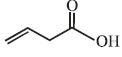
$IUPAC$ name of is
According to Bronsted-Lowry concept, the correct order of relative strength of bases follows the order
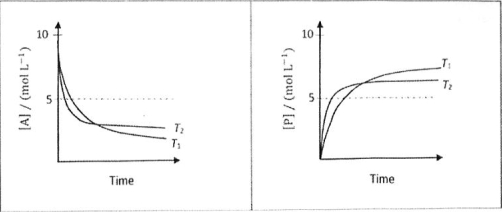
For a reaction, $A \rightleftharpoons P$, the plots of $[ A ]$ and $[ P ]$ with time at temperatures $T _1$ and $T _2$ are given below.

If $T _2> T _1$, the correct statement(s) is (are)

(Assume $\Delta H ^{\ominus}$ and $\Delta S ^{\ominus}$ are independent of temperature and ratio of $\ln K$ at $T _1$ to $\ln K$ at $T_2$ is greater than $T_2 / T_1$. Here $H, S, G$ and $K$ are enthalpy, entropy, Gibbs energy and equillibrium constant, respectively.)

$(A)$ $\Delta H ^{\ominus}<0, \Delta S ^{\ominus}<0$  $(B)$ $\Delta G ^{\ominus}<0, \Delta H ^{\ominus}>0$  $(C)$ $\Delta G ^{\ominus}<0, \Delta S ^{\ominus}<0$  $(D)$ $\Delta G ^{\ominus}<0, \Delta S ^{\ominus}>0$

The weight of a molecule of the compound ${C_{60}}{H_{122}}$ is
Which of the following behaves as both Lewis and Bronsted base
The wavelength of an electron and a neutron will become equal when the velocity of the electron is $x$ times the velocity of neutron. The value of $x$ is (Nearest Integer)(Mass of electron is $9.1 \times 10^{-31} kg$ and mass of neutron is $1.6 \times 10^{-27}\,kg$ )
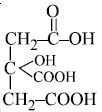
The $IUPAC$ name of compound
What may be the first ionisation energy of $Na$ if it has effective nuclear charge of $1.84$ assuming Bohr model of $H$-atom to be effective on it ............. $\mathrm{eV}$
For a spontaneous change, free energy change $\Delta G$ is