Question
Group 16
Group 17
 
_______
_______
(First Period)
_______
A
(Second Period)
_______
_______
(Third Period)
B
C
(Fourth Period)
  1. State whether element C would be a metal or a non-metal. Why?
  2. Which is the more active element, A or C? Why?
  3. Which type of ion (cation or anion) will be formed by the element C? Why?
Answer

  1. A is non metal.
  2. Stament c is less reactive that A.
  3. C is much smaller that the size of the B.
A will be form anion. hope this right answer derived from the table so the student can simply check out right ideas from it.

Need a full question paper?

Generate a complete, print-ready paper with questions like this in minutes — across 16+ boards, with answer keys.

Start Generating Free

Similar questions

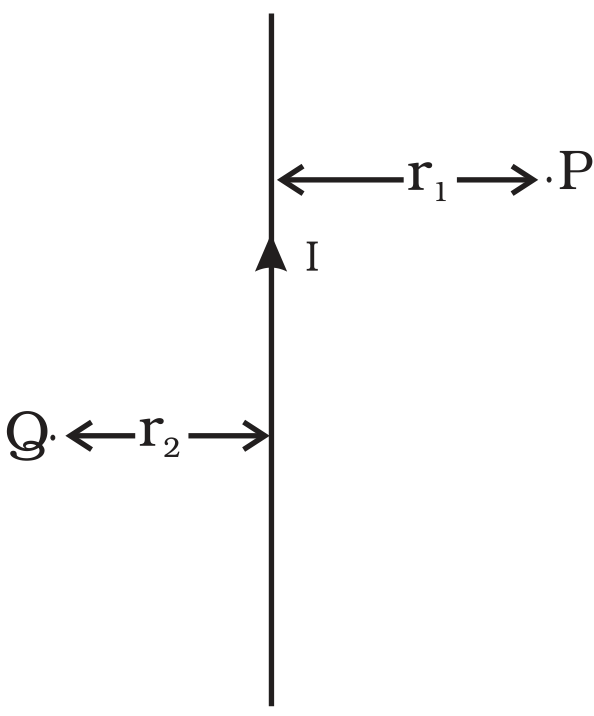
AB is a current carrying conductor in the plane of the paper as shown in Figure. What are the directions of magnetic fields produced by it at points P and Q? Given $r_1 > r_2$, where will the strength of the magnetic field be larger?
When a green iron salt is heated strongly, its colour finally changes to brown and odour of burning sulphur is given out:
  1. Name the iron salt.
  2. Name the type of reaction that takes place during the heating of iron salt.
  3. Write a chemical equation for the reaction involved.
What is a circuit diagram? Draw the labelled diagram of an electric circuit comprising of a cell, a resistor, an ammeter, a voltmeter and a closed switch (or closed plug key). Which of the two has a large resistance: an ammeter or a voltmeter?
  1. Which parts of the eye cause rays of light to converge on the retina?
  2. Which part causes the greatest convergence?
  3. Which part brings the image into sharp focus on the retina? How does it do this?
The electrical resistivities of four materials A, B, C and D are given below:
$\text{A}\ -110\times10^{-8}\Omega\text{ m}$
$\text{B}-\ 1.0\times10^{10}\Omega\text{ m}$
$\text{C}-\ 10.0\times10^{-8}\Omega\text{ m}$
$\text{D}-\ 2.3\times10^{3}\Omega\text{ m}$
Which material is:
  1. Good conductor.
  2. Resistor.
  3. Insulator, and
  4. Semiconductor
Which one of these two is more reactive and why?
A person needs a lens of power -4.5D for correction of her vision.
  1. What kind of defect in vision is she suffering from?
  2. What is the focal length of the corrective lens?
  3. What is the nature of the corrective lens?
What do you understand by the term “electromagnetic induction”? Explain with the help of a diagram.
Draw circuit symbols for:
  1. Fixed resistance.
  2. Variable resistance.
  3. A cell.
  4. A battery of three cells.
  5. An open switch.
  6. A closed switch.
Here are some results of solutions tested with universal indicator paper:
  1. Sulphuric acid: Red
  2. Metal polish: Dark blue
  3. Washing-up liquid:
  4. Yellow Milk of magnesia:
  5. Light blue Oven cleaner:
  6. Purple Car battery acid: Pink
Arrange the solutions in order of their increasing pH values (starting with the one with the lowest pH).