Heating the acyl azide in dry toluene under reflux for $3-$ hours give a $90\%$ yield for a heterocyclic product. Identify the product $(A)$.

- A
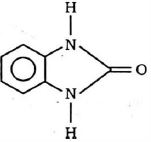
- B
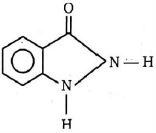
- C
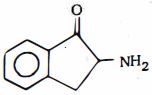
- D
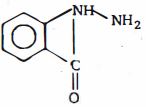
Advanced



Download our appand get started for free
Experience the future of education. Simply download our apps or reach out to us for more information. Let's shape the future of learning together!No signup needed.*
Similar Questions
- 1Product $(B)$ of this reaction isView Solution

- 2When ethyl amine is heated with chloroform and alcoholic $ KOH$ , a compound with offensive smell is obtained. This compound isView Solution
- 3Rank the following in order of decreasing rate of reaction with alkoxide ion $(CH_3 CH_2O^- )$ in a nucleophilic aromatic substitution reactionView Solution

- 4A trinitro compound, $1, 3,5$ tris-($4$-nitrophenyl) benzene, on complete reaction with an excess of $\mathrm{Sn} / \mathrm{HCl}$ gives major product, which on treatment with an excess of $NaNO_2 / HCl$ at $0^{\circ} C$ provides $P$ as the product. $P$, upon treatment with excess of $H_2 O$ at room temperature, gives the product $Q$. Bromination of $Q$ in aqueous medium furnishes the product $R$. The compound $P$ upon treatment with an excess of phenol under basic conditions gives the product $S$.View Solution
The molar mass difference between compounds $Q$ and $R$ is $474 \mathrm{~mol}^{-1}$ and between compounds $P$ and $S$ is $172.5 \mathrm{~g} \mathrm{~mol}^{-1}$.
($1$)The number of heteroatoms present in one molecule of $R$ is. . . . . .
[Use: Molar mass (in g mol ${ }^{-1}$ ): $\mathrm{H}=1, \mathrm{C}=12, \mathrm{~N}=14, \mathrm{O}=16, \mathrm{Br}=80, \mathrm{Cl}=35.5$
Atoms other than $\mathrm{C}$ and $\mathrm{H}$ are considered as heteroatoms]
($2$)The total number of carbon atoms and heteroatoms present in one molecule of $S$. . . . . .
[Use: Molar mass in $\mathrm{g} \mathrm{mol}^{-1}$ ]: $\mathrm{H}=1, \mathrm{C}=12, \mathrm{~N}=14, \mathrm{O}=16, \mathrm{Br}=80, \mathrm{Cl}=35.5$
Atoms other than $\mathrm{C}$ and $\mathrm{H}$ are considered as heteroatoms
Give the answer quetion ($1$) and ($2$)
- 5View SolutionEthylamine can be prepared by the action of bromine and caustic potash on
- 6$Z$ isView Solution
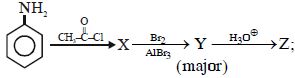
- 7Which of following does not react with $HNO_2$ ?View Solution
- 8View SolutionWhich (isomeric) amine has lowest boiling point ?
- 9The reaction of chloroform with alcoholic $KOH$ and $p-$ toludine formsView Solution
- 10When primary amine is heated with $NaNO_2/HCl$View Solution
$R-NH_2$ $\xrightarrow[{HCl}]{{NaN{O_2}}}$ $..................$
(a gas is evolves with brisk effervescene is)