Hinsberg’s reagent is
- A
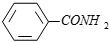
- B
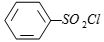
- C
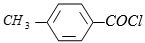
- D

Medium


Download our appand get started for free
Experience the future of education. Simply download our apps or reach out to us for more information. Let's shape the future of learning together!No signup needed.*
Similar Questions
- 1View SolutionReduction of methyl isocyanide gives
- 2View SolutionAniline reacts with acetaldehyde to form
- 3View SolutionThe correct order of the basic strength of methyl substituted amines in aqueous solution is
- 4View SolutionIdentify the strongest base from the given compounds
- 5${C_3}{H_9}N$ representsView Solution
- 6View SolutionWhich one of the following nitro-compounds does not react with nitrous acid ?
- 7View SolutionPredict the major product of the following reaction sequence.

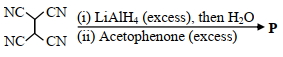
- 8The total number of $\mathrm{sp}^2$ hybridised carbon atoms in the major product $P$ (a non-heterocyclic compound) of the following reaction is. . . . . . .View Solution
- 9Match the compounds in $LIST-I$ with the observation in $LIST-II$, and choose the correct option.View Solution
$LIST-I$ $LIST-II$ $(I)$ Aniline $(P)$ Sodium fusion extract of the compound on boiling with $FeSO _4$, followed by acidification with conc. $H _2 SO _4$, gives Prussian blue color. $(II)$ o-Cresol $(Q)$ Sodium fusion extract of the compound on treatment with sodium nitroprusside gives blood red color. $(III)$ Cysteine $(R)$ Addition of the compound to a saturated solution of $NaHCO _3$ results in effervescence. $(IV)$ Coprolactam $(S)$ The compound reacts with bromine water to give a white precipitate. $(T)$ Treating the compound with neutral $FeCl _3$ solution produces violet color. - 10View SolutionThe amine that reacts will Hinsberg's reagent to give an alkali insoluble product is