Question
How do Basidiomycetes differ from Phycomycetes?

Answer

S.No.
Basidiomycetes
Phycomycetes
1. 
The mycelium is septate.
The mycelium is aseptate and coenocytic.
2.
No asexual spores are formed.
Asexual reproduction is by zoospores or aplanospores.
3.
Sexual reproduction is by somatogamy.
Sexual reproduction is isogamous, anisogamous or oogamous.
4.
A fruiting body, the basidiocarp is formed.
No fruiting body is formed; the zygospore or oospore directly undergoes development.
5. A dikaryophase is seen in the life cycle. No dikaryophase is found in the life cycle.

Need a full question paper?

Generate a complete, print-ready paper with questions like this in minutes — across 16+ boards, with answer keys.
Start Generating Free

Similar questions

Write the differences between:
Open and Closed system of circulation
Comment on the statement “living state is a non-equilibrium steadystate to be able to perform work”.
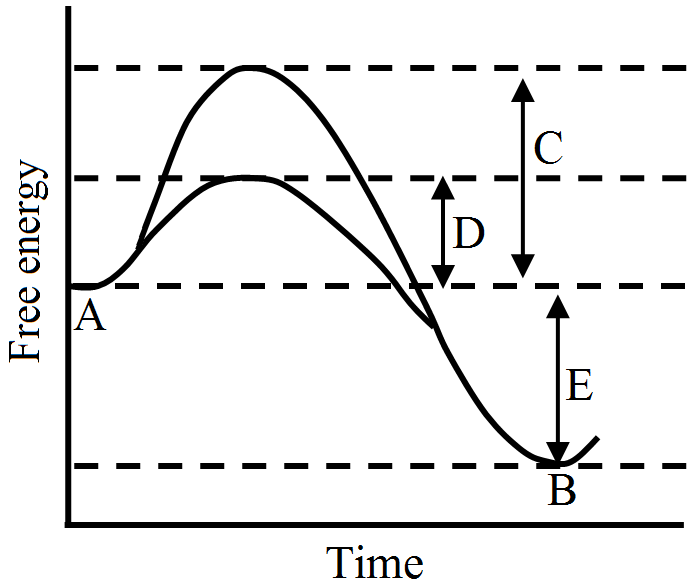
Observe the given figure related to enzyme action and answer the following questions.
  1. What is the figure showing?
  2. Name the substances marked as (A) and (B).
  3. What does the arrows marked (C) to (E) indicate?

Differentiate between:
i. Acoelomate and pseudocoelomate
ii. Notochord and nerve cord
iii. Polyp and medusa
Write the general characteristics of Protista class.
Prakhar, a class XI student went out after rains in the garden. He saw earthworms on the ground and wondered how they are able to move, eat and perform various function of life Next day, he went to his biology teacher and asked her about the same. Her biology teacher politely explained him about how different animals have various levels of organisation of cells. She also told her that except sponges and coelenterates, all the animals of the kingdom-Animalia have organ- system level of organisation.
  1. What kind of body organisation are present in sponges and coelenterates?
  2. Write about the organisation type in lower animals, like protozoans.
  3. In which phylums organ system level organisation is found?
  4. What values are shown by Prakhar?
Differentiate between:
a. Open and closed circulatory system
b. Oviparity and viviparity
c. Direct and indirect development
Write any four differences between cortical and juxtamedullary nephrons.
Illustrate the taxonomical hierarchy with suitable examples of a plant and an animal.
Sino-atrial node is called the pacemaker of our heart. Why?