Question
How do herbivores differ from carnivores?

Answer

Herbivores eat only plants or plant products. Their teeth are designed to chew plants and their stomachs to digest them. Carnivores eat other animals. They have sharp teeth to tear the flesh of animals.

Need a full question paper?

Generate a complete, print-ready paper with questions like this in minutes — across 16+ boards, with answer keys.
Start Generating Free

Similar questions

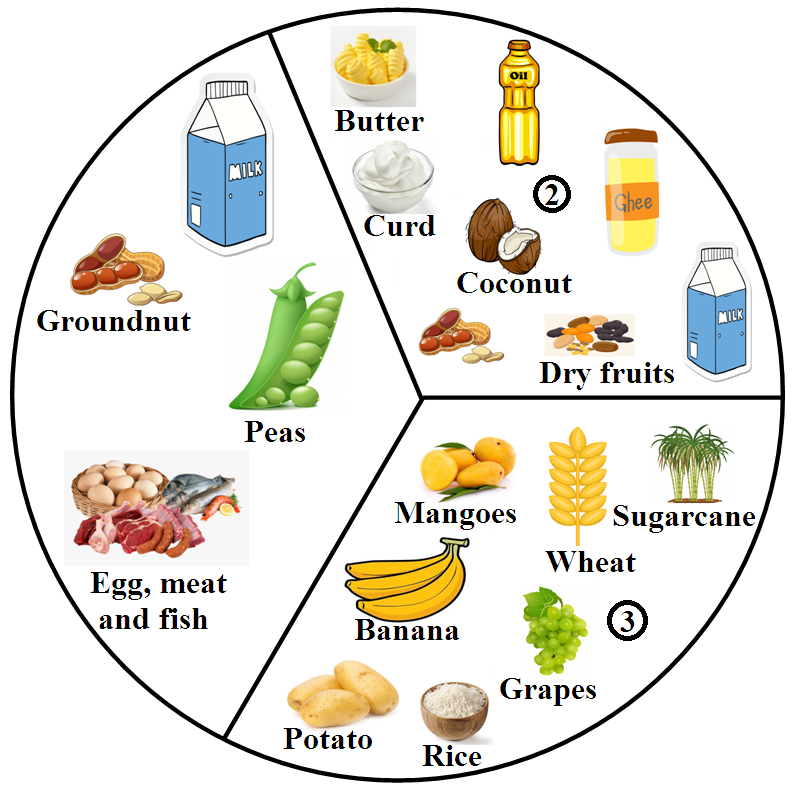
Here are three strips. You have to paste them in figure at three places $1, 2$ and $3$ At which place will you paste each strip?
  1. Protein rich food.
  2. Carbohydrate rich food.
  3. Fat rich food.
A torch requires $3$ cells. Show the arrangement of the cells, with a diagram, inside the torch so that the bulb glows.
Why do you think oxygen dissolved in water is important for the survival of aquatic animals and plants?
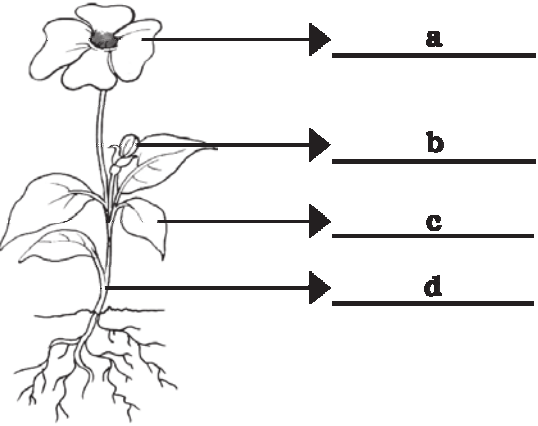
Label the different parts of the plant given below in figure.
If you and your friend are given the choice of eating in a plastic plate or a banana leaf platter at a party, which one would you prefer and why?
Cooking results in loss of certain nutrients. Many useful proteins are lost if excess of water is used in cooking and then thrown away. For e.g. Vitamin C gets destroyed easily by heat during cooking. Therefore it is important to include some fruits and raw vegetables in our diet.
Write various methods of separation of compounds from their mixture.
How does the earthworm move?
Activity.
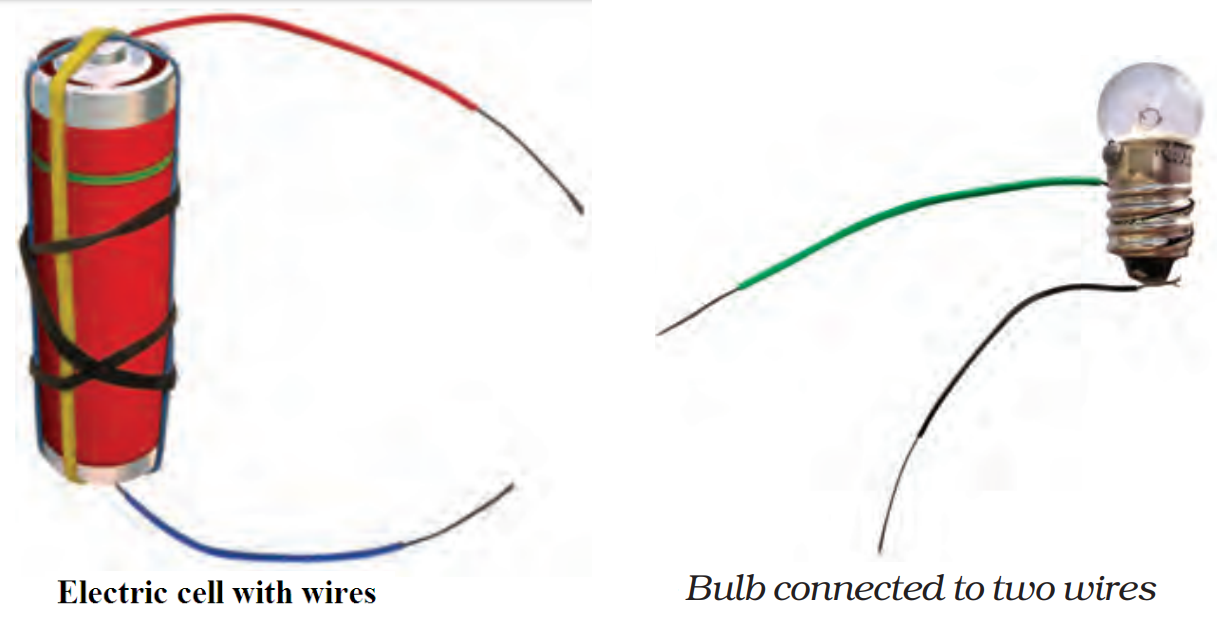
Take four lengths of electric wire with differently coloured plastic coverings. Remove a little of the plastic covering from each length of wire at the ends. This would expose the metal wires at the ends of each length. Fix the exposed parts of two wires to the cell and the other two of the bulb as shown in Fig. $(A)$ and Fig. $(B).$

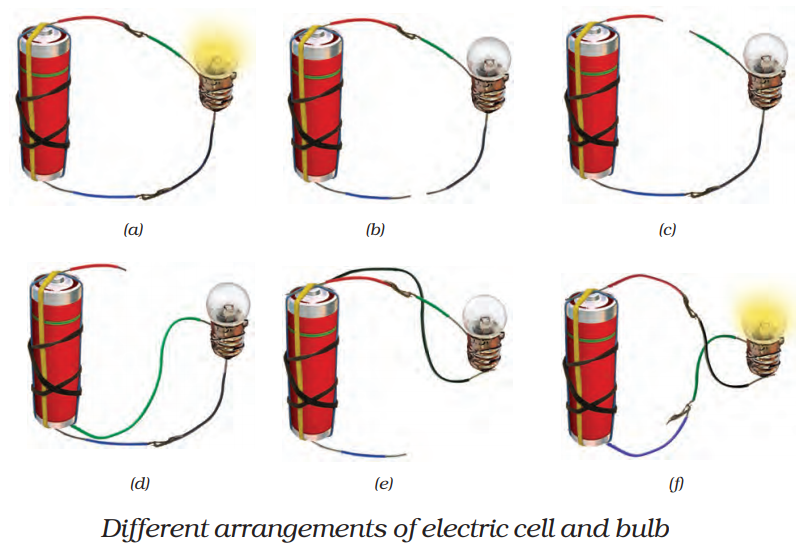
You can stick the wires to the bulb with the tape used by electricians. Use rubber bands or tape to fix the wires to the cell.Now, connect the wires fixed to the bulb with those attached to the cell in six different ways as have been shown in Fig. $C$ $[(a)$ to $(f)].$
For each arrangement, find out whether the bulb glows or not. Write “Yes’ or ‘No’ for each arrangement in your notebook.
Now, carefully look at the arrangements in which the bulb glows. Compare these with those in which the bulb does not glow.

Can you find the reason for the difference?
Which of the following changes cannot be reversed?
  1. Blowing of a balloon.
  2. Folding a paper to make a toy aeroplane.
  3. Rolling a ball of dough to make roti.
  4. Baking cake in an oven.
  5. Drying a wet cloth.
  6. Making biogas from cow dung.
  7. Burning of a candle.