Question
How does a Cash Book serve 'Dual Purpose?

Answer

It is both a subsidiary book (book of original entry) and a principal book. When a cash book is maintained, transactions of cash are not recorded in the journal. As all the cash transactions are recorded for the first time in the cash book, it is therefore a book of original entry. But when a cash book is prepared, cash account in the ledger is not prepared. In this way, cash book represents the cash account and hence, becomes the principal book of accounts. As such, the cash book is a subsidiary book as well as principal book.

Need a full question paper?

Generate a complete, print-ready paper with questions like this in minutes — across 16+ boards, with answer keys.

Start Generating Free

Similar questions

Give two examples of errors of commission?
Write a note on the following:
  1. Dishonour of Bill.
  2. Endorsement of Bill.
Name the books of original entry where the following transactions will be recorded with reasons thereof:
a Goods Purchased from Ram Lal ₹ 5,000 on credit.
b Provision for doubtful debts created @ 5% on debtors with book value of ₹ 10,000.
c Defective goods sold to Babita on credit worth ₹ 4,000 were returned by her.
d Purchased furniture on credit from Mr. Ratan Singh for ₹ 15,000 for use in the business.
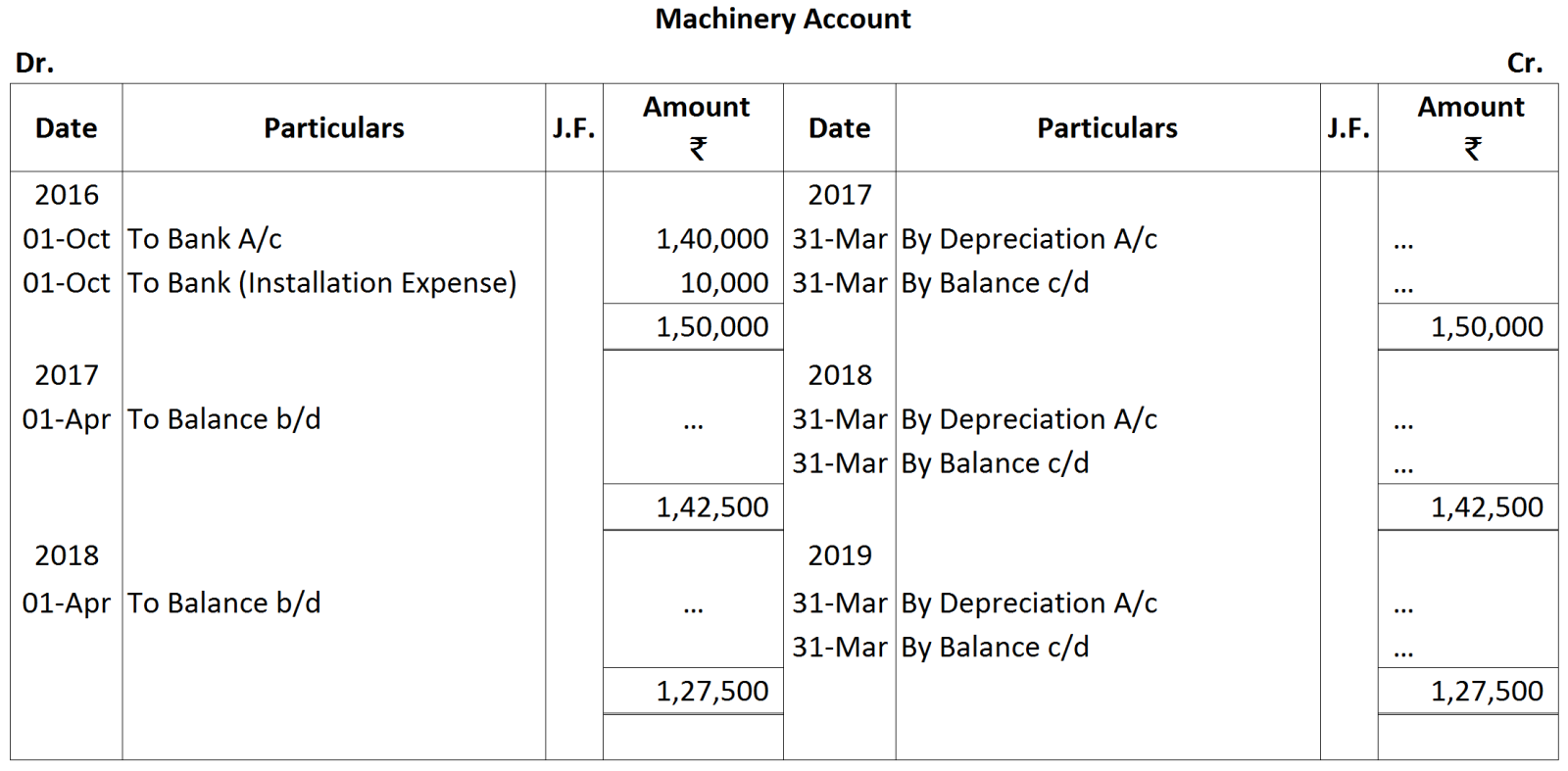
In the following Machinery Account, determine the missing values, if depreciation is to be charged @ 10% p.a. as per Straight Line Method:
Raghav & Co. have two bank accounts, Account No. I and Account No. II. From the following particulars relating to Account No. I, find out the balance on that account on December 31, 2016 according to the Cash Book of the firm.
  1. Cheques paid into bank prior to December 31, 2016, but not credited until after that date for ₹ 10,000.
  2. Transfer of funds from Account No. II to Account No. I recorded by the bank on December 31, 2016 but entered in the Cash Book after that date for ₹ 8,000.
  3. Cheques issued prior to December, 31 2016 but not presented until after that date for ₹ 7,429.
  4. Bank charges debited by bank not entered in the Cash Book for ₹ 200.
  5. Interest debited by the bank not entered in the Cash Book ₹ 580.
  6. Overdraft as per Pass Book ₹ 18,990.
From the following particulars prepare a bank reconciliation statement of Govil as on 31st December, 2014.
Balance as per Pass Book on 31st December 2014 is ₹ 8,500. Cheques for ₹ 5,100 were issued during the month of December but of these cheques for ₹ 1,200 were presented in the month of January 2015 and one cheque for ₹ 200 was not presented for payment. Cheques and cash amounting to ₹ 4,800 were deposited in bank during December but credit was given for ₹ 3,800 only. A customer has deposited ₹ 800 into bank directly. The bank credited the merchant for ₹ 200 as interest and has debited him for ₹ 30 as bank charges for which there are no corresponding entries in Cash Book.
What are Provisions?
Tiwari and Sons find that the bank balance shown by their Cash Book on December 31, 2016 is ₹ 40,500 (Credit) but the Pass Book shows a difference due to the following reasons:
  1. A cheque for ₹ 5,000 drawn in favour of Manohar has not yet been presented for payment.
  2. A post-dated cheque for ₹ 900 has been debited in the bank column of the Cash Book but it could not have been presented in any case.
  3. Cheques totalling ₹ 10,200 deposited with the bank have not yet been collected and an another cheque for ₹ 4,000 deposited in the account has been dishonoured.
  4. A Bill Payable for ₹ 10,000 was retired by the Bank under a rebate of ₹ 150 but the full amount of the bill was credited in the bank column of the cash book.
Prepare a Bank Reconciliation Statement and find out the balance as per Pass Book.
Rectify the following errors:
  1. Salary paid ₹ 5,000 was debited to employee’s personal account.
  2. Rent Paid ₹ 4,000 was posted to landlord’s personal account.
  3. Goods withdrawn by proprietor for personal use ₹ 1,000 were debited to sundry expenses account.
  4. Cash received from Kohli ₹ 2,000 was posted to Kapur’s account.
  5. Cash paid to Babu ₹ 1,500 was posted to Sabu’s account.
Pass Journal entry for purchase of goods by Amrit, Delhi from Add Gel Pens, Delhi for ₹ 15,000 less Trade Discount 10% and Cash Discount 3%. CGST and SGST is levied @ 6% each. Assume payment is made at the time of purchase.