Question
How does an air conditioner differ from a refrigerator? Define the coefficient of performance of an air conditioner and express it in terms of heat current.

Answer


The working of an air conditioner is exactly similar to that of a refrigerator, but the volume of the chamber/room cooled by an air conditioner is far greater than that in a refrigerator. The evaporator coils of an air conditioner are inside the room, and the condenser outside the room. A fan inside the air conditioner circulates cool air in the room.The coefficient of performance, $K$, of an air conditioner is defined as $K=\left|\frac{Q_C}{W}\right|$, where $Q_c$ is the heat absorbed and $W$ is the work done. The time rate of heat removed is the heat current, $H =\frac{\left|Q_C\right|}{t}$, where $t$ is the time in which heat $\left|Q_c\right|$, is removed.
$
\therefore K=\left|\frac{Q_{ C }}{W}\right|=\frac{\left|Q_{ C }\right| / t}{|W| / t}=\frac{H}{P} \text {, }
$
where $H =\left| Q _c\right| / t$ is the heat current and $P (=| W | / t )$ is the time rate of doing work, i.e., power.

Need a full question paper?

Generate a complete, print-ready paper with questions like this in minutes — across 16+ boards, with answer keys.
Start Generating Free

Similar questions

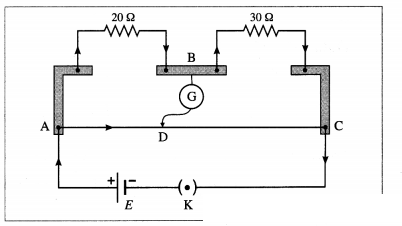
Two resistances, $20 \Omega$ and $30 \Omega$, are connected across the two gaps of a metre bridge as shown in the following figure.
Image
The bridge wire has diameter $0.5\ mm$ and resistance $2 \Omega$. The emf of the cell is $2 V$. Assume that the internal resistance of the cell is zero. Calculate $(I)$ the resistivity $($specific resistance$)$ of the material of the bridge wire $(ii)$ the current provided by the cell when the bridge is balanced.
Derive an equation for the resultant wave produced due to superposition of two waves. Hence, state the expression for the amplitude of the resultant wave when two waves are
(1) in phase
(2) out of phase.
A satellite moves around the Earth in an elliptical orbit such that at perigee (closest approach) it is two Earth radii above the Earth's surface. At apogee (farthest position), it travels with one-fourth the speed it has at perigee. In terms of the Earth's radius R, what is the maximum distance of the satellite from the Earth's surface?
Explain analytically how stationary waves are formed. What are nodes and antinodes? Show that distance between two adjacent nodes or antinode is \(\frac{\lambda}{4}\).
In a metre bridge experiment, the resistances $R$ and $X$ are connected in the left and right gap, respectively, and the null point is obtained at $33.7 \ cm$ from the left end. When a resistance of $12 \Omega$ is connected in parallel to $X$, the null point is obtained at $51.9 \ cm$ from the left end.
Calculate $R$ and $X$.
Under what condition a charge undergoes uniform circular motion in a magnetic field? Describe, with a neat diagram, cyclotron as an application of this principle. Obtain an expression for the frequency of revolution in terms of the specific charge and magnetic field.
A conductor of length $25 cm$ is placed (i) parallel (ii) perpendicular (iii) inclined at an angle $30^{\circ}$, to a uniform magnetic field of induction $2 T$. If $1 C$ of charge passes through it in $5 s$, calculate the force experienced by the conductor in each case.
What is the fundamental difference between an electric dipole and a magnetic dipole?
A road at a bend should be banked for an optimum or most safe speed $v_0$. Derive an expression for the required angle of banking.
OR
Obtain an expression for the optimum or most safe speed with which a vehicle can be driven along a curved banked road. Hence show that the angle of banking is independent of the mass of a vehicle.
During a stunt, a cyclist (considered to be a particle) is undertaking horizontal circles inside a cylindrical well of radius 6.05 m. If the necessary friction coefficient is 0.5, how much minimum speed should the stunt artist maintain? Mass of the artist is 50 kg. If she/he increases the speed by 20%, how much will the force of friction be?
$\left[\right.$