Question
How does ratio analysis become less effective due to price level changes?

Answer

Ratio Analysis Becomes Less Effective Due to Price Level Changes: Price level over the year goes on changing threfore the ratio of various year cannot be compared. For example, one firm sells 1,000 Machines for ₹ 10 Lakhs during 2017; it again sells 1,000 Machines of the same type in 2018 but owing to rising prices the sale price was ₹ 15 Lakhs. On the basis of ratios it will be concluded that the sales. have increased by 50%, whereas in actual, sales have not increased at all. Hence, the figures of the past years must be adjusted in the light of price level changes before the ratios for these years are compared.

Need a full question paper?

Generate a complete, print-ready paper with questions like this in minutes — across 16+ boards, with answer keys.

Start Generating Free

Similar questions

Current Assets of a Company are ₹ 3,06,000 and its Current ratio is 1.8 Afterwards, it issued new equity shares off ₹ 1,00,000. Calculate the revised current ratio.
From the following Statement of Profit and Loss of RJ Ltd., prepare a Comparative Statement of Profit and Loss for the year ended 31st March, 2022:
RJ Ltd.Statement of Profit and Loss for the year ended 31st March, 2022
ParticularsNote No.2021 - 22 ₹2020 - 21 ₹
Revenue from Operations20,00,00015,00,000
Employee Benefit Expenses8,00,0004,00,000
Other Expenses2,00,0001,00,000
Tax Rate 50%
On April 01, 2014, a company made an issue of 5,000, 8% debentures of ₹ 100 each at ₹ 94 per debentures. The terms of issue provided for the redemption of 1,000 debenture every year starting from March 31, 2016 either by purchase from open market or by converting them into Equity shares of ₹ 10 each at a premium
of ₹ 2.50 per share. On March 31, 2016, the company redeemed 1,000 debentures by converting them into equity shares. Give the necessary journal entries.
Pass journal entries in the following cases:
M. Ltd forfeited 200 Equity Shares of ₹ 10 each, issued at a premium of ₹ 5 per share, held by Ram for non-payment of the final call of ₹ 3 per share. Of these, 100 shares were reissued to Vishu at a discount of ₹ 4 per share.
On 1st May, 2016, Goodluck Ltd. issued 16,000, 9% Debentures of ₹ 100 each at a discount of 10% redeemable after five years. All the debentures were subscribed and allotment was made. Discount on issue of Debentures is to be written off over the life of the debentures.
Prepare the Balance Sheet (extract) as at 31st March, 2017 showing Discount on issue of Debentures.
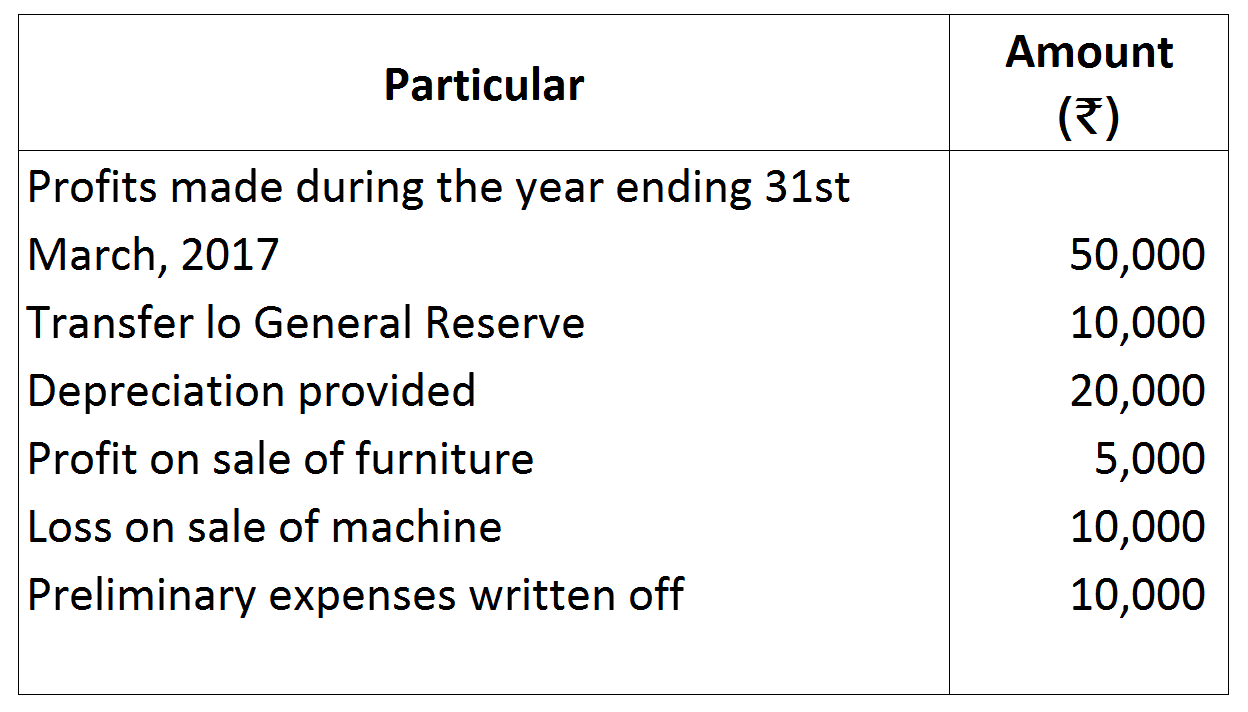
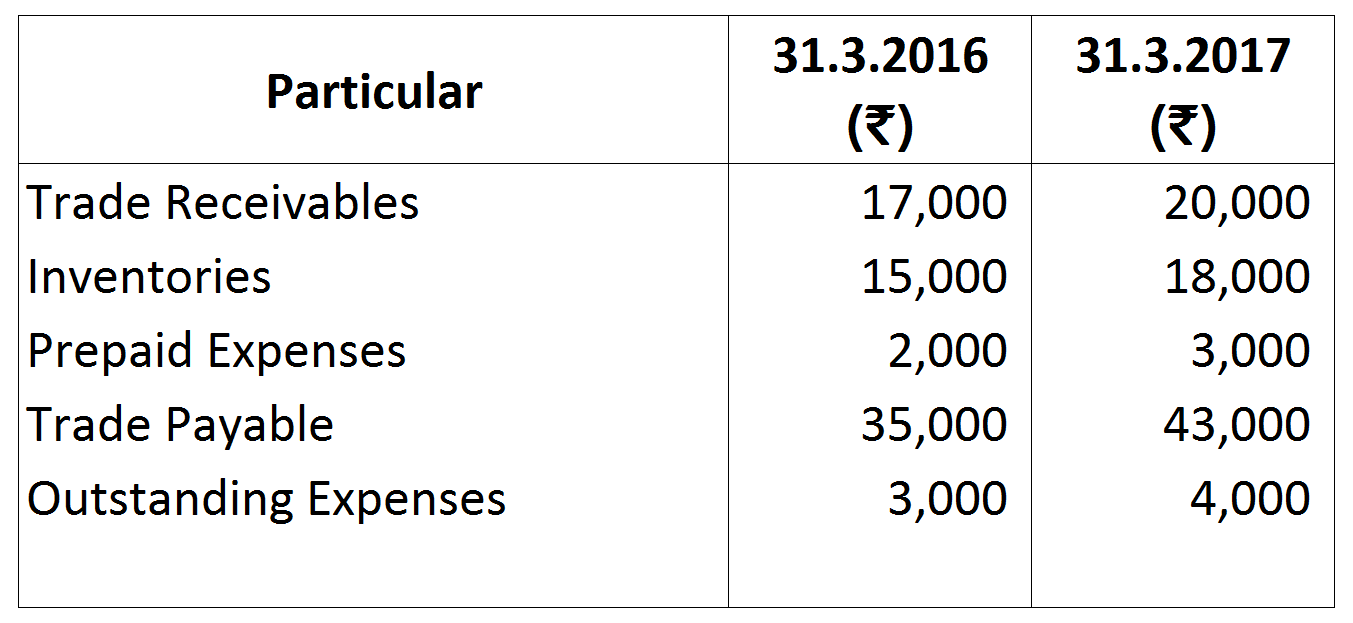
Calculate net-cash flows from operating activities from the following information:
Additional information:
Name any two items that are shown under the head 'Other Current Liabilities' and any two items that are shown under the head 'Other Current Assets' in the Balance Sheet of a Company as per Schedule III of the Companies Act, 2013.
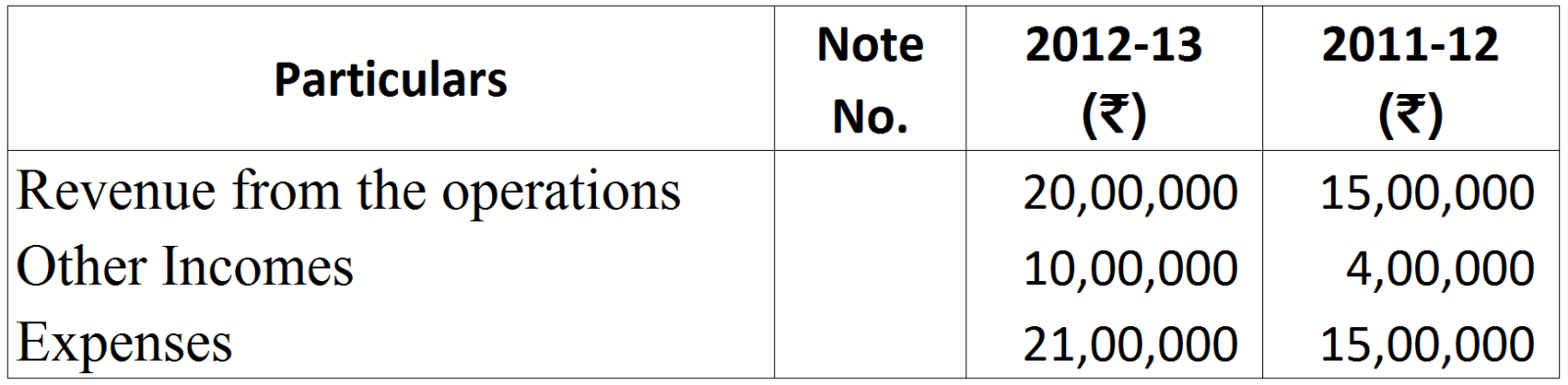
From the following 'Statement of Profit & Loss' for the year ended $31^{st}$ March, $2013$, prepare a 'Comparative Statement of Profit & Loss' of Goods Services Ltd.

Rate of Income tax was $50\%$.
Calculate Cash Flow from Investing Activities from the following information:
Particulars
31st March, 2018 ₹
31st March, 2017 ₹
Investments in Land
Shares in Z Ltd.
12% Long-term Investments
Plant and Machinery
Patents
Goodwill
3,00,000
1,50,000
80,000
7,50,000
70,000
1,50,000
3,00,000
1,50,000
50,000
6,00,000
1,00,000
1,00,000
Additional Information:
  1. A plece of land was purchased as an investment out of surplus. It was let out for commercial purpose and the rent received was ₹ 20,000.
  2. Dividend received from Z Ltd. @ 12%.
  3. Patents written off to the extent of 20,000. Some patents were sold at a profit of ₹ 10,000.
  4. A machine costing ₹ 80,000 (depreciation provided thereon ₹ 30,000) was sold for ₹ 35,000. Depreciation charged during the year was ₹ 70,000.
  5. During the year 12% investments were purchased for ₹ 1,00,000 and some investments were sold at a profit of ₹ 10,000. Interest on investments for the year was duly received.
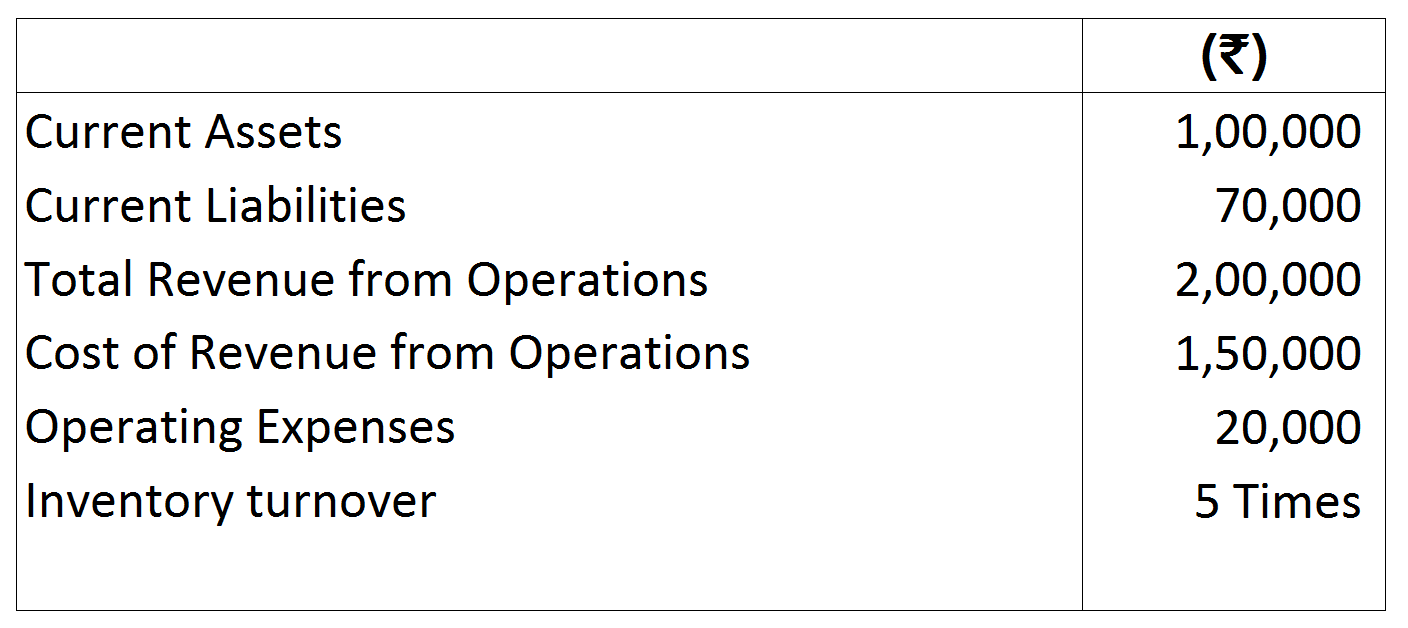
Following are the details available:If the closing inventory is more by f4,000 than opening inventory, determine the following:
  1. Opening Inventory.
  2. Liquid Ratio.