Question
How does reabsorption take place in the excretory system in human?

Answer

Reabsorption: A comparison of the volume of the filtrate formed per day (180 litres per day) with that of the urine released (1.5 litres), suggest that nearly 99 per cent of the filtrate has to be reabsorbed by the renal tubules. This process is called reabsorption. The tubular epithelial cells in different segments of nephron perform this either by active or passive mechanisms. For example, substances like glucose, amino acids, Na+, etc., in the filtrate are reabsorbed actively whereas the nitrogenous wastes are absorbed by passive transport. Reabsorption of water also occurs passively in the initial segments of the nephron. During urine formation, the tubular cells secrete substances like H+, K+ and ammonia into the filtrate. Tubular secretion is also an important step in urine formation as it helps in the maintenance of ionic and acid base balance of body fluids.

Need a full question paper?

Generate a complete, print-ready paper with questions like this in minutes — across 16+ boards, with answer keys.
Start Generating Free

Similar questions

Why do we consider blood as a connective tissue?
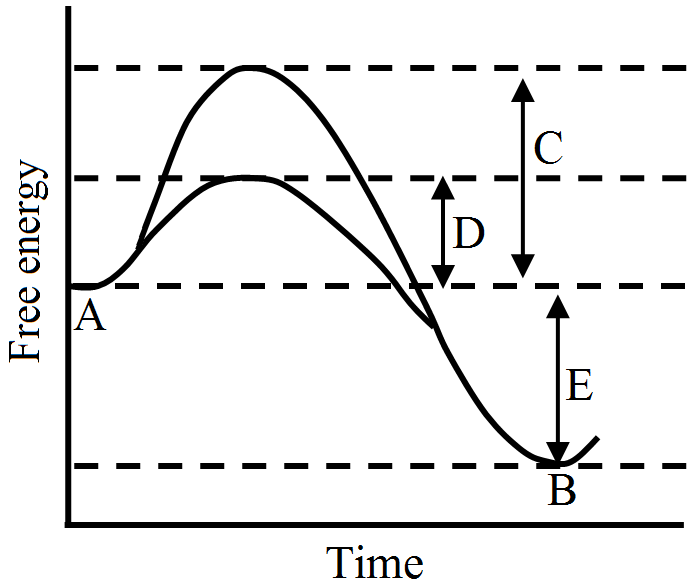
Observe the given figure related to enzyme action and answer the following questions.
  1. What is the figure showing?
  2. Name the substances marked as (A) and (B).
  3. What does the arrows marked (C) to (E) indicate?

List out some living features of viruses.
The composition of glomerular filtrate and urine is not same. Comment.
Amrita while playing with her friend, near the pond noticed in the pond that a green colour covering is floating on the surface of the water. She discussed this with her friend and both got surprised. Next day in the school Amrita asked her teacher about the same. Teacher told her, that was nothing, but green algae which occur both in fresh and marine water habitats.
  1. Mention the economic importance of algae.
  2. Why green algae are considered to be the ancestors of all land plants. Justify the statement by giving reasons.
  3. What values as a good biology student are reflected from Amrita's character.
S. No.
column I
S. No.
column II
A.
Compound epithelium
1.
Alimentary canal
B.
Compound eye
2.
Cockroach
C.
Septal nephridia
3.
Skin
D.
Open circulatory system
4.
Mosaic vision
E.
Typhlosole
5.
Earthworm
F.
Osteocytes
6.
Phallomere
G.
Genitalia
7.
Bone
Write floral formula for a flower which, is bisexual; actinomorphic; pentamerous sepal, petal, stamens free with ovary, syncarpous, superior, trilocular with axile placentation.
Describe the role of different regions of a nephron in urine formation.
While travelling at a higher altitude, a person complains of dizziness and vomiting sensation. Which part of the inner ear is disturbed during the journey?
What is hemodialysis? Describe the various stages of its process.