Question
How does replication of the long DNA molecule occur? Explain the process.
OR
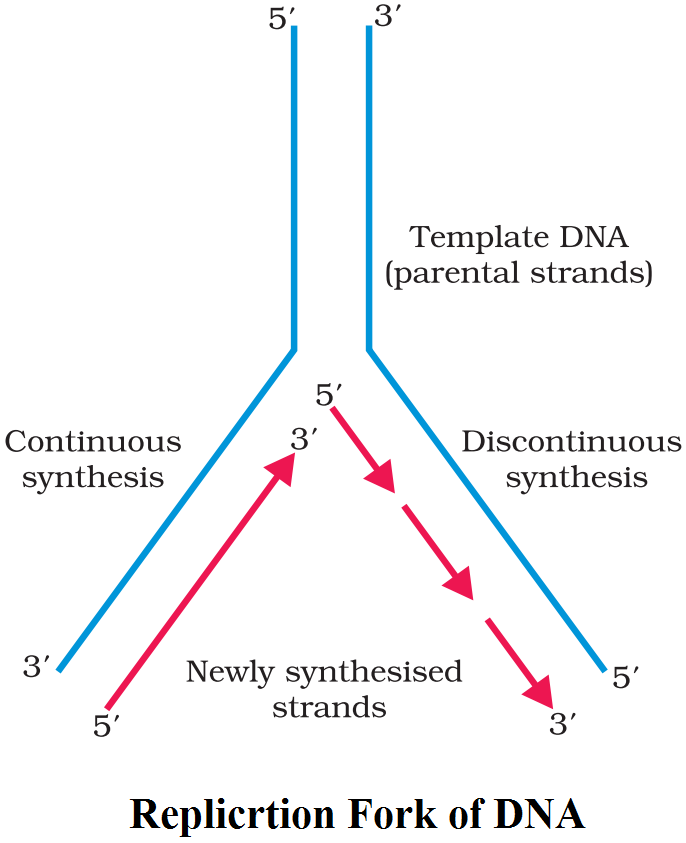
Explain the process of DNA replication with the help of a replicating fork.
Answer

  1. Replication of DNA.
  2. Replication of DNA occurs during S-phase of cell cycle.
  3. During replication of DNA, the two strands unwind upto a point and a replication fork is formed.
  4. Since the unwinding cannot take place for the entire length, replicaion starts from the replication fork.
  5. Both the strands act as templates for DNA synthesis.
  6. DNA polymerase is the enzyme that polymerises the bases/ nucleotides into a strand of DNA.
  7. Since this enzyme polymerises the nucleotides in 5' → 3' direction only, on one of the template strands (with 3' → 5' polarity), the new strand is synthesised as a continuous stretch (leading strand); it is called continuous synthesis.
  8. On the other template strand, (with 5' → 3' polarity), DNA strand is synthesised as short stretches (using primers), called Okazaki fragments; this is called discontinuous synthesis.
  9. Later, these short stretches are joined by DNA-ligase (lagging strand).

Need a full question paper?

Generate a complete, print-ready paper with questions like this in minutes — across 16+ boards, with answer keys.
Start Generating Free

Similar questions

Write notes on ex-situ conservation of biodiversity
Describe in detail that formation of life was preceded by chemical evolution.
OR
Write an essay on Oparin theory of origin of life.
Recombinant DNA vectors are typically attenuated viruses or bacteria that are unrelated to the pathogen of interest.
These vectors can penetrate human cells and often replicate within them, but do not cause disease in the host.

Image
i. A recombinant vector with a gene of interest inserted within the gene of a-galactosidase enzyme, is introduced into a bacterium. Explain the method that would help in selection of recombinant colonies from non-recombinant ones.
ii. Why is this method of selection referred to as insertional inactivation?
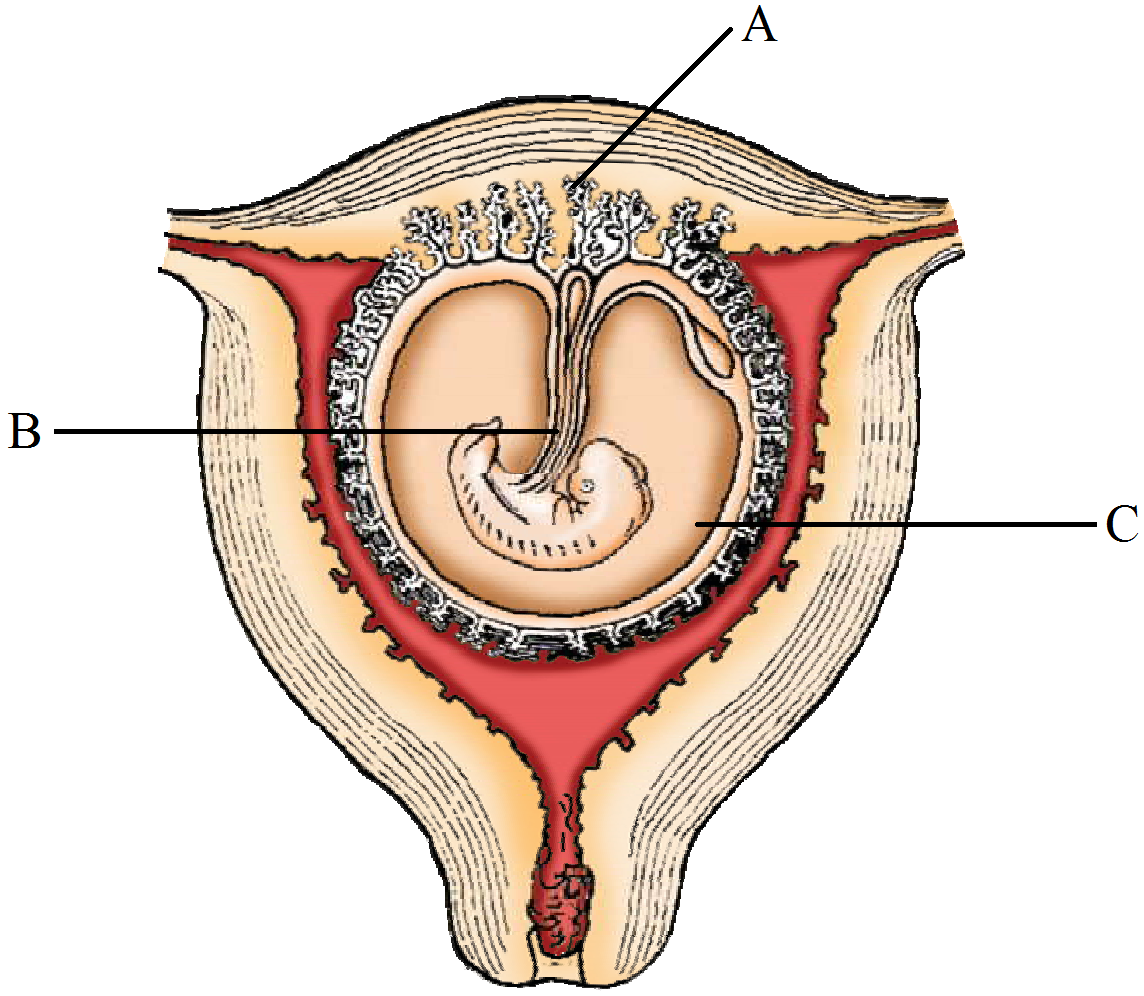
  1. Identify the parts labelled A, B and C in the diagram given.
  1. Draw a labelled diagram of a human blastocyst.
  2. What is parturition and is it induced at the end of pregnancy in a human female?
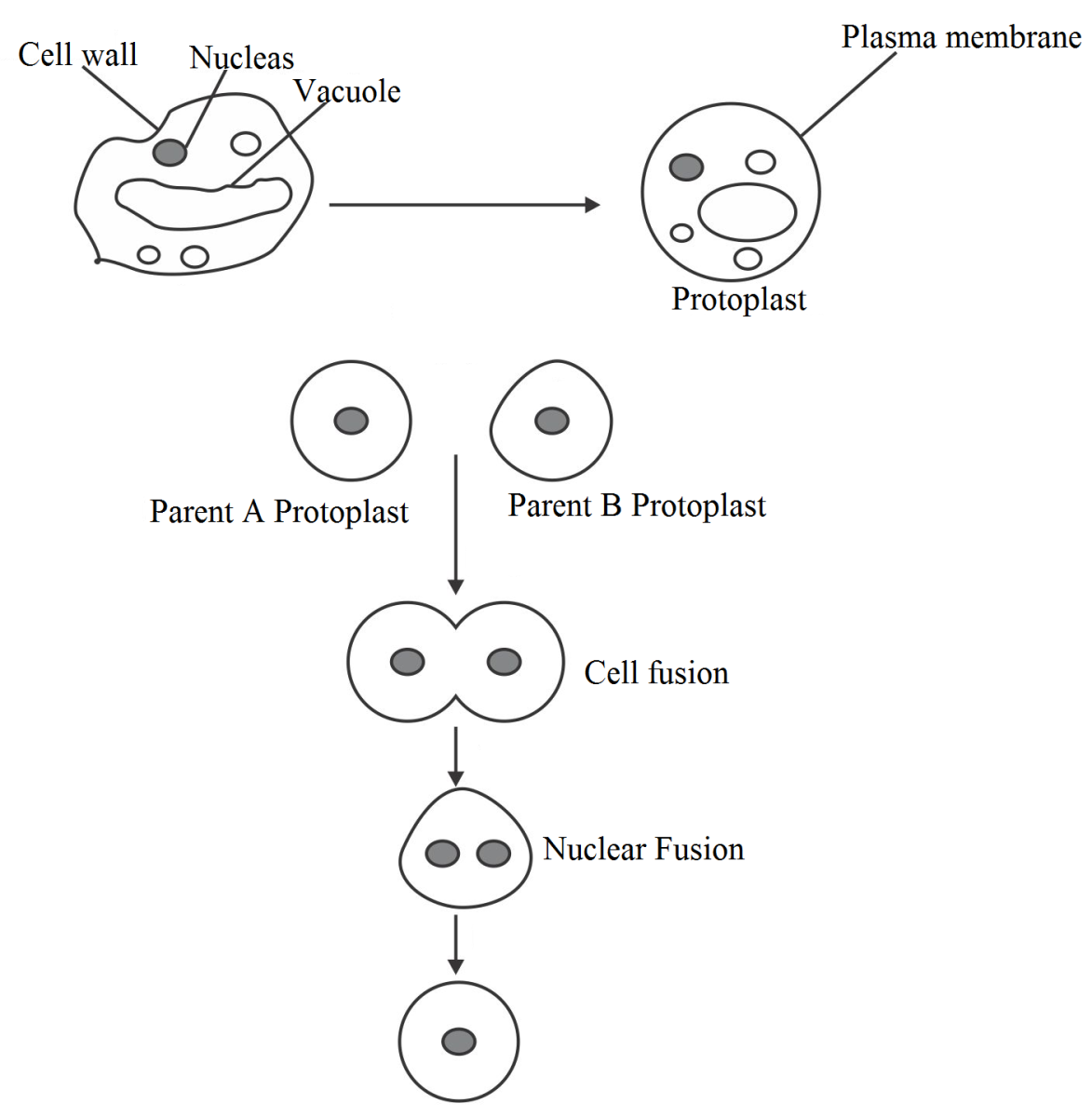
Figure given below represent a certain technique of tissue culture.
  1. Name the technique, as shown in the diagram.
  2. What are the enzymes used to digest plant cell wall?
  3. Name the fusinogen.
  4. What is the product of fusion of protoplasts?
State the laws of inheritance that can be derived from such a cross.
Does light factor affect the distribution of organisms? Write a brief note giving suitable examples of either plants or animals.
For selection of recombinants, insertional inactivation of antibiotic marker has been superceded by insertional inactivation of a marker gene coding for a chormogenic substrate. Give reasons.
What is meant by R cells and S cells with which Frederick Griffith carried out this experiments on Streptococcus pneumoniae? What did he prove from these experiments?
Explain any three preventive measures to control microbial infections.