Question
How is displacement current produced between the plates of a parallel plate capacitor during charging?

Answer

Conduction current is established by actual movement of free electrons through a metallic conductor while displacement current is established by polarization of molecules of a dielectric under the influence of an external electric field. Displacement current is produced by time varying electric flux and electric field across the dielectric medium between capacitor plates that leads to polarization and displacement of charges.

Need a full question paper?

Generate a complete, print-ready paper with questions like this in minutes — across 16+ boards, with answer keys.
Start Generating Free

Similar questions

Write name of that electromagnetic radiation whose wavelength is in the range of $10^{-2}$. Write one use of these radiation.
A small creature moves with constant speed in a vertical circle on a bright day. Does its shadow formed by the sun on a horizontal plane move in a simple harmonic motion?
Write the magnitude of average value of alternating current for a complete cycle.
If the magnetic field outside a copper box is suddenly changed, what happens to the magnetic field inside the box? Such low-resistivity metals are used to form enclosures which shield objects inside them against varying magnetic fields.
If the area of one plate of a parallel plate capacitor is halved, will the device work as a capacitor?
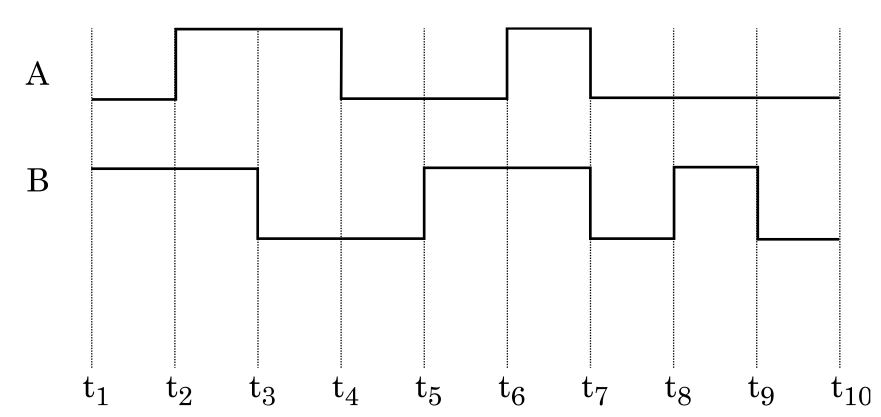
Two signals A and B are used as inputs of a NOR gate. Draw the output wave form.
A person travelling at 43.2km/h applies the brake giving a deceleration of $6.0m/s^2$ to his scooter. How far will it travel before stopping?
At Deoprayag (Garhwal, UP) river Alaknanda mixes with the river Bhagirathi and becomes river Ganga. Suppose Alaknanda has a width of 12m, Bhagirathi has a width of 8m and Ganga has a width of 16m. Assume that the depth of water is same in the three rivers. Let the average speed of water in Alaknanda be 20km/h and in Bhagirathi be 16km/h. Find the average speed of water in the river Ganga.
What will be the effect on the focal length of a convex lens ( $n=1.5$ ) when it is immersed in water?
Answer the following questions regarding earth’s magnetism:
The angle of dip at a location in southern India is about 18° Would you expect a greater or smaller dip angle in Britain?