Question
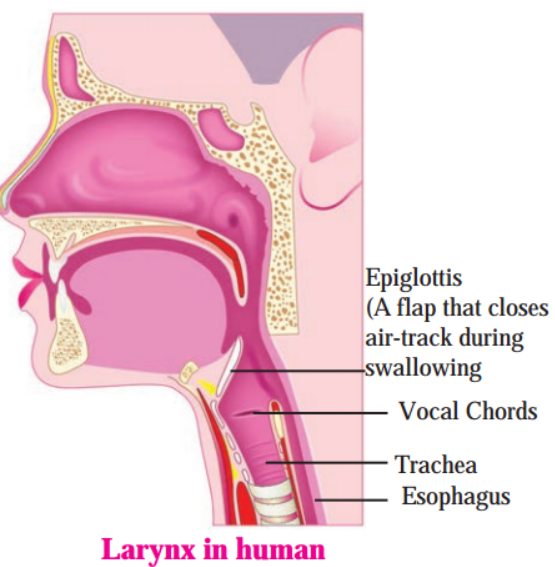
How is sound produced in the human larynx and a loudspeaker?
The frequency of the sound produced depends upon the length and thickness of the cords, and the tension in the chords. The frequency increases with the increase in tension and the more the length or the thickness of the cord, the less is the frequency. Muscles attached to the cords can make the cords tight (more tension) or loose (less tension).
2. Sound produced in a loudspeaker:
Figure shows the internal construction of a loudspeaker. Here, a coil is wound around a permanent magnet. The conical screen of the loudspeaker is attached to the coil.
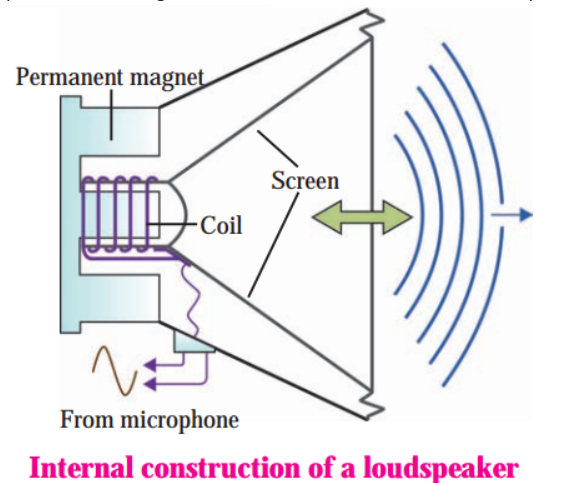
When a current is passed through the coil, a magnetic field is produced. Its interaction with the permanent magnet results in the back and forth motion of the coil. The frequency and the amplitude of the motion of the coil depends on the variation in the current through the coil.
As the coil moves, the conical screen also moves back and forth. The vibrations of the screen produce sound waves in air. Very loud sound can be produced by changing the current.
Generate a complete, print-ready paper with questions like this in minutes — across 16+ boards, with answer keys.