Question
How many $\sigma$ and $\sigma-$bonds are present in $\text{CH}_2=\text{C}-\text{CH}=\text{CH}_2?$
Answer

$\ \ \ \ \ \ \ \ \ {\text{H}\ \ \ \ \ \ \text{H} \ \ \ \ \text{H} \ \ \ \ \ \text{H}} \\\ \ \ \ \ \ \ \ \ \ |\ \ \ \ \ \ \ \ | \ \ \ \ \ \ | \ \ \ \ \ \ \ | \\\ \text{H}-\text{C}=\text{C}-\text{C}=\text{C}-\text{H}$
There are 9 $\sigma-$bonds and $2\pi-$bonds.
Reason: Each single bond is sigma bond each double bond has $1\sigma$ and $1\pi$ bond.

Need a full question paper?

Generate a complete, print-ready paper with questions like this in minutes — across 16+ boards, with answer keys.

Start Generating Free

Similar questions

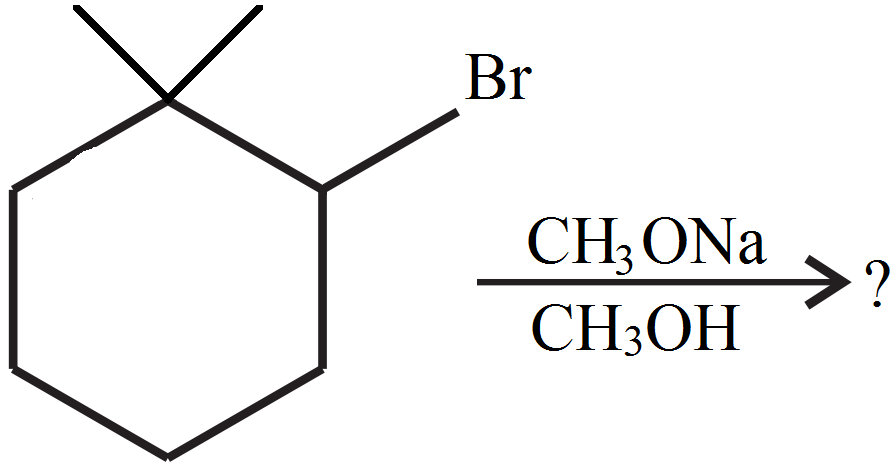
  1. Write the major product of the following reaction.
  1. Arrange the following in increasing order of acidic character.
$\ \ \ \ \ \ \ \ \ \ \ \ \text{CH}_3\ \text{O} \ \ \ \ \ \ \ \ \ \ \ \ \ \ \ \ \ \ \ \ \ \ \ \ \ \ \text{O}\\ \ \ \ \ \ \ \ \ \ \ \ \ \ | \ \ \ \ \ \ \ || \ \ \ \ \ \ \ \ \ \ \ \ \ \ \ \ \ \ \ \ \ \ \ \ \ \ \ ||\\\text{CH}_3-\text{C}-\text{C}-\text{OH},\ \text{CH}_3-\text{C}-\text{OH},\\ \ \ \ \ \ \ \ \ \ \ \ \ \ |\\ \ \ \ \ \ \ \ \ \ \ \ \ \text{CH}_3$ $ \ \ \ \ \ \ \ \ \ \ \ \ \ \ \ \ \ \ \ \ \ \ \ \ \ \text{O}\ \ \ \ \ \ \ \ \ \ \ \ \ \ \ \ \ \ \ \ \ \ \ \ \ \ \text{O}\\ \ \ \ \ \ \ \ \ \ \ \ \ \ \ \ \ \ \ \ \ \ \ \ \ \ || \ \ \ \ \ \ \ \ \ \ \ \ \ \ \ \ \ \ \ \ \ \ \ \ \ \ \ ||\\\text{CH}_3-\text{CH}_2-\text{C}-\text{OH},\ \text{CH}_3-\text{C}-\text{COOH}$
  1. What is the product obtained when but-2-ene reacts with $Br_2$​​​​​​​?
  1. Write two toxic effects of mercury contamination.
  2. Why does sea level rise due to global warming?
Explain the following:
  1. Boyle's law.
  2. Avogadro's law.
  3. Critical temperature.
1. At $298 K, K _{ p }$ for the reaction $N _2 O _4(g) \rightleftharpoons 2 NO _2(g)$ is 0.98 . Predict whether the reaction is spontaneous or not.
2. Define specific heat.
3. State Hess's law.
Write the anode reaction, the cathode reaction and the net cell reaction in the following cells. Which electrode would be positive terminal in each cell?
  1. $\text{Zn}\text{(s)}|\text{Zn}^{2+}||\text{Br}_2|\text{Br}^-|\text{Pt}\text{(s)}$
  2. $\text{Cr}\text{(s)}|\text{Cr}^{3+}||\text{I}_2|\text{I}^-|\text{Pt}\text{(s)}$
  3. $\text{Pt}\text{(s)}|\text{H}_2\text{(g)}||\text{H}^+\text{(aq)}||\text{Cu}^{2+}|\text{Cu}\text{(s)}$
Copper dissolves in dilute nitric acid but not in dilute HCl. Explain.
i. Why is $NH _4 Cl$ added before addition of $NH _4 OH$ in qualitative analysis of $3^{\text {rd }}$ group?
ii. Which will be added to precipitate soap
(RCOONa)? NaCl or KCl and why?'
Calculate the volume of 02 at STP liberated by heating 12.25 g of $\mathrm{KClO}_3$ (At. wt. of $\mathrm{K}=39, \mathrm{Cl}=35.5,0=16 \mathrm{u}$ )
The critical temperature $\left(\mathrm{T}_{\mathrm{d}}\right)$ and critical pressure $\left(\mathrm{P}_{\mathrm{d}}\right)$ of $\mathrm{CO}_2$ are $30.98^{\circ} \mathrm{C}$ and 73 atm respectively. $\mathrm{Can} \mathrm{CO}_2(\mathrm{~g})$ be liquefied at $32^{\circ} \mathrm{C}$ and 80 atm pressure?
Arrange the bonds in order of increasing ionic character in the molecules: $\mathrm{LiF}, \mathrm{K}_2 \mathrm{O}, \mathrm{N}_2, \mathrm{SO}_2$ and $\mathrm{ClF}_3$.