Pure and Artificial Silk - Pure silk is obtained from the cocoons of silkworm and it is made up of protein. Artificial silk is obtained from wood pulp and it is made of modified plant material ‘cellulose’. Just like silk, wool is also made up of proteins. So, a piece of woollen fabric also burns giving the smell of burning hair. The thread which burns giving a smell of burning paper will be cotton fibres. Cotton and paper both are carbohydrates. Paper is made of cellulose obtained from wood pulp. So, on burning cotton and paper both give similar smell.
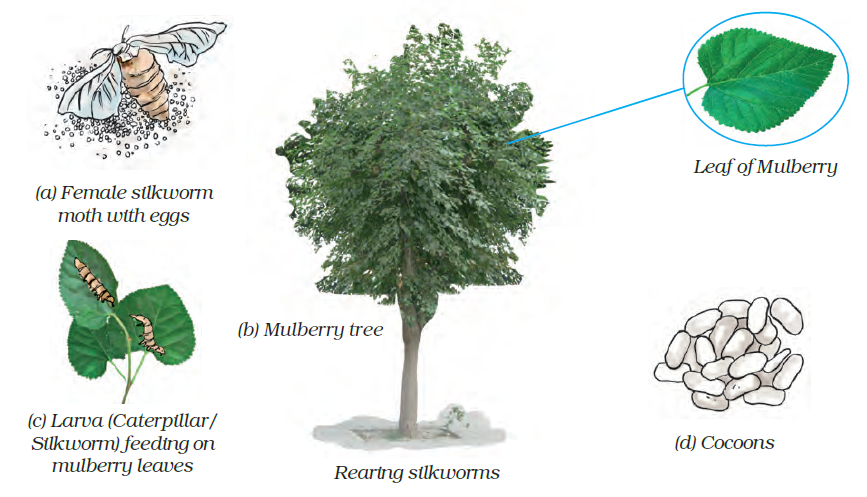
From Cocoon to Silk - For obtaining silk, silk moths are reared and their cocoons are collected to get silk thread.
Rearing Silkworms - A female silk moth lays hundred of eggs at a time. The eggs are stored carefully on strips of paper or cloth and sold to silkworm farmers. The farmers keep eggs under hygienic condition. They warm them to a suitable temperature for the larvae to hatch from egg.
The larvae are kept in clean bamboo trays along with young and freshly chopped mulberry leaves. After 25-30 days, the silkworms stop eating and start spinning the cocoons. Small racks or twigs may be provided in the trays to which cocoons get attached.
Processing Silk - The cocoons are collected and boiled in water to kill the insect inside them. The resulting fibre is known as raw silk. The silk fibres separate out.
Reeling the Silk - The process of taking out fibres from the cocoon for use as silk is known as reeling the silk. Reeling is done in special machines. Silk fibres are spun into silk threads which are woven into silk cloth by weavers.