Question
How would you distinguish experimentally between an alcohol and a carboxylic acid?

Answer

We can distinguish between an alcohol and a carboxylic acid on the basis of their reaction with carbonates and hydrogen carbonates. Acid reacts with carbonate and hydrogen carbonate to evolve $CO _2$ gas that turns lime water milky.$\text{Metal Carbonate}/\text{Metal Hydrogencarbonate}+\text{Carboxylic acid}\\\ \ \ \ \ \ \ \ \ \ \ \ \ \ \ \ \ \ \ \ \ \ \ \ \ \ \ \ \ \ \ \ \ \ \ \ \ \ \ \ \ \ \ \ \ \ \ \ \downarrow\\\ \ \ \ \ \ \ \ \ \ \ \ \ \ \ \ \ \ \ \ \ \ \ \ \ \ \ \ \ \ \ \text{Salt}+\text{Water}+\text{Carbon dioxide}$
Alcohols, on the other hand, do not react with carbonates and hydrogen carbonates.

Need a full question paper?

Generate a complete, print-ready paper with questions like this in minutes — across 16+ boards, with answer keys.
Start Generating Free

Similar questions

Explain why, metals usually do not liberate hydrogen gas with dilute nitric acid.
Draw a ray diagram to show the formation of a virtual magnified image of an object by a convex lens. In your diagram, the position of object and image with respect to the principal focus should be shown clearly.
Draw a ray diagram showing how a concave mirror can be used to produce a real, inverted and diminished image of an object.
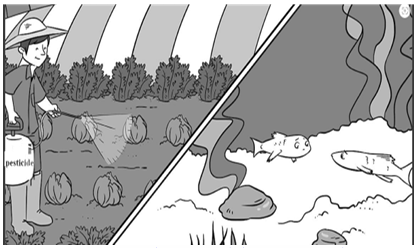
Image
What impact will the process shown in the image have on Humans if they occupy the last trophic level? Explain.
What is meant by:
Draw diagram to show the action of convex mirror on a beam of parallel light rays. Mark on this diagram principal axis, focus F, centre of curvature C, pole P and focal length ƒ, of the convex mirror.
Explain why the tongue may be considered as both a receptor and an effector organ.
Why is water considered as the most valuable natural resource?
Write the balanced chemical equation for the following and identify the type of reaction in each case.
  1. Potassium bromide(aq) + Barium iodide(aq) → Potassium iodide(aq) + Barium bromide(s)
  2. Zinc carbonate(s) → Zinc oxide(s) + Carbon dioxide(g)
  3. Hydrogen(g) + Chlorine(g) → Hydrogen chloride(g)
  4. Magnesium(s) + Hydrochloric acid(aq) → Magnesium chloride(aq) + Hydrogen(g)
You are supplied with a number of $100 Ω$ How could you combine some of these resisters to make a $250 Ω$ resistor?
Calculate the resistance of an electric bulb which allows a 10 A current when connected to a 220 V power source.