Question
Hydrogen gas is not evolved when metals like copper, Zinc, iron etc react with dilute nitric acid.

Answer

$(i)$ Nitric acid is a strong oxidizing agent. It oxidizes hydrogen $(H_2)$ to water.
$(ii)$ Hence, it oxidizes completely to form any of the nitrogen oxide and water.
$(iii)$ Hence, these metals do not produce $H_2$ gas when they react with dilute $HNO_3.$
E.g $Cu _{( s )}+4 HNO _{3( aq )} Cu \left( NO _3\right)_2+2 NO _{2(g)}+2 H _2 O$

Need a full question paper?

Generate a complete, print-ready paper with questions like this in minutes — across 16+ boards, with answer keys.
Start Generating Free

Similar questions

What are the various factors which we should keep in mind while choosing a source of energy?
(external, inhalation, alveolar, breathing, respiration, exhalation)
Release of energy from the assimilated food is called …………. Inhalation and exhalation is called …….. When ……….. is done, air enters the lungs. The oxygen from this air enters the blood while carbon dioxide from the blood exits from the blood. Through exhalation, $CO_2$​​​​​​​ is given out. This gaseous exchange occurs through ……….. membrane. This is called ………….. respiration. The RBCs carry oxygen to every cell.
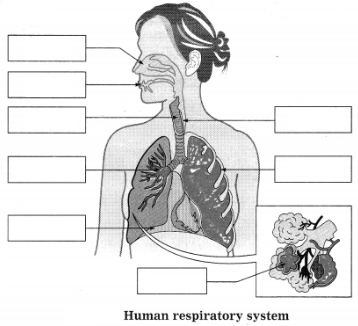
Observe and label the diagram: 
Image
Which are the destructive effects of flood?
Find the amount of heat required to convert 10 g of water at 100 °C into steam. (Specific latent heat of vaporization of water = 540 cal/g)
Calculate the critical velocity (υc) of the satellite to be located at $35780$ km above the surface of the earth.
How does the size of atoms (atomic size) generally vary in going from left to right in a period of the periodic table? Why does it vary this way?
Consider the following salts:
$Na_2CO_3, NaCl, NH_4Cl, CH_3COONa, K_2SO_4, (NH_4) SO_4$​​​​​​​ Which of these salts will give:
  1. Acidic solutions?
  2. Neutral solutions?
  3. Basic solutions (or alkaline solutions)?
If steam of mass 100 g and temperature 100 °C is released on an ice slab of temperature 0 °C, how much ice will melt?
Explain how dew and fog are formed.
(OR)
Write a short note on formation of dew and fog.